
What we offer Chickamauga patients
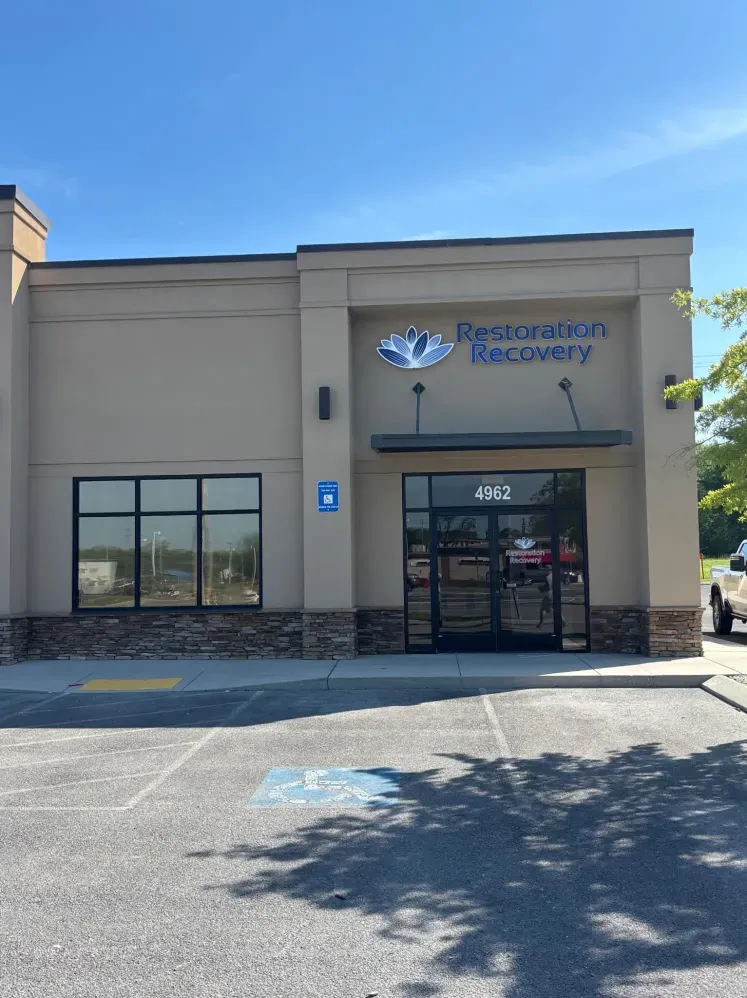
Restoration Recovery is an outpatient program — no residential stay, no detox facility. You visit our Ringgold clinic, about 15–20 minutes east on Battlefield Parkway, and go home the same day. Your first visit takes about 2 to 3 hours: a DSM-5 assessment (plus a COWS score for opioid use disorder), counseling, a doctor evaluation, and a same-day Suboxone prescription. Sublocade and Brixadi injections are ordered at the first visit and given at a short follow-up. After the first visit, follow-ups can be by telehealth. You only need to come in for an injection or when your provider asks to see you.
Medication options
Which medication fits depends on your history, your other medications, and whether daily dosing or a monthly injection suits your schedule — your provider walks through the choice with you at the first visit.
Opioid use disorderBuprenorphine, three ways
Buprenorphine/naloxone — reduces cravings and prevents withdrawal so you can function normally. Our most-prescribed option.
Extended-release buprenorphine for patients who would rather not take a daily medication. Given at the Ringgold and Chattanooga clinics.
Extended-release buprenorphine with flexible dosing intervals — weekly or monthly. Given at the Ringgold and Chattanooga clinics.
Alcohol use disorderInjection or daily oral
Naltrexone — blocks the reward pathway behind compulsive drinking. Given at the Ringgold and Chattanooga clinics.
Acamprosate, naltrexone, and disulfiram — daily alternatives to the monthly Vivitrol injection.
Insurance & cost
We accept Georgia Medicaid through the Georgia Families managed care program, Medicare, BlueCross BlueShield of Georgia, Cigna, Aetna, Ambetter, UnitedHealthcare, and Tricare — plus most major commercial plans. The Georgia Medicaid CMO lineup can change as the state settles its next round of contracts, so call us with your specific plan and we’ll verify in-network status before scheduling. If you live in Chickamauga but work in Tennessee, your Medicaid is still Georgia’s — TennCare does not apply — and we can bill it from either our Ringgold or Chattanooga clinic. What you pay depends on your plan; if you are uninsured, self-pay for MAT is a flat $250 per month, with medication billed separately.