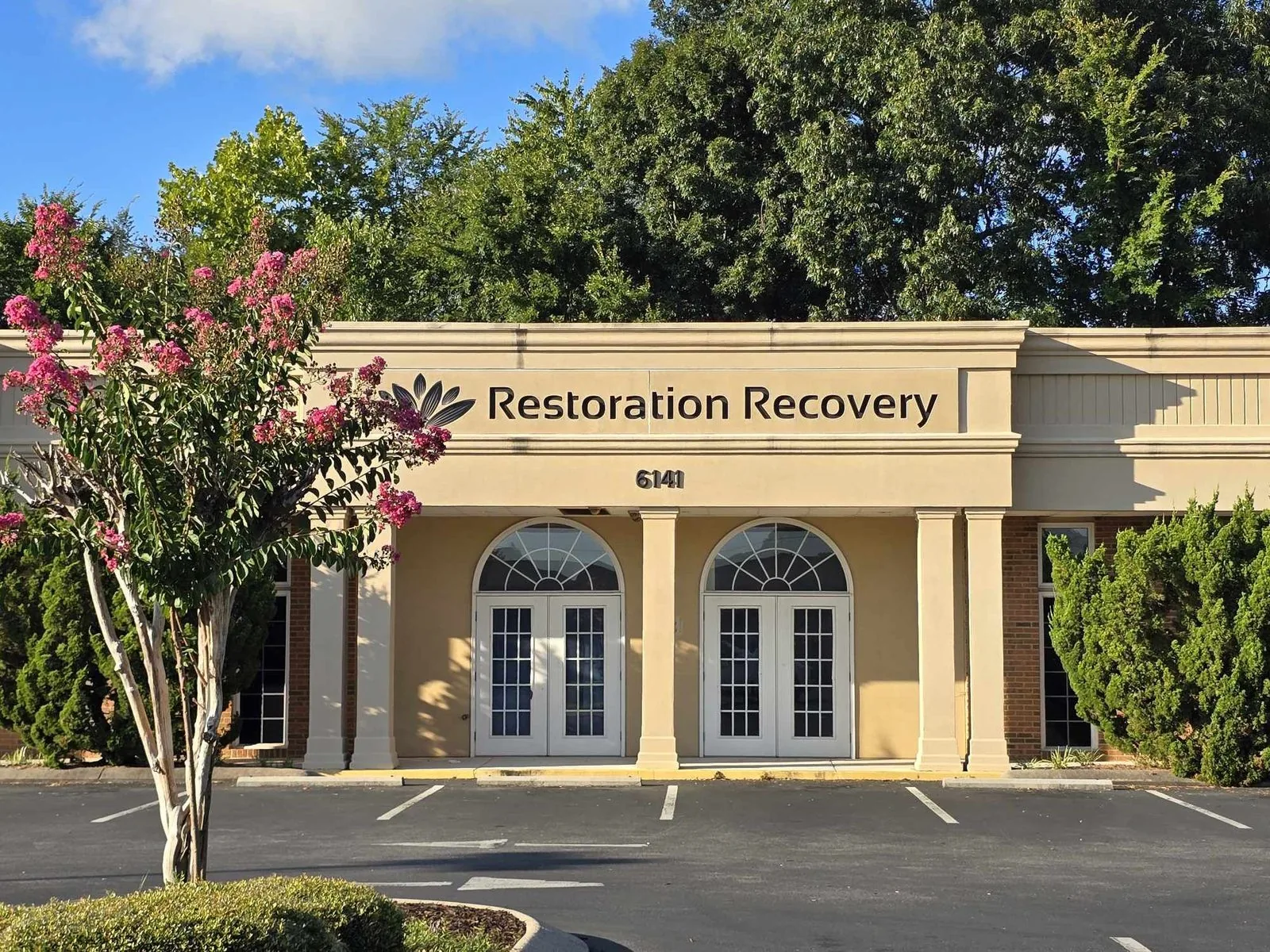
FDA-approved buprenorphine therapy for opioid use disorder — prescribed by experienced MAT providers at four outpatient clinics across Tennessee and Georgia.
We accept patients in active addictionConfidential from your first call
CARF AccreditedServing Chattanooga since 2017
CARF AccreditedLicensed in Tennessee & GeorgiaSame-day appointments availableConfidential from your first call
What Is Suboxone?
Suboxone is a prescription medication that combines two active ingredients: buprenorphine and naloxone. It is FDA-approved specifically for the treatment of opioid use disorder (OUD) and is one of the most widely studied and effective tools available for helping people stop misusing opioids.
The medication is taken sublingually — placed under the tongue to dissolve — and is available in either a film or a tablet form. Your provider will recommend the option that best fits your situation. Buprenorphine is a partial opioid agonist, meaning it activates opioid receptors in the brain just enough to reduce cravings and prevent withdrawal symptoms without producing the euphoria associated with full opioid agonists like heroin, fentanyl, or prescription painkillers. Naloxone is included to discourage misuse of the medication itself.
At Restoration Recovery, Suboxone is prescribed exclusively for opioid use disorder. It is not used for alcohol dependence or other substance use disorders. For patients who prefer an injection rather than a daily film or tablet, we also offer Sublocade (monthly) and Brixadi (weekly or monthly) — two long-acting forms of buprenorphine administered at our clinics.
How Suboxone Works
Opioid dependence changes the way the brain functions. When someone uses opioids repeatedly, the brain adapts to the presence of the drug. Without it, the brain signals distress through intense cravings and painful withdrawal symptoms. This cycle makes it extremely difficult to stop using opioids through willpower alone.
Suboxone works by occupying the same receptors that opioids bind to, but it activates them only partially. This achieves two critical effects:
Craving reduction. Because buprenorphine partially stimulates opioid receptors, the brain no longer sends urgent signals demanding more opioids. Patients report a significant decrease in the constant preoccupation with finding and using drugs.
Withdrawal prevention. Suboxone stabilizes brain chemistry enough to prevent the nausea, muscle aches, anxiety, insomnia, and other withdrawal symptoms that drive relapse. Patients can function normally at work, at home, and in daily life.
Suboxone also has a ceiling effect, meaning that taking more than the prescribed dose does not increase its effects. This built-in safety profile makes it a lower-risk medication compared to full opioid agonists and reduces the potential for misuse.
Your options
Buprenorphine, Three Ways
All three of our opioid-use-disorder medications deliver buprenorphine — the same partial-agonist molecule. What changes is the route and the dosing rhythm. Suboxone is the daily film or tablet patients start on; for those who would rather not dose every day, the long-acting injectables Sublocade and Brixadi are administered in clinic. Your provider walks you through which one fits your situation at the first visit.
Most prescribed
Daily film or tablet
Suboxone
Sublingual buprenorphine/naloxone · taken once daily under the tongue
For most patients starting OUD treatment. A daily sublingual film or tablet that reduces cravings and prevents withdrawal without the euphoria of full agonists. Naloxone is included to deter misuse. You leave your first visit with a same-day prescription, and your provider explains when to take your first dose at home.
Monthly injection
Sublocade
300 mg ×2 to start, then 100 mg or 300 mg monthly
For patients who prefer monthly dosing. A long-acting buprenorphine injection given in clinic once a month — no daily film to remember. We have you take Suboxone for at least a week first, and the first injection usually comes about a month after you start.
Weekly or monthly injection
Brixadi
Flexible dosing intervals — weekly or monthly
For patients who want a flexible injection interval. A long-acting buprenorphine injectable available in weekly and monthly formulations, giving more scheduling flexibility than a monthly-only product. Like Sublocade, it’s ordered during your visit and administered in clinic on follow-up.
We don’t stock injections on-site — if you choose Sublocade or Brixadi, your provider orders it during your first visit, you continue on Suboxone as a bridge, and your injection appointment is scheduled once the medication arrives. Weighing daily Suboxone against the monthly injection? Our Sublocade vs. Daily Suboxone comparison lays out the head-to-head trial evidence, lifestyle tradeoffs, and insurance math.
The evidence
What the Research Shows
Suboxone is the standard of care for opioid use disorder and one of the most rigorously studied treatments in addiction medicine, endorsed by SAMHSA, NIDA, ASAM, and the WHO. The three findings below come from a review of 19 cohort studies and from two clinical trials.
4.6 → 1.4Overdose deaths / 1,000 / yr
Overdose deaths ran at 1.4 per 1,000 patients per year during buprenorphine treatment, against 4.6 per 1,000 after treatment stopped. Sordo L et al. BMJ. 2017;357:j1550 — from a single buprenorphine cohort in a review of 19 cohort studies.
75%One-year retention
Three in four buprenorphine patients were still in treatment at one year, versus 0% on placebo. Kakko J et al. Lancet. 2003;361(9358):662–668 — randomized placebo-controlled trial; both groups received counseling.
49 → 8.6%On medication, then after tapering
Short tapers succeeded for 7% of patients. The patients they didn’t work for then got 12 weeks of buprenorphine: 49% succeeded while on it, and eight weeks after tapering off, 8.6% did. Weiss RD et al. Arch Gen Psychiatry. 2011;68(12):1238–1246 — POATS trial, 653 patients across 10 U.S. sites.
Why these numbers matter
Decades of independent research
Overdose deaths are much less common while people stay in buprenorphine treatment than after it stops. The Sordo meta-analysis, published in BMJ, pooled 19 cohort studies, including nearly 16,000 buprenorphine-treated patients. The overdose rates above come from a single buprenorphine cohort in that review.
The Kakko trial randomized 40 patients with heroin dependence to buprenorphine plus counseling or placebo plus counseling. At one year, not a single placebo patient remained in treatment. Three in four buprenorphine patients did. Because both groups received counseling, that difference is attributable to the medication itself.
The POATS trial tested whether a short course of Suboxone plus a taper could resolve prescription opioid dependence. Only 7% succeeded. Those it didn’t work for then got 12 weeks of treatment, and 49% of them succeeded while on it; eight weeks after tapering off, 8.6% did. A Cochrane review of 31 trials covering 5,430 participants found buprenorphine kept more people in treatment than placebo, and a Medicaid cohort analysis in Health Affairs found patients retained on Suboxone for 15 months or longer had substantial reductions in emergency-department visits, overdose events, and opioid-related hospital admissions compared to shorter-retention peers. MAT is not a replacement of one substance with another — the same way insulin manages diabetes, medication is a legitimate tool for managing opioid use disorder.
Full citations in References: Sordo 2017 (BMJ), Kakko 2003 (Lancet), Weiss 2011 (Arch Gen Psychiatry), Mattick 2014 (Cochrane), Williams 2020 (Health Affairs).
What to Expect at Your First Appointment
Your first visit typically lasts 2 to 3 hours and follows a four-step clinical flow. For opioid use disorder, you leave with a same-day Suboxone prescription, and your provider explains when to take your first dose at home so buprenorphine doesn’t cause precipitated withdrawal.
01
Intake
Paperwork and a clinical intake — a DSM-5 assessment to confirm the OUD diagnosis and its severity, plus a COWS (Clinical Opiate Withdrawal Scale) score to measure your current withdrawal state.
02
Counseling
You meet with a counselor to discuss your substance use history, any previous treatment, and your personal recovery goals.
03
Doctor evaluation
A medical provider reviews your intake, COWS score, and counselor notes, explains how Suboxone works, and walks you through film-vs-tablet and daily-vs-injection options.
04
Prescription
You leave the same day with a Suboxone prescription. If you prefer the extended-release route, your provider orders Sublocade or Brixadi during this visit and you continue on Suboxone as a bridge.
About 2–3 hours.You leave the same day with a Suboxone prescription.Bring a photo ID, your insurance card, and a list of any medications.
What each step covers in detail+
Intake. You’ll complete paperwork and a clinical intake. For opioid use disorder, this includes a DSM-5 assessment to confirm the diagnosis and its severity, and a COWS (Clinical Opiate Withdrawal Scale) score to measure your current withdrawal state. Buprenorphine is started once withdrawal has begun, so the provider goes over the timing of your first dose at home during the doctor evaluation.
Doctor evaluation. A medical provider reviews your intake, COWS score, and counselor notes, explains how Suboxone works, walks you through film-vs-tablet and daily-vs-injection options (Sublocade, Brixadi), and answers your questions.
Prescription (and injection ordering, if chosen). You leave the same day with a Suboxone prescription. If you prefer the extended-release route, your provider will order Sublocade or Brixadi during this visit — we don’t stock injections on-site — and you’ll continue on Suboxone as a bridge. Your injection appointment is scheduled for a follow-up once the medication arrives, typically after a stabilization period on Suboxone. For Sublocade, that’s at least a week, and the first injection usually comes about a month after you start.
Bring a valid photo ID, your insurance card (if applicable), and a list of any medications you currently take. Records from previous treatment providers are helpful but not required. For a step-by-step walkthrough, see our guide on what to expect at your first Suboxone appointment. Anything you share during intake, counseling, or treatment is protected by HIPAA and 42 CFR Part 2 — the federal rule that specifically shields addiction-treatment records from disclosure without your written consent, including from many subpoenas, employers, and family members, except in limited cases the law allows, such as a medical emergency or a court order.
How Long Does Treatment Last?
There is no fixed timeline for Suboxone treatment. Some patients take the medication for several months while they build the skills, habits, and support systems needed for long-term recovery. Others may continue treatment for a year or longer. The duration depends entirely on your individual circumstances and goals.
Your provider will never pressure you into stopping medication before you are ready. Research shows that patients who remain on medication-assisted treatment for adequate periods have significantly better outcomes than those who discontinue prematurely. When the time comes to taper off Suboxone, your provider will work with you to develop a gradual reduction plan that minimizes discomfort and protects your recovery.
Follow-up visits are scheduled weekly during the first phase of treatment, then step down to every two weeks and then monthly as you stabilize. Telehealth follow-ups are available for established patients, making it easier to stay on track without disrupting your schedule.
Who Is a Candidate for Suboxone?
Suboxone treatment may be appropriate if you:
Are physically dependent on opioids, including prescription painkillers, heroin, or fentanyl
Have tried to stop using opioids on your own but have been unable to manage cravings or withdrawal
Have experienced relapse after previous treatment attempts
Are looking for an outpatient treatment option that allows you to continue working and fulfilling family responsibilities
Want a structured treatment plan that combines medication with counseling and support
Suboxone is FDA-approved for opioid use disorder; our providers also prescribe it off-label for kratom and 7-OH dependence. If you are seeking treatment for alcohol dependence or other substances, our providers offer other evidence-based options. Visit our services page for a complete overview of available treatments.
Still weighing whether this is the right path? Our Is Suboxone Right for Me? page walks through the decision honestly — who it fits, who it doesn’t, and how it compares to detox, abstinence-based recovery, and other MAT options. If you’re already leaning toward trying it but want the first-call questions answered first, see Nervous About Starting Suboxone? For a side-by-side view of five of the MAT medications we offer (Suboxone, Sublocade, Brixadi, Vivitrol, Acamprosate) in two scannable tables, see our MAT Medications Compared tracker. For patients asking about alternatives to FDA-approved MAT — particularly ibogaine, which has been in the news after a 2026 federal executive order — we cover the current legal status, clinical evidence, and safety concerns in detail.
Why Patients Choose Restoration Recovery
Choosing the right clinic matters as much as choosing the right medication. Suboxone works — the research is clear. How well it works for you depends heavily on the clinic and the counseling around the prescription.
Four physical clinics across Tennessee and Georgia. Chattanooga, Cleveland, Soddy-Daisy, and Ringgold. You are seeing a real provider in a real clinic — not a video call with someone you may never meet in person.
Same-day appointments. When you are ready to begin, waiting two months is not an option. Your first appointment can be as soon as the same day you call.
Experienced MAT providers and a CARF-accredited program. CARF (the Commission on Accreditation of Rehabilitation Facilities) is an independent, nonprofit accreditor that reviews treatment programs on-site against its published standards.
Serving Chattanooga since 2017. Some of our patients have been with us for more than five years. Continuity matters in recovery, and so does institutional experience.
4.6 stars across 51 verified Google reviews. Real patients writing about real experiences. Read a few before you call.
Counseling and behavioral health. Medication without counseling is only part of a treatment plan. Counseling is available at every clinic. Many patients are also managing co-occurring anxiety, depression, or trauma, which our Chattanooga clinic treats alongside recovery. The first of those visits is in person, and later ones can be by telehealth.
Telehealth follow-ups for established patients. After your first in-person evaluation, routine check-ins can happen from home — the basis of our approach for working professionals who can’t take time off.
Most major insurance plans accepted. TennCare, Medicaid, Medicare, and the full range of commercial carriers. What you pay out of pocket depends on your insurance. See our insurance page for the full list.
Confidential by federal law. Your treatment is protected under HIPAA and 42 CFR Part 2, a federal rule that specifically shields addiction-treatment records from most forms of disclosure, including many subpoenas. What you share with us stays with us.
Integrated hepatitis C screening and treatment. When the two travel together — and they often do — our team is equipped to address both under one roof.
“I owe my entire recovery to this place. I had tried so many times in the past, but not until I found these guys did I succeed.”
CARF-accredited outpatient addiction care
TennCare, BlueCare, BCBS, UHC, Medicare & most commercial insurance accepted. We verify your benefits before your first visit — no surprises. Licensed in TN & GA · HIPAA · 42 CFR Part 2.
Insurance and Access
Restoration Recovery accepts most major insurance plans, including TennCare, Medicaid, and a wide range of commercial insurance providers. Our patient services team can verify your benefits before your first appointment so you know exactly what to expect in terms of cost.
For TennCare members specifically, Restoration Recovery is enrolled in TennCare’s BESMART program, which removes prior-authorization delays for preferred buprenorphine products and supports same-day Suboxone prescriptions for eligible TennCare members.
If you do not have insurance or are unsure about your coverage, contact us anyway. Self-pay is a flat $250 per month, and our team can go over your options. To check your specific plan before you book, use our 2-minute insurance verification.
Ready to start Suboxone?
Same-day appointments at all four clinics, on the days each is open. Call and our team will verify your insurance — TennCare is typically $0 through BESMART — and get you scheduled, in person or by telehealth follow-up after your first visit.
We operate four outpatient clinics across Tennessee and North Georgia. All four offer Suboxone treatment, with same-day appointments on the days each is open. If you live near Chattanooga, see our Suboxone treatment in Chattanooga page for what to expect at the main office on Shallowford Road.
All locations are designed for a comfortable, confidential outpatient experience. Telehealth follow-up visits are also available for established patients who have completed their initial in-person evaluation. Phones are answered Monday through Friday, 9am to 4:30pm Eastern. After hours? The 988 Suicide & Crisis Lifeline and the free, confidential SAMHSA National Helpline (1-800-662-4357) are available 24/7.
References
The statistics and clinical findings on this page come from peer-reviewed medical research and authoritative public-health sources. Patients, family members, and providers are welcome to verify any claim against the original source.
Sordo L, Barrio G, Bravo MJ, Indave BI, Degenhardt L, Wiessing L, Ferri M, Pastor-Barriuso R. Mortality risk during and after opioid substitution treatment: systematic review and meta-analysis of cohort studies. BMJ. 2017;357:j1550. doi:10.1136/bmj.j1550 [PubMed]
Kakko J, Svanborg KD, Kreek MJ, Heilig M. 1-year retention and social function after buprenorphine-assisted relapse prevention treatment for heroin dependence in Sweden: a randomised, placebo-controlled trial. Lancet. 2003;361(9358):662–668. [PubMed]
Weiss RD, Potter JS, Fiellin DA, et al. Adjunctive counseling during brief and extended buprenorphine-naloxone treatment for prescription opioid dependence: a 2-phase randomized controlled trial. Arch Gen Psychiatry. 2011;68(12):1238–1246. [PubMed]
Mattick RP, Breen C, Kimber J, Davoli M. Buprenorphine maintenance versus placebo or methadone maintenance for opioid dependence. Cochrane Database of Systematic Reviews. 2014;(2):CD002207. [Cochrane]
Larochelle MR, Bernson D, Land T, et al. Medication for Opioid Use Disorder After Nonfatal Opioid Overdose and Association With Mortality: A Cohort Study. Ann Intern Med. 2018;169(3):137–145. [PubMed]
Williams AR, Samples H, Crystal S, Olfson M. Impact of Long-Term Buprenorphine Treatment on Adverse Health Care Outcomes in Medicaid. Health Affairs. 2020. [PubMed]
American Society of Addiction Medicine (ASAM). National Practice Guideline for the Treatment of Opioid Use Disorder: 2020 Focused Update. Published via the Substance Abuse and Mental Health Services Administration (SAMHSA). [ASAM]
National Institute on Drug Abuse (NIDA). Medications for Opioid Use Disorder. Accessed 2026. [NIDA]
SUBOXONE (buprenorphine and naloxone) sublingual film. Prescribing Information. Indivior Inc. Accessed via DailyMed, U.S. National Library of Medicine. [DailyMed]
Questions
Frequently Asked Questions
How does Suboxone work?+
Suboxone is a combination of buprenorphine and naloxone taken as a daily sublingual film or tablet. Buprenorphine is a partial opioid agonist — it activates opioid receptors enough to prevent withdrawal and reduce cravings, but without the intense euphoria of full agonists like heroin or fentanyl. Naloxone is included to deter misuse (it’s inactive when taken as directed but blocks opioids if the film is injected). Over time, Suboxone stabilizes your brain chemistry so you can focus on counseling, work, relationships, and recovery instead of the using-and-withdrawal cycle.
Will Suboxone make me feel high?+
For most people, no — especially once you’re stabilized on an appropriate dose. Buprenorphine has a ceiling effect that limits how strong the opioid response can be, which is exactly what makes it safer than full agonists. In the first week or two, some people notice mild subjective effects that resolve as the dose stabilizes. Most patients describe being on Suboxone as feeling normal or like themselves again rather than intoxicated. You’ll remain able to work, drive, and function throughout treatment.
Is Suboxone just trading one addiction for another?+
Clinically, no — though it’s a fair question. Addiction is characterized by compulsive use despite harm, loss of control, and continued use despite negative consequences. Suboxone is a prescribed, medically supervised medication that treats the underlying condition (opioid use disorder) by normalizing brain chemistry. Patients on Suboxone can work, drive, raise families, and live normal lives — something that’s typically impossible during active addiction. In a 2017 BMJ review, overdose deaths ran at 4.6 per 1,000 patients per year after buprenorphine treatment stopped, against 1.4 during treatment (Sordo 2017).
How long do people stay on Suboxone?+
There’s no one-size-fits-all answer. People do best while they stay on the medication. In the Weiss 2011 POATS trial, the patients a short taper didn’t work for then got 12 weeks of Suboxone: 49% succeeded while on it, and eight weeks after tapering off, 8.6% did. Many patients stay on Suboxone for years, some indefinitely. Treatment length is a conversation between you and your provider based on your clinical history, life circumstances, and goals. We don’t push tapers; we support whatever duration works clinically.
Does my insurance cover Suboxone?+
Most insurance plans cover Suboxone, including TennCare (BlueCare, Wellpoint, UHC Community Plan), traditional Medicare, Medicare Advantage, and most commercial plans. TennCare members typically have $0 out-of-pocket for both the office visit and the medication. Commercial copays vary. Prior authorization is sometimes required. Our intake team verifies your specific coverage before your first appointment. For patients without insurance, self-pay for medication-assisted treatment (MAT) is a flat $250 a month.
Do I have to go through withdrawal before my first appointment?+
Not for the appointment itself. You take your first dose of Suboxone at home after your first visit. For patients using shorter-acting opioids (heroin, pills), you need to be in mild-to-moderate withdrawal when you take that first dose so buprenorphine doesn’t cause precipitated withdrawal. That usually means 6 to 24 hours since your last dose of a short-acting opioid, or longer for long-acting ones. For fentanyl users the rules are different because fentanyl accumulates in body tissue, so your provider will time your induction to your recent use. Your provider will plan the right approach at your first visit.
Same-day appointments available. We accept patients in active addiction, and it’s confidential from your first call. Most major insurance plans accepted.