Signs of Alcohol Use Disorder
Alcohol use disorder is diagnosed using the DSM-5 criteria. You do not need to meet all of them; meeting even two or three is enough for a mild AUD diagnosis and enough to benefit from treatment. The criteria, translated into plain language, are:
- Drinking more or longer than intended. Starting with “just one” and ending up with several, or planning to stop at a certain hour and continuing past it. This is often the earliest sign people notice.
- Unsuccessful attempts to cut down. Wanting to drink less, trying, and not being able to stick with it — whether for a day, a week, or “dry January.”
- Significant time spent on alcohol. Drinking, obtaining alcohol, or recovering from its effects — hangovers, lost mornings, foggy afternoons.
- Cravings. Strong urges to drink, often triggered by particular times of day, places, people, or emotional states.
- Interference with responsibilities. Drinking affecting work performance, family obligations, childcare, or household tasks.
- Continued use despite consequences. Drinking that persists through health problems, relationship conflict, financial stress, or legal consequences like a DUI.
- Giving up activities. Dropping hobbies, social activities, or commitments because they conflict with drinking or because drinking has taken up the space they used to fill.
- Drinking in risky situations. Driving after drinking, operating machinery, drinking before work, or drinking in physically unsafe contexts.
- Use despite knowing the harm. Continuing to drink after a doctor has warned about liver function, blood pressure, or medication interactions, or continuing to drink after depression or anxiety has worsened.
- Tolerance. Needing more alcohol to feel the same effect, or noticing that the amount that used to get you drunk now barely registers.
- Withdrawal symptoms when you stop or cut back: tremors, sweating, anxiety, rapid heart rate, insomnia, nausea, or in severe cases seizures and delirium.
If several of these patterns sound familiar, a clinical evaluation can clarify where you are on the spectrum and what options make sense. “Functioning” and “struggling” are not mutually exclusive. People with moderate and even severe AUD often continue to work, parent, and maintain the appearance of normalcy long after drinking has become a daily problem. The fact that life has not fallen apart is not evidence that alcohol is not a problem — it is often evidence of how much effort is going into holding things together.
Alcohol Withdrawal: Timeline and Symptoms
Alcohol withdrawal is different from most other substance withdrawals in one important way: severe alcohol withdrawal can be medically dangerous and, in rare cases, fatal. This is unusual. Opioid withdrawal is miserable but not typically life-threatening in otherwise healthy adults. Alcohol withdrawal in a heavy, long-term drinker can produce seizures and delirium tremens, which require emergency medical care.
That is why the single most important message on this page is: if you are drinking heavily every day, do not try to stop on your own. Come in and let a clinician assess your risk level and build a safe plan with you. For most patients with mild or moderate AUD, outpatient withdrawal is safe and well-tolerated. For patients with a long history of daily heavy use, prior withdrawal seizures, or prior DTs, a higher level of care may be needed first — and we coordinate those handoffs routinely.
A general timeline for alcohol withdrawal looks like this:
- First 6 to 12 hours. Early symptoms begin: mild anxiety, restlessness, tremor (especially in the hands), headache, nausea, sweating, insomnia. Most patients with mild AUD will not progress beyond this stage.
- 12 to 24 hours. Symptoms can intensify: worsening anxiety, more pronounced tremor, elevated heart rate, elevated blood pressure. Some patients experience brief visual or tactile hallucinations without confusion — a phenomenon called alcoholic hallucinosis, distinct from DTs.
- 24 to 48 hours. Highest risk window for alcohol withdrawal seizures in patients with heavy dependence. Seizures are typically generalized tonic-clonic and occur in patients who have not been tapered or medically managed. Prior history of a withdrawal seizure is the strongest predictor of a future one.
- 48 to 72 hours. Risk of delirium tremens (DTs) for patients with severe dependence. DTs is defined by confusion, severe agitation, autonomic instability (elevated heart rate, blood pressure, fever), and hallucinations. Historical untreated mortality approaches 15 to 20 percent; modern medical management reduces that to under 5 percent. DTs is a medical emergency — call 911 or go to the nearest ER.
- Day 4 to day 7. Acute physical symptoms gradually subside in most patients. Sleep remains disturbed; mood is often labile.
- Week 2 and beyond. Post-acute withdrawal symptoms (PAWS) can continue for weeks: sleep fragmentation, irritability, anhedonia, intermittent cravings, and mood swings. These are normal, they fade, and they respond well to the combination of medication and counseling.
Your provider will assess your drinking history and prior withdrawal experiences during your first visit. The clinical question is not whether you can stop — it is whether you can stop safely, and whether outpatient care is the right setting. For the majority of patients the answer is yes, and Vivitrol can begin once your provider determines that you have safely paused drinking. For a smaller group with severe physical dependence, we bridge to a regional detox partner and then pick up the MAT piece once stabilization is complete.
How We Treat Alcohol Use Disorder
Restoration Recovery treats alcohol use disorder with an evidence-based combination of medication and psychosocial support. The medication we use is:
- Vivitrol (monthly naltrexone injection). Vivitrol is the extended-release, injectable form of naltrexone. It is administered once a month in a brief office visit. Vivitrol works by blocking the opioid receptors that alcohol triggers to release reward-signaling endorphins — which means drinking produces less of the pleasurable reinforcement that drives the cycle of heavy use. Most patients notice, within the first few weeks, that alcohol simply becomes less interesting and cravings become easier to ride out. Vivitrol is non-addictive, has no abuse potential, and can be discontinued at any time without withdrawal effects. At our clinic Vivitrol is used specifically for alcohol use disorder.
Vivitrol is paired with:
- Individual counseling with licensed therapists experienced in substance use disorder. Counseling is where the real behavioral and emotional work happens — identifying triggers, building coping strategies, addressing trauma, and rebuilding relationships. The medication reduces cravings; counseling builds the life you want to stay sober for.
- Certified peer support from specialists who have lived experience with recovery themselves. Peer support bridges the gap between clinical care and the community side of recovery. Patients who engage with peer support are more likely to stay in treatment and more likely to report a sense of hope that sustains them through the hard weeks.
- Intensive outpatient programming (IOP) for patients who benefit from a more structured schedule. IOP is the only group-setting service we offer, and it is delivered in a group format by design — three sessions a week, skill-building and psychoeducation, with peer accountability baked in. Patients often step into IOP in the early weeks of treatment and step down as they stabilize.
- Psychiatric medication management for co-occurring depression, anxiety, insomnia, or trauma-related symptoms. Alcohol and mental health conditions reinforce each other; treating one without the other is rarely enough.
- Integrated care for the medical consequences of heavy drinking — liver function screening, basic labs, referrals for hepatology or primary care when needed, and coordination with other specialists.
We want to be explicit about what we do not use. We do not prescribe Antabuse (disulfiram), which works by making you sick if you drink. The evidence base for Antabuse is weaker than the evidence base for naltrexone, and the deterrent-based mechanism is a poor fit for most patients. We also do not treat alcohol use disorder with Suboxone, Sublocade, or Brixadi — those are buprenorphine medications specifically for opioid use disorder, and they are not appropriate for AUD. Vivitrol is the alcohol medication in our formulary because it is the most effective, best-tolerated, and best-supported option for the majority of patients.
Restoration Recovery is an outpatient clinic. We do not provide medical detox, partial hospitalization, or residential care. Most patients with AUD can begin treatment on an outpatient basis, and we start there. For patients with severe physical dependence, a history of complicated withdrawal, or unstable co-occurring medical conditions, we coordinate with regional detox and hospital partners so the handoff is clean and the MAT piece picks up as soon as stabilization is complete.
What to Expect at Your First Appointment
Your first visit typically lasts 60 to 120 minutes and follows a four-step clinical flow. We designed it so you leave with a clear plan — even if the injection itself is scheduled for a follow-up.
- Intake. You will complete paperwork and a structured clinical intake. For alcohol use disorder this includes a DSM-5 assessment covering all eleven AUD criteria and severity, plus a detailed drinking history: daily quantity, pattern, duration of heavy use, previous quit attempts, prior withdrawal experiences, and any history of seizures or DTs. Recent labs (liver function, CBC, basic metabolic panel) are reviewed if available. We do not use COWS here — COWS is the Clinical Opiate Withdrawal Scale and is specific to opioid withdrawal, not alcohol.
- Counseling. You will meet with a counselor to talk through your drinking history, prior treatment attempts, motivations for coming in now, and personal recovery goals. This is a conversation, not an interrogation. It sets the foundation for the therapeutic relationship that will carry much of your recovery work going forward.
- Doctor evaluation. A medical provider reviews your intake and counselor notes, completes a physical exam as indicated, assesses your withdrawal risk, reviews liver function, and determines whether Vivitrol is clinically appropriate for you at this visit. The provider walks you through what Vivitrol does, how it feels, what to expect in the first month, and any questions you have.
- Treatment plan and Vivitrol administration or ordering. If you have paused drinking, Vivitrol is in stock that day, and the clinical picture is appropriate, your first injection may be possible at this visit — it takes only a few minutes. When stock or timing does not line up, we order Vivitrol for you and schedule your injection appointment as a follow-up, typically within a few days to a week depending on insurance and pharmacy turnaround. Counseling and peer support begin right away so treatment does not wait on the injection.
Your provider will ask you to pause drinking so the Vivitrol injection can be started safely. We will work out a timeline with you that fits your situation — for patients with mild-to-moderate AUD this is usually a brief pause of several days; for heavier drinkers we build the plan around withdrawal safety first, which sometimes means managed tapering or a detox bridge before the first injection. Whatever the pathway, the sequencing is clinical, not punitive, and it gets worked out in conversation.
Bring a valid photo ID, your insurance card if applicable, and a list of any medications you currently take (including over-the-counter sleep aids, pain relievers, or supplements). If you have had recent labs, bring those or have them released to us.
Why Vivitrol and Counseling Work for Alcohol Use Disorder
Vivitrol is endorsed as an evidence-based treatment for alcohol use disorder by the American Society of Addiction Medicine, the Substance Abuse and Mental Health Services Administration (SAMHSA), and the National Institute on Alcohol Abuse and Alcoholism (NIAAA). The evidence base for naltrexone — both oral and extended-release — is one of the largest for any addiction medication: more than a hundred randomized controlled trials spanning three decades, across multiple countries and patient populations.
The research consistently shows that naltrexone, and Vivitrol specifically:
- Reduces heavy drinking days. A 2022 systematic review of seven extended-release naltrexone trials (about 1,500 patients, treatment durations of two to six months) found that patients on treatment for longer than three months had nearly two fewer heavy drinking days per month compared to controls.
- Lowers the rate of return to heavy drinking. A 2023 JAMA systematic review of 118 alcohol-treatment trials reported a number-needed-to-treat (NNT) of 11 with oral naltrexone to prevent one patient from returning to heavy drinking — a clinically meaningful effect size.
- Cuts drinks per drinking day. The same 2023 review found naltrexone reduced average consumption by roughly one drink per drinking day compared to placebo.
- Improves treatment retention. Patients on Vivitrol stay in treatment longer than those receiving counseling alone, and longer retention is the single strongest predictor of long-term recovery outcomes.
- Reduces cravings and the reinforcing effect of drinking. This is the subjective experience patients describe most often — alcohol simply becomes less compelling, less rewarding, less the center of attention.
- Has no abuse potential. Naltrexone is not a controlled substance, has no reinforcing effects of its own, and can be discontinued at any time without withdrawal.
The effect sizes are modest on any single metric. That is worth saying out loud. Vivitrol is not a miracle drug, and a medication that produces two fewer heavy drinking days per month may not sound impressive on its own. The point is that those effects compound: two fewer heavy drinking days means fewer mornings lost, fewer arguments, fewer near-miss decisions, and more space for counseling and peer support to do their work. Over six months, that compounding is what produces meaningful change in a person’s life. The medication is not the whole treatment — it is the platform that makes the rest of the treatment workable.
Alcohol use disorder is a medical condition, not a moral failing, and medications like Vivitrol are a legitimate part of the standard of care. Many patients describe Vivitrol as “taking the edge off” the constant pull of alcohol — quieting the noise enough that counseling, peer support, and lifestyle change can actually take root.
Why Restoration Recovery
Choosing where to start treatment matters. Restoration Recovery brings together the clinical depth, the practical access, and the kind of care that keeps patients in treatment long enough to get well.
- Chattanooga’s longest-running outpatient addiction treatment clinic. Our providers have decades of clinical experience treating alcohol and other substance use disorders in Southeast Tennessee.
- CARF accredited. The Commission on Accreditation of Rehabilitation Facilities is the gold standard for outpatient addiction care — our accreditation is reviewed on an ongoing basis, not a one-time stamp.
- Four clinic locations across Southeast Tennessee and North Georgia, with telehealth follow-up available for established patients.
- Most major insurance accepted — TennCare, Georgia Medicaid, commercial plans, Medicare, and supplemental Medicare. Our patient services team verifies your benefits before your first visit so there are no surprises.
- Same-day appointments in most cases. You do not have to wait weeks to start.
- One integrated team. Medical providers, counselors, certified peer support specialists, and psychiatric care under one roof — not parallel referral tracks that leave you coordinating your own care.
- Licensed in both states. Licensed in Tennessee and Georgia, HIPAA compliant, 42 CFR Part 2 compliant — your treatment is confidential from the first phone call.
Insurance and Access
Restoration Recovery accepts most major insurance plans, including TennCare, Georgia Medicaid, a broad range of commercial plans, and Medicare (plus supplemental Medicare plans). Our patient services team can verify your benefits before your first appointment so you know exactly what to expect in terms of cost. Vivitrol is covered by most commercial insurance and by Medicaid in both Tennessee and Georgia, though prior authorization is sometimes required — our team handles that paperwork on your behalf.
If you do not have insurance, contact us anyway. We can help you explore options and will walk you through self-pay pricing. For a full list of accepted carriers and details on the verification process, visit our insurance page.
Four Clinic Locations
We operate four outpatient clinics across Southeast Tennessee and North Georgia. All locations offer alcohol addiction treatment with Vivitrol, same-day appointments in most cases:
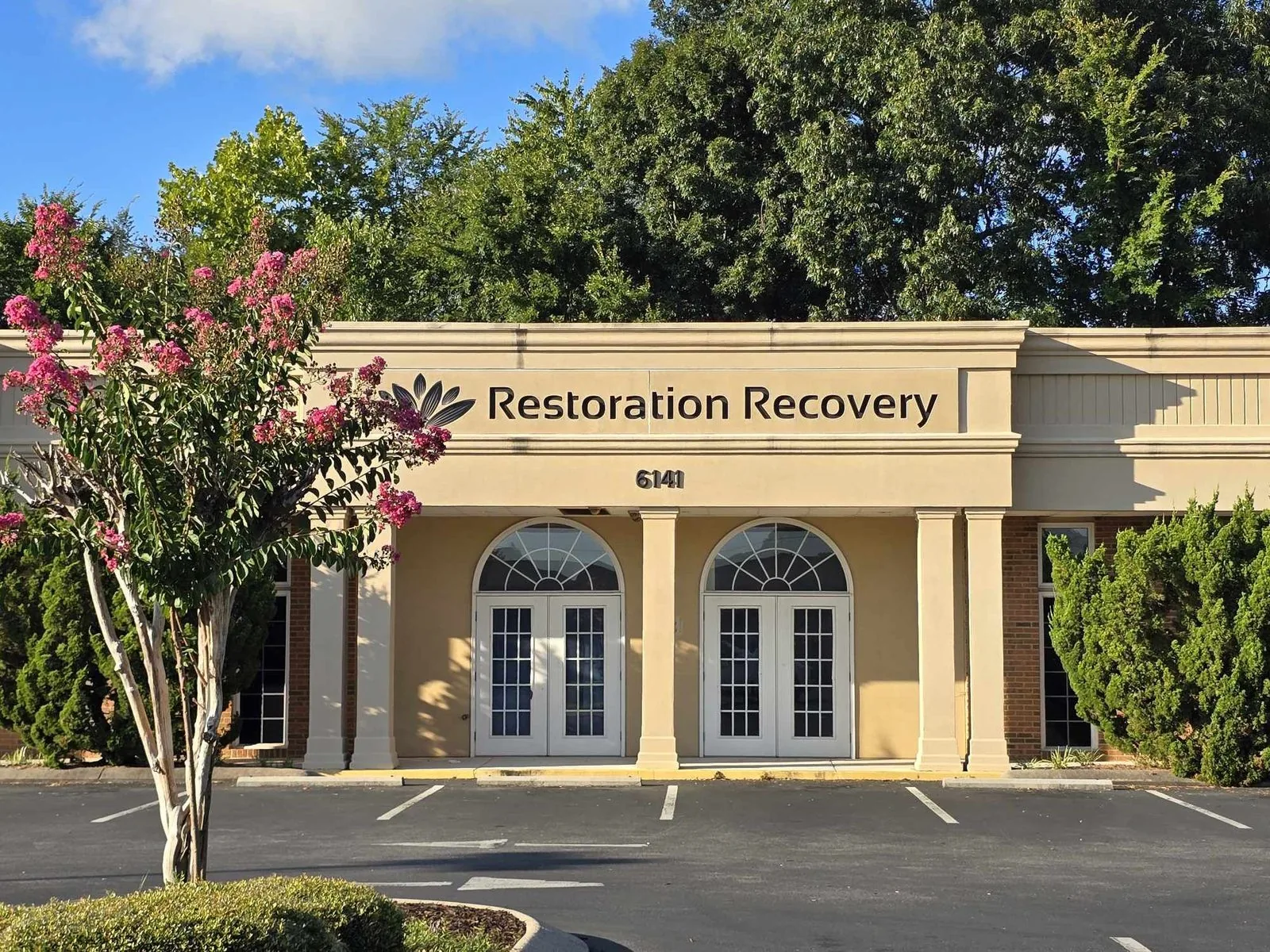
- Chattanooga, TN — 6141 Shallowford Rd, Suite 100, Chattanooga, TN 37421
- Cleveland, TN — Serving Bradley County and surrounding areas
- Soddy-Daisy, TN — Serving Hamilton County north and the Sequatchie Valley
- Ringgold, GA — Serving Catoosa County and Northwest Georgia
Telehealth follow-up visits are available for established patients who have completed their initial in-person evaluation. For directions, hours, and contact information, visit our locations page.

Alcohol Treatment FAQ
What is Vivitrol and how does it work for alcohol use disorder?
Vivitrol is an extended-release injection of naltrexone given once a month. It blocks the opioid receptors that alcohol triggers to create feelings of reward, which means drinking no longer produces the same pleasurable reinforcement. Most patients report fewer and less intense cravings within the first few weeks, and the evidence base shows Vivitrol reduces heavy drinking days and helps patients stay engaged in counseling longer than counseling alone. It is non-addictive and can be stopped at any time without withdrawal.
Do I have to stop drinking before my first visit?
You do not need to be sober to come in and start the evaluation process. Your provider will guide you on pausing drinking so the Vivitrol injection can be started safely, and will work out a timeline with you that fits your situation. If you are drinking heavily every day, stopping suddenly on your own can be medically dangerous — please come in and let a clinician help you plan the safest path forward.
Is Vivitrol like Antabuse?
No. Antabuse (disulfiram) works by making you physically ill if you drink — it is a deterrent. Vivitrol does not make you sick if you drink. Vivitrol blocks the reward signal alcohol sends to the brain, so drinking simply becomes less pleasurable and less reinforcing over time. Restoration Recovery does not use Antabuse. Vivitrol is our medication of choice for alcohol use disorder because the evidence base is stronger and the side-effect profile is more tolerable for most patients.
What happens if I drink while on Vivitrol?
Unlike Antabuse, Vivitrol will not make you sick if you drink — but you will likely notice that alcohol feels less rewarding and less interesting than it used to. This is the point: the medication is designed to reduce the pull of drinking so counseling and peer support can do the long-term work. A lapse while on Vivitrol is not a clinical emergency, but it is a signal to talk with your counselor and provider about adjusting the plan. Lapses are part of many recoveries; they do not mean treatment is failing.
Is alcohol withdrawal dangerous?
For most people with mild-to-moderate alcohol use disorder, outpatient withdrawal is uncomfortable but safe. For patients with a long history of heavy daily drinking, withdrawal can be medically dangerous — delirium tremens (DTs) and alcohol withdrawal seizures are rare but potentially fatal complications that typically appear 24 to 72 hours after the last drink. If you have ever had a withdrawal seizure, DTs, or significant autonomic symptoms during past attempts to stop, tell your provider before you try to stop on your own. We coordinate with regional detox partners when a higher level of care is needed first.
How long do most patients stay on Vivitrol?
There is no fixed stopping date. The research evidence is clearest for durations of three months or longer — that is when reductions in heavy drinking days become most meaningful. Many of our patients continue Vivitrol for six to twelve months, and some stay on it longer while they build out a stable recovery foundation. Vivitrol is non-addictive and can be discontinued at any time without withdrawal, so the decision to taper off is a clinical conversation between you and your provider, not a deadline.
What if I have liver problems?
Heavy alcohol use often damages the liver, so your first-visit workup will include a review of any recent labs and a clinical assessment of liver health. Vivitrol is processed through the liver, so providers use caution in patients with significant liver dysfunction. In most cases, mild-to-moderate liver abnormalities do not prevent Vivitrol — your provider will make that determination based on your history, current labs, and overall clinical picture. If your liver function is severely compromised, we will coordinate with your primary care or hepatology team before starting.
Take the Next Step
Alcohol addiction is survivable, and treatment works. You do not have to figure this out alone — and you do not need to have all the answers before you call. You do not need to be sober before your first appointment. Our team will walk you through the process from your first phone call to your first visit and every follow-up after that.
Same-day appointments are available in most cases. Contact us today to schedule your evaluation, or call 423-498-2000 to speak with our team directly.