
Restoration Recovery outpatient addiction treatment logo
Cleveland, TN · Bradley County

Cleveland Addiction Treatment

Restoration Recovery runs outpatient addiction treatment in Cleveland for Bradley County and the surrounding southeast Tennessee region — Suboxone, Sublocade, Brixadi, Vivitrol, Acamprosate, MAT, individual counseling, peer support, telehealth follow-ups, and integrated hepatitis C care. Our Cleveland clinic is at 2130 Chambliss Avenue NW, Tuesday and Thursday from 9:00 am to 4:30 pm, with same-week appointments and most TennCare and commercial insurance accepted.

CARF CARF Accredited Accepting New Patients Same-Week Appointments Most Insurance Accepted Telehealth Available
The Cleveland picture

What recovery looks like for Bradley County and East Tennessee

Cleveland is the county seat of Bradley County and the practical access point for outpatient addiction treatment across a multi-county corner of southeast Tennessee. This is an industrial and agricultural region — a legacy manufacturing workforce, a large farming and trades economy, and tens of thousands of residents across Bradley, McMinn, Polk, and Meigs Counties for whom a drive to Chattanooga isn't practical for ongoing treatment. Outpatient medication-assisted treatment is where most people in this part of the state begin recovery and where most of them stay. It's the largest and most-evidence-backed lane of addiction care in the country, and it's what the Cleveland clinic has been built around.

The trendline across Tennessee is more encouraging now than at any point in the last decade. TDH's 2023 overdose data showed Tennessee recording year-over-year decreases in drug overdose deaths for the first time since the state began overdose surveillance in 2013. Tennessee's Regional Overdose Prevention Specialist (ROPS) program has distributed more than 854,000 naloxone units statewide between October 2017 and June 2024, with 103,000 documented lives saved — a huge share of that distribution reaching the small towns, rural roads, and first-responder kits across Bradley, McMinn, Polk, and Meigs Counties. Nationally, the CDC's NCHS 2026 Data Brief No. 549 shows synthetic-opioid-involved deaths fell 35.6% in 2024 vs 2023 — the first year-over-year national decrease since synthetic opioids became the dominant cause of overdose death.

What the numbers don't show is the demand still under the surface in Cleveland, Athens, Etowah, Benton, Copperhill, Ducktown, and Decatur. Fewer fatal overdoses doesn't mean fewer people with substance use disorder — it means more of them are surviving long enough to reach for treatment. The conversations our intake team has most weeks involve patients who were revived with Narcan months ago and have been thinking about coming in ever since, patients whose prescribing doctor just retired and left them without refills, patients who quit cold turkey and relapsed inside a week, and patients who've watched a family member die and don't want to be next. That's the Cleveland picture today: a region decisively turning the corner on overdose deaths, and a population of people still quietly making the decision to come in.

Three forces driving the decline

The Tennessee trend isn't the result of a single intervention — it's three things working at once, and all three reach deep into southeast Tennessee.

Naloxone is everywhere. Tennessee's ROPS program has distributed more than 854,000 naloxone units statewide since October 2017, with 103,000 documented lives saved as of June 2024. In Bradley County and the surrounding counties, Narcan is in patrol cars, in first-responder kits, in schools, in harm-reduction backpacks, and increasingly in private homes. A meaningful share of overdose events in the region never reach the EMS or ER record because someone nearby already had naloxone and used it.

The street fentanyl supply is shifting. CDC's NCHS 2026 Data Brief No. 549 shows synthetic-opioid-involved deaths fell 35.6% nationally in 2024 vs 2023 — the first year-over-year decrease since synthetic opioids became the dominant cause of overdose death. The reasons are debated (supply interdiction, adulterant shifts like xylazine replacement, behavior change, increased awareness of counterfeit M30 pills), but the direction is unambiguous. Southeast Tennessee is participating in that national swing.

More people are starting MAT. Buprenorphine prescribing is up across East Tennessee, BlueCare and BCBS-TN are covering MAT more consistently than five years ago, and outpatient clinics across the region — ours included — are seeing more first-visit patients than a year ago. Treatment isn't the only reason Tennessee's overdose numbers are falling, but it's measurably part of it. And in a multi-county region where a local MAT appointment used to mean a 45-minute drive each way, the Cleveland clinic on Tuesday and Thursday is what that part of the state looks like when treatment becomes accessible.

What's still missing from the numbers: the people not yet in treatment but thinking about it. If that's you, the practical path is straightforward. Keep reading.

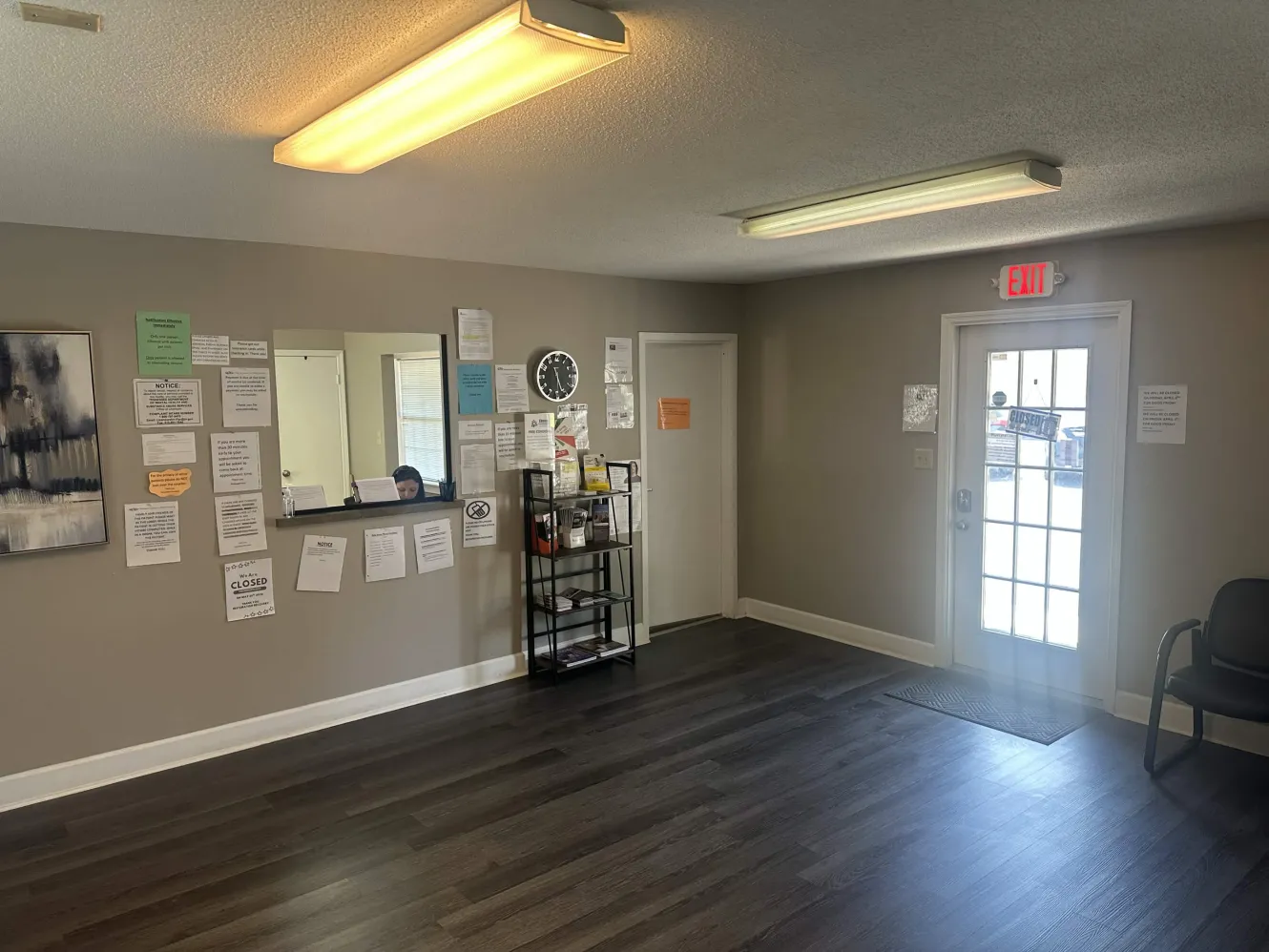
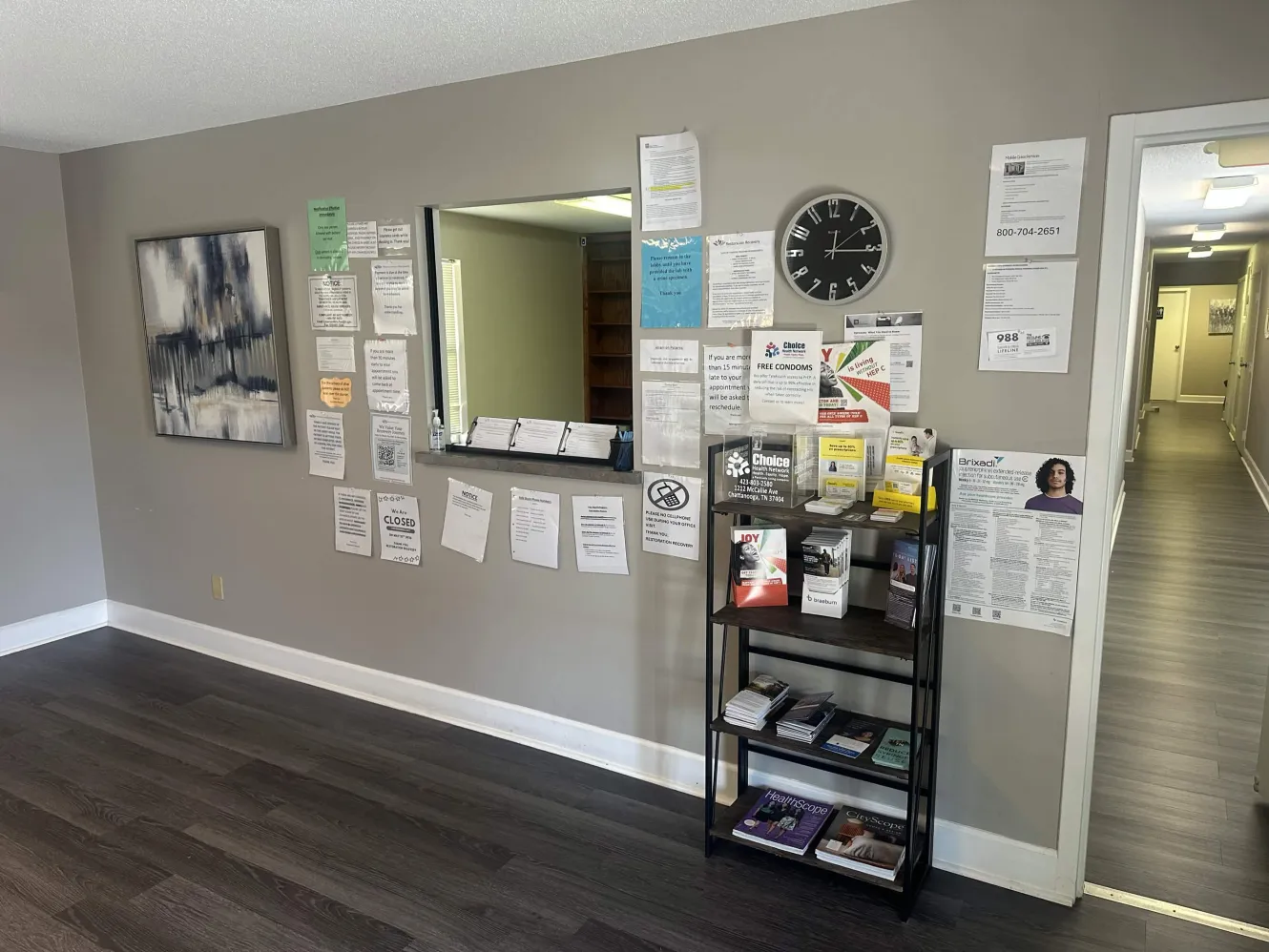
Cleveland Location

Cleveland Clinic

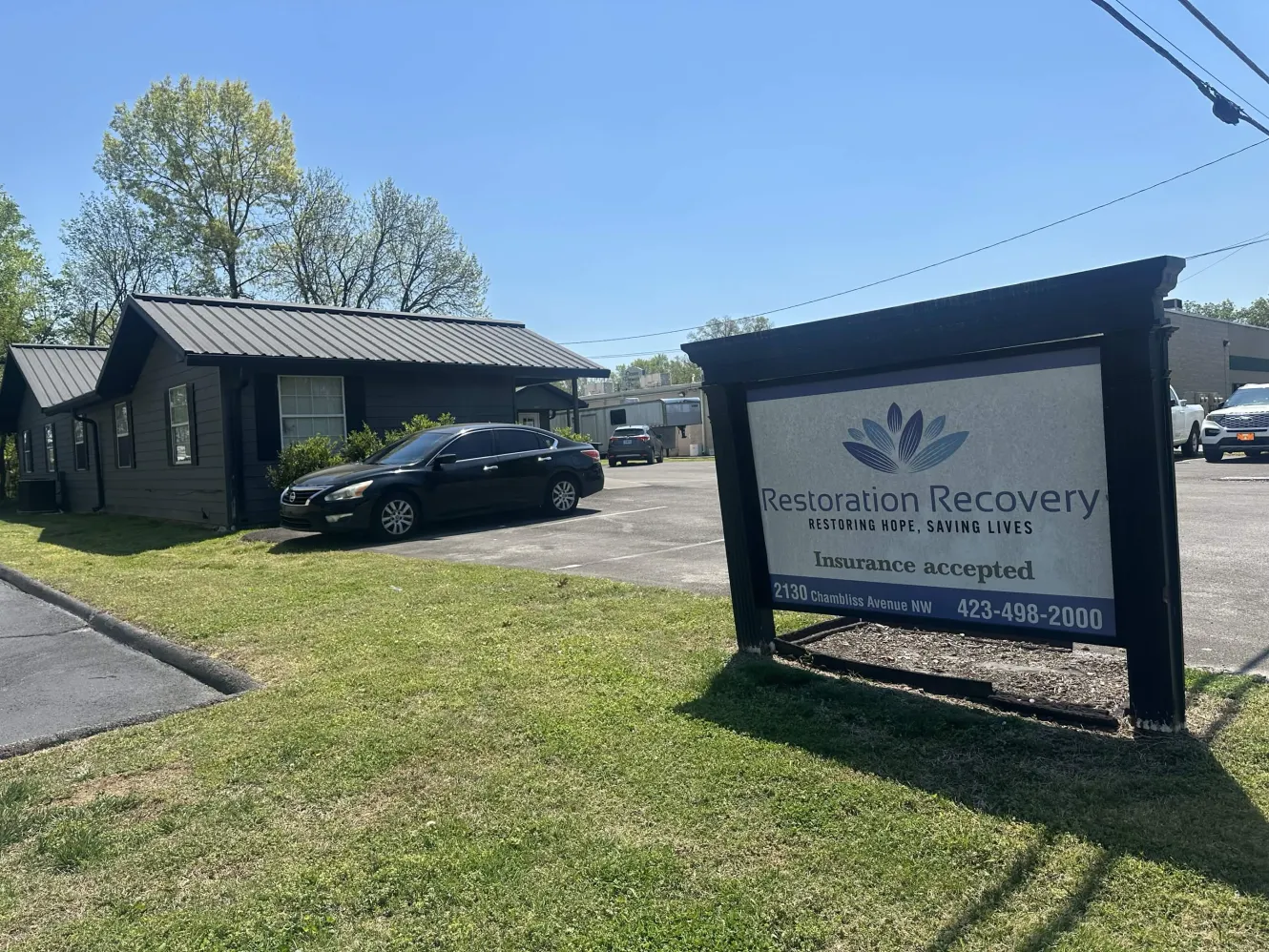
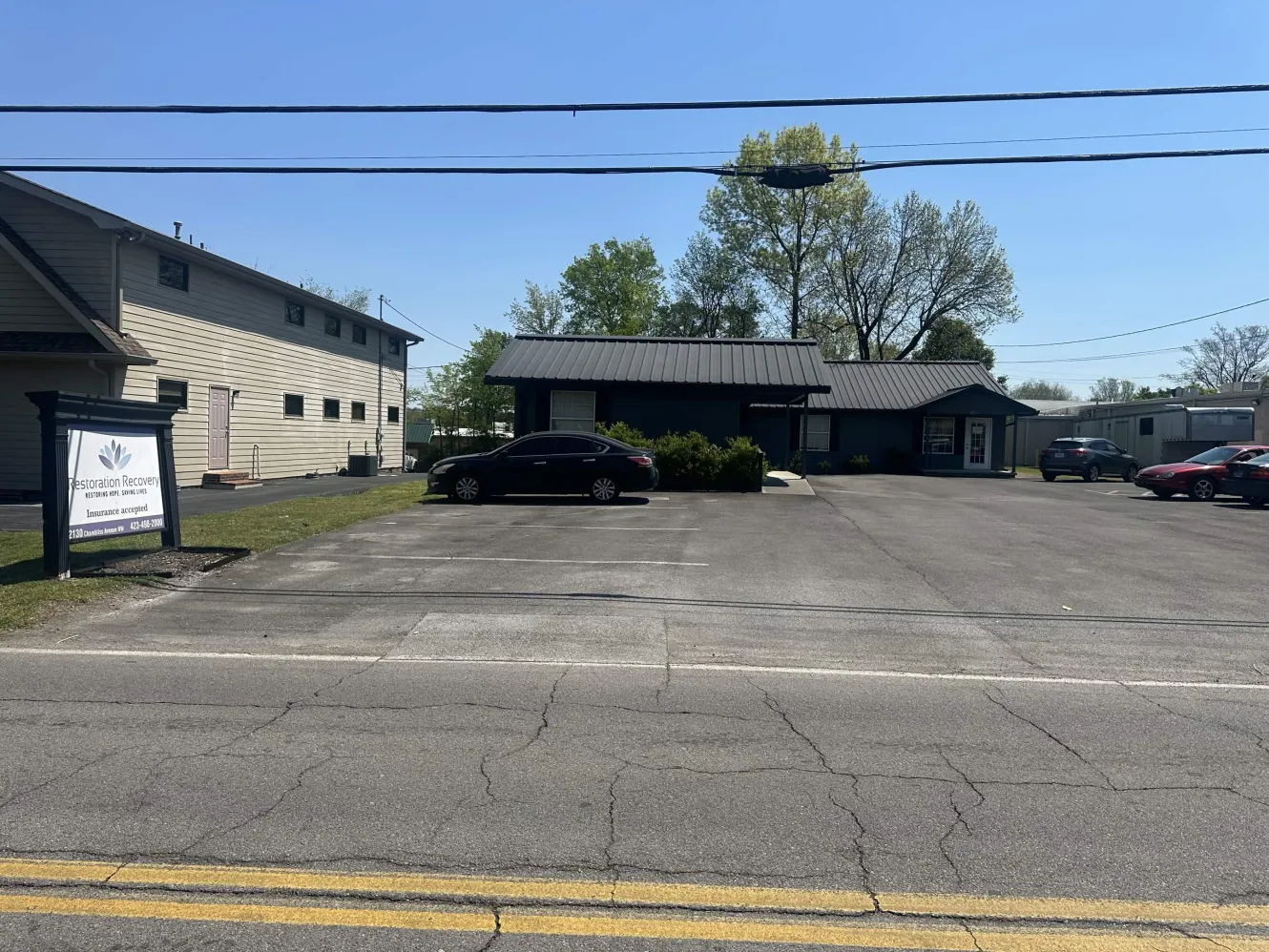
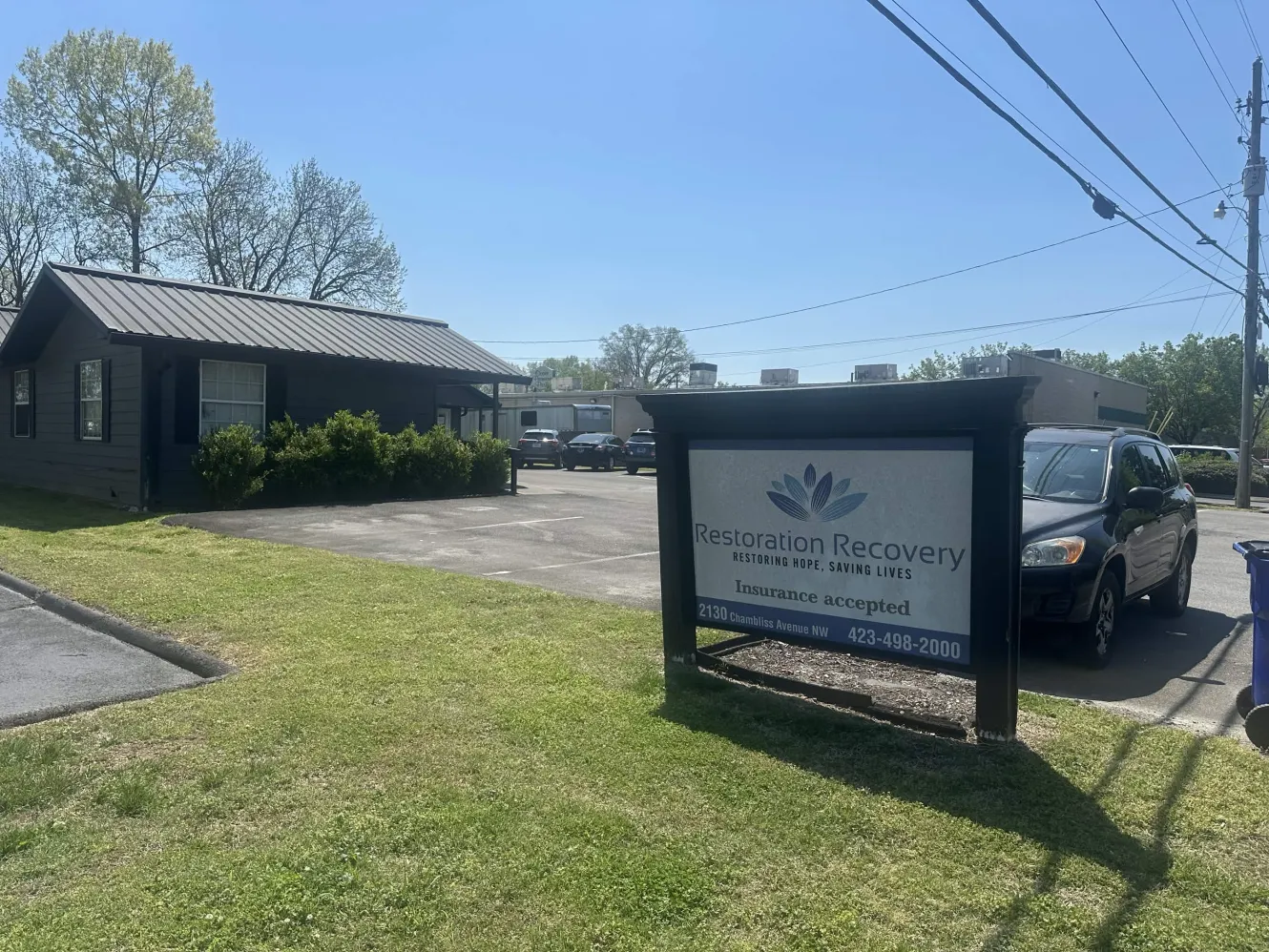
Address2130 Chambliss Avenue NW
Cleveland, TN 37311
HoursTuesday & Thursday · 9:00 am – 4:30 pm
CountyBradley County (Cleveland is the county seat)
Why patients choose us

Why Cleveland Patients Start Treatment at Restoration Recovery

Outpatient medication-assisted treatment is the largest and most-evidence-backed lane of addiction care in the country. For the overwhelming majority of patients with opioid or alcohol use disorder, it's the right place to start — and for most of our patients, it's where treatment ends up, too. Here's what starting at Restoration Recovery's Cleveland clinic looks like in practice.

Same-week appointments on Tuesday and Thursday

Most Cleveland patients are seen within the same week they call. No six-week waitlists, no endless phone tag. The clinic runs Tuesday and Thursday from 9:00 am to 4:30 pm — which means there's a same-week slot on one of those two days for the vast majority of new intakes. Your first visit is a 60-to-120-minute evaluation with intake, counseling, and a doctor — and if clinically appropriate, a same-day Suboxone prescription. Sublocade injections are ordered during the first visit and administered at a follow-up.

Keep your job, your family, your home

Outpatient MAT is built around the life you already have — not the life you'd need to pause to get care. For Cleveland's industrial and manufacturing workforce, for Bradley County tradespeople and shift workers, for Lee University students, for farmers and agricultural workers across McMinn, Polk, and Meigs Counties, the calculation is almost always the same: treatment has to fit the week, not reshape it. You come in for the first visit (one half-day), leave with a prescription, and follow-ups are 15 to 30 minutes each. Most patients never miss more than a few hours of work, and most follow-ups can be done by telehealth after the first in-person visit.

Evidence-based medications for opioid and alcohol use disorder

At Cleveland we prescribe Suboxone (daily film or tablet), Sublocade (monthly injection), Brixadi (weekly, bi-weekly, or monthly injection for flexible MAT cadence), Vivitrol (monthly injection for alcohol use disorder), and Acamprosate (daily oral for alcohol abstinence). Your provider picks the medication that fits your clinical picture and your life — not a one-size-fits-all protocol.

Counseling and peer support alongside medication

Individual counseling and certified peer support specialists are part of every treatment plan at Cleveland. Medication is the clinical backbone, but the counseling and peer support layer is what most patients point to a year in as what kept the momentum going. For patients who need a higher intensity of structured programming than individual counseling provides, the intensive outpatient program (IOP) runs at our Chattanooga flagship clinic — 30 minutes southwest via I-75.

Telehealth follow-ups after your first visit

After the initial in-person evaluation, many follow-up appointments can be done via secure HIPAA-compliant telehealth from your phone, tablet, or computer. For patients coming in from Athens, Etowah, Benton, Copperhill, Ducktown, or Decatur, this is often the deciding factor — the first visit is worth a drive; a 20-minute medication check every 4 to 12 weeks is much easier to fit into the week from your kitchen table than from a highway shoulder.

TennCare, BlueCare, and most commercial insurance accepted

We accept TennCare (BlueCare is a major Bradley County MCO), Medicaid, BlueCross BlueShield of Tennessee, Cigna, Aetna, Ambetter, UnitedHealthcare, Tricare, and most major commercial plans. Most patients pay little to nothing out of pocket for MAT. Verify your coverage before your first visit or call us to check.

Four regional clinics — Cleveland as the Bradley County door

Cleveland is one of four Restoration Recovery clinics, running Tuesday and Thursday at 2130 Chambliss Avenue NW. Our Chattanooga, TN flagship is open Monday through Friday 30 minutes southwest via I-75; our Soddy-Daisy, TN and Ringgold, GA clinics add regional coverage on other weekdays. Same patient, same medical record, same treatment plan across all four doors — call 423-498-2000 and we'll help you pick the clinic that fits your schedule and geography best.

Ready to start? Call 423-498-2000 or request an appointment online — most new Cleveland patients are in the chair within a week.

From your Bradley County neighborhood & beyond

How to get to our Chambliss Avenue clinic from across Bradley County and East Tennessee

The Cleveland clinic sits at 2130 Chambliss Avenue NW, just north of downtown Cleveland and easy to reach from the I-75 / Paul Huff Parkway corridor. Because Cleveland is the practical MAT access point for a multi-county service area — Bradley, McMinn, Polk, and Meigs — most patients are driving in from somewhere other than a Cleveland ZIP. Here's how the main routes work depending on where you're starting from.

Downtown Cleveland & South Cleveland near Lee University (37311 · 37312)

From downtown Cleveland, Lee University, or any of the South Cleveland neighborhoods, Chambliss Avenue NW is a 5- to 10-minute drive. The simplest route is Keith Street or 25th Street north to Chambliss, then west — the clinic is on the right with on-site parking. If you're a Lee student or faculty member, the appointment fits easily inside a class break; most students who start treatment here do so without disrupting their academic schedule.

North Cleveland & Paul Huff Parkway corridor (37312)

From the Paul Huff Parkway area, the North Cleveland retail corridor, or Westside residents closer to I-75 exit 27, the clinic is about 5 to 10 minutes via Paul Huff west to Chambliss south. This is the fastest approach for patients already commuting through the I-75 corridor for work — the appointment fits cleanly into a lunch hour or before-work block.

East Cleveland & the 25th Street / Walmart corridor (37323)

From East Cleveland, the 25th Street Walmart area, or neighborhoods east of the Blythe Ferry area, the clinic is about 10 to 15 minutes via 25th Street west to Keith Street north and then Chambliss. If your regular shopping trips already take you to the 25th Street Walmart, the clinic is a short additional drive on the same route.

McMinn County — Athens, Etowah, Englewood (37303 · 37331 · 37329)

From Athens, take US-11 south or I-75 south — both are 20 to 25 minutes to the Cleveland clinic. From Etowah or Englewood, add another 10 to 15 minutes; I-75 south is usually the fastest path. For McMinn County residents, the Cleveland clinic on Tuesday and Thursday is typically the closest in-person MAT option — shorter than a trip to Chattanooga and on an interstate the whole way.

Polk County — Benton, Copperhill, Ducktown, Turtletown (37307 · 37317 · 37326)

From Benton, US-411 north then US-64 west brings you into Cleveland in about 20 to 25 minutes. From Copperhill, Ducktown, or Turtletown at the far east end of Polk County, the drive via US-64 west is 45 minutes to an hour — one of the longest inbound drives we see, and a common reason Polk County patients shift heavily to telehealth after the first in-person visit. For patients who make that trip, the Tuesday and Thursday schedule usually pairs with a grocery or supply run that would have happened in Cleveland anyway.

Meigs County — Decatur, Georgetown, Ten Mile (37322 · 37336 · 37385)

From Decatur, Hwy 58 southeast to Hwy 60 east brings you into Cleveland in about 30 to 35 minutes. From Georgetown or Ten Mile, add 10 to 15 minutes. Meigs County has limited local MAT access, and the Cleveland clinic on Tuesday and Thursday is often the closest practical in-person option for patients in Meigs — particularly for Sublocade injection follow-ups, which need to be done in person.

Already commuting through Cleveland?

If your work commute already takes you past the Paul Huff / I-75 interchange, the 25th Street corridor, or Chambliss Avenue, your first in-person visit can fit into a longer lunch hour (60 to 120 minutes depending on intake flow). Follow-up visits are shorter — often 15 to 30 minutes — and most are eligible for telehealth after the first in-person visit. Several of our Cleveland patients never make a second in-person trip after month one: the medication management side of recovery moves entirely online once you're stable, and a Sublocade patient only needs to come in once a month for the injection.

How outpatient addiction treatment works at our Cleveland clinic

Restoration Recovery provides outpatient addiction treatment at our Cleveland clinic. You visit for appointments and go home the same day. Treatment is built around your schedule, not the other way around.

Your first visit typically takes 60 to 120 minutes and follows a four-step flow: intake (DSM-5 assessment + COWS score for opioid use disorder), counseling evaluation, a doctor visit, and — if clinically appropriate — a same-day Suboxone prescription (Sublocade injections are ordered during the first visit and administered at a follow-up appointment). Follow-up visits are shorter (usually 15 to 30 minutes) and can often be done via telehealth from home, office, or a quiet parking spot.

What we treat

We provide evidence-based treatment for addiction to opioids and opioid-like substances including heroin, fentanyl, oxycodone (OxyContin, Percocet), hydrocodone (Vicodin, Norco), morphine, codeine, tramadol, and prescription painkillers.

We also treat alcohol use disorder, stimulant dependence (cocaine, methamphetamine, Adderall, Ritalin, Vyvanse), benzodiazepine dependence (Xanax, Klonopin, Ativan, Valium), cannabis use disorder, and co-occurring anxiety and depression that commonly travel alongside addiction.

Kratom & 7-Hydroxymitragynine (7-OH) addiction

Kratom and its concentrated derivative 7-OH are increasingly available and cause opioid-like physical dependence with severe withdrawal symptoms. Tennessee HB1647 (“Matthew Davenport's Law”) passed both chambers in April 2026 and awaits the Governor's signature; regardless of legal outcome, physical dependence is real and treatable. Our providers have experience treating kratom and 7-OH dependence with MAT and clinical support tailored to its distinct withdrawal profile.

Medications we prescribe at Cleveland

  • Suboxone (buprenorphine/naloxone) — daily film or tablet for opioid use disorder. Reduces cravings and prevents withdrawal so you can function normally.
  • Sublocade (extended-release buprenorphine) — once-monthly injection for patients who prefer not to take daily medication. No pills, no films, no daily decisions.
  • Brixadi (extended-release buprenorphine) — weekly, bi-weekly, or monthly injection options for patients who want a flexible MAT cadence and want to skip daily dosing.
  • Vivitrol (naltrexone) — once-monthly injection for alcohol use disorder. Blocks the reward pathway that drives compulsive drinking.
  • Acamprosate — daily oral for alcohol use disorder. Supports sustained abstinence by reducing post-acute withdrawal discomfort.

Insurance & cost

We accept most major insurance plans including TennCare (BlueCare is a major Bradley County MCO), Medicaid, BlueCross BlueShield of Tennessee, Cigna, Aetna, Ambetter, UnitedHealthcare, Tricare, and most other major commercial plans. Most patients pay little to nothing out of pocket. Verify your coverage or call 423-498-2000 before your first visit.

Who we see at the Cleveland clinic

The patterns we see most often at a first visit

The industrial and manufacturing workforce patient

Bradley County has been an industrial and manufacturing hub for decades, and a huge share of our Cleveland patients come from that workforce. The story is often the same: a work injury, a surgery, or a chronic-pain issue led to a legitimate opioid prescription; the prescription stopped or the prescribing doctor retired; physical dependence was already there. For the manufacturing workers, line workers, maintenance teams, tradespeople, and warehouse and logistics staff who make up Cleveland's economic backbone, the question isn't whether treatment is worth doing — it's whether treatment is compatible with showing up to a shift on Monday morning. Outpatient MAT is built specifically for that. One half-day for the first visit, 15 to 30 minutes for follow-ups, and most of those can move to telehealth. Your supervisor doesn't have to know; your coworkers don't have to know.

The multi-county commuter

A meaningful share of our Cleveland patients aren't from Bradley County. They're from Athens, Etowah, Englewood, Benton, Copperhill, Ducktown, Turtletown, Decatur, Georgetown, Ten Mile — McMinn, Polk, and Meigs County residents for whom a 45-minute drive to Cleveland on Tuesday or Thursday is the shortest practical path to in-person MAT. For most of them, the math is the drive versus no treatment at all; the drive wins. Once they're established, most of these patients shift heavily to telehealth for follow-ups, making the inbound trip once a month for a Sublocade injection or once every 1 to 3 months for a medication check.

The BlueCare / BCBS-TN patient

BlueCare is a major Bradley County TennCare MCO, and a large share of employer-sponsored insurance in the manufacturing belt is BlueCross BlueShield of Tennessee. Both cover MAT in-network at Restoration Recovery Cleveland with minimal or no patient cost share. If the financial side of treatment is what's held you back, it's probably not the obstacle you think. Check your coverage.

The kratom or 7-OH patient

Kratom use has grown quickly across Tennessee, and the more concentrated 7-OH products have created a new wave of patients — often younger, often Lee University students or recent graduates, often without any history of other opioid use — who've developed physical dependence without expecting it. Buprenorphine-based treatment (Suboxone, Sublocade, Brixadi) works well for kratom withdrawal. With HB1647 on Governor Lee's desk, more current kratom users are asking what comes next; our answer hasn't changed: don't stop cold turkey, come in for an evaluation, and we'll map out a taper or MAT start that fits your situation.

Frequently asked questions

Is outpatient MAT the right starting point for me?

For most people with opioid or alcohol use disorder, yes. Outpatient MAT at Restoration Recovery is built for patients who can keep living their lives — working, parenting, managing a household — while getting treatment. You come in for a 60-to-120-minute first visit, leave with a prescription if clinically appropriate, and most follow-ups are 15 to 30 minutes. Outpatient is the largest and most-evidence-backed lane of addiction care in the country. A 5-minute phone call at 423-498-2000 will tell you whether it's the right fit for your situation.

Do I need to detox before starting Suboxone?

In most cases, no. For opioid use disorder, you should be in early withdrawal before your first Suboxone dose — your provider will explain exactly what to expect. If your clinical picture calls for medically-supervised withdrawal first, your provider will tell you and help you find the right path in.

How quickly can I start addiction treatment in Cleveland?

Most patients are seen within the same week at our Cleveland clinic. The clinic runs Tuesday and Thursday, 9:00 am to 4:30 pm. Call 423-498-2000 or request an appointment online. Many patients begin Suboxone on their first visit after a 60 to 120 minute evaluation. Sublocade injections are ordered during the first visit and administered at a follow-up.

What insurance do you accept?

We accept TennCare (BlueCare is a major Bradley County MCO), Medicaid, BlueCross BlueShield of Tennessee, Cigna, Aetna, Ambetter, UnitedHealthcare, Tricare, and most major commercial plans. Most patients pay little to nothing out of pocket for MAT. Verify your coverage or call us before your first visit.

What about kratom or 7-OH dependence?

Kratom and concentrated 7-hydroxymitragynine (7-OH) products cause opioid-like physical dependence. Buprenorphine-based treatments (Suboxone, Sublocade, Brixadi) work well for kratom and 7-OH withdrawal. Our clinicians have experience with the distinct kratom withdrawal profile. Don't stop cold turkey — come in for evaluation first.

Is my treatment confidential?

Yes. All treatment at Restoration Recovery is protected by HIPAA and 42 CFR Part 2 — the strictest federal privacy standard for substance use treatment. Your records cannot be shared with family members, employers, or other providers without your written consent.

Can I do most of my appointments via telehealth?

Your first visit is in-person for a DEA-compliant evaluation. After that, many follow-up appointments can be done via secure HIPAA-compliant telehealth from your phone, tablet, or computer — especially useful for Bradley, McMinn, Polk, and Meigs County patients who want to limit drive time between visits.

Should I come to Cleveland or Chattanooga?

For local Bradley, McMinn, Polk, and Meigs County residents, the Cleveland clinic on Tuesday and Thursday is usually the right fit — shorter drive, same medical record, same treatment plan. Choose Chattanooga if you need Group IOP or behavioral health and psychiatric care (not offered at Cleveland), or if you need a weekday other than Tuesday or Thursday. Call 423-498-2000 and we'll help you pick based on your location and schedule.

Other Restoration Recovery locations

In addition to our Cleveland clinic, Restoration Recovery operates three other outpatient locations across Tennessee and Georgia.

  • Chattanooga, TN — 6141 Shallowford Rd, Suite 100, Chattanooga, TN 37421 (Mon – Fri, 9am–4:30pm) — flagship clinic, 30 minutes southwest via I-75
  • Soddy-Daisy, TN — 210 Walmart Drive, Suite 100, Soddy-Daisy, TN 37379 (Mon & Wed, 9am–4:30pm)
  • Ringgold, GA — 4962 Battlefield Pkwy, Ringgold, GA 30736 (Fri, 9am–4:30pm)

View all locations →

A place for hope & healing

Starting is the
hardest part.
We’ll take it from there.

Same-week appointments available on Tuesday and Thursday. Confidential from your first call.