


Signs of Hydrocodone Use Disorder
Hydrocodone use disorder is a medical condition, not a character flaw. It also isn’t always loud. The prescription-opioid version of opioid dependence often looks like a person holding a normal-looking life together while the pills quietly run the math in the background. Common signs include:
- Tolerance and dose escalation. The pills that worked when they were first prescribed don’t anymore — or the prescribed amount wears off sooner than it used to. Doses creep up. Two becomes three becomes four. The total daily amount is often well above what was originally prescribed.
- Running out early. The 30-day prescription lasts 22 days. Then 18. Then 14. A pattern of frequent “lost” prescriptions, “stolen” bottles, or early refill requests is one of the clearest signals clinicians see.
- Doctor-shopping or multi-sourcing. Visiting more than one provider to keep supply steady — urgent-care clinics, ER visits, a dentist, a pain clinic, a family doctor — often without each one knowing about the others. Since Tennessee’s CSMD database requires providers to check prescription history before writing Schedule II opioids, this pattern is now far easier to detect than it used to be, which often pushes patients toward the next sign.
- Switching to cheaper or stronger alternatives. When the prescription access closes or becomes too expensive, patients commonly switch to illicit pills (“30s,” “Roxies,” off-the-street Lortab), to heroin, or — increasingly and unknowingly — to fentanyl. The same person who never dreamed they’d buy drugs on the street can end up doing exactly that, because the alternative is withdrawal.
- Withdrawal fear driving use. Taking pills not for pain, not for any real feeling — just to not be sick. The morning dose before work. The extra dose before a family event because you know what 8 hours without one feels like. Life starts getting scheduled around dose timing.
- Loss of control. Deciding you’ll only take two today and taking four. Deciding you’ll skip today and not being able to. Making and breaking the same “last pill” promise to yourself or a spouse for months or years.
- Hiding use. Taking pills somewhere no one will see. Lying about how many are left. Emptying part of a bottle into a different container. This is often the first sign a family member notices — the behavior around the pills, not the pills themselves.
- Liver or GI symptoms from the combination ingredient. High chronic doses of Vicodin, Lortab, or Norco also deliver high chronic doses of acetaminophen. Persistent fatigue, right-upper-quadrant abdominal pain, nausea, or jaundice can reflect acetaminophen-related liver strain and should be worked up. This is a medical concern distinct from the opioid dependence itself.
- Continued use despite consequences. Using even when it’s costing you — financially, at work, in relationships, in health, in court. Continued use in the face of mounting consequences is one of the DSM-5 criteria for opioid use disorder.
You do not have to meet every item on this list. The formal DSM-5 threshold for opioid use disorder is 2 of 11 criteria in a 12-month period. Mild, moderate, and severe are all treatable — and treatment earlier is almost always easier than treatment later.
Hydrocodone Withdrawal: Timeline and Symptoms
Hydrocodone withdrawal is uncomfortable. For most healthy adults it is not life-threatening the way alcohol or benzodiazepine withdrawal can be, but it can be severe enough that many patients relapse simply to stop the symptoms. That’s not weakness. That’s physiology, and medication-assisted treatment is designed specifically to prevent it rather than force you to push through it.
Hydrocodone is considered a short-to-medium-acting opioid. Its half-life is roughly 3.8 hours, which means withdrawal onset is faster and more predictable than with longer-acting opioids or with lipid-stored opioids like fentanyl. A general timeline looks like this:
- First 6 to 12 hours after last dose. Early symptoms: anxiety, restlessness, irritability, muscle aches, yawning, watery eyes, runny nose, sweating, and craving. Sleep often becomes difficult the first night. This phase typically hits faster than fentanyl withdrawal (which can take 8–24+ hours to begin).
- Day 1 to day 3 (peak). Full symptom picture: nausea, vomiting, diarrhea, abdominal cramping, chills alternating with sweating, dilated pupils, goosebumps (“kicking”), muscle and bone aches, profound fatigue, and intense cravings. Heart rate and blood pressure rise. Insomnia persists. This is the window when most unmedicated attempts to stop fail.
- Day 3 to day 7. Acute GI symptoms gradually subside. Appetite may start to return. Sleep is still fragmented. Cravings remain strong. Low mood and anxiety often peak here as the body re-regulates.
- Week 2 and beyond (post-acute withdrawal). Low energy, difficulty concentrating, mood changes, anhedonia, and intermittent cravings can last weeks to several months. This is not a sign that treatment isn’t working — it’s the nervous system slowly re-calibrating after years of opioid exposure. MAT dramatically shortens and softens this phase.
Two additional clinical considerations matter for hydrocodone patients specifically:
- Combination-product considerations. If you’ve been taking high-dose Vicodin, Lortab, or Norco chronically, you’ve also been taking high-dose acetaminophen. Our intake providers routinely review liver function for patients in this situation and can coordinate a liver panel when clinically appropriate. Starting MAT stops the ongoing acetaminophen exposure — which is itself a medical benefit.
- Induction timing. Starting buprenorphine (Suboxone, Sublocade, Brixadi) too early after your last hydrocodone dose can trigger precipitated withdrawal — a sudden, severe worsening of symptoms. For hydrocodone, the target induction window is typically when the COWS (Clinical Opiate Withdrawal Scale) score reaches a moderate level, usually 6–24 hours after last use. For patients who have also been exposed to fentanyl (via counterfeit pills), the window is often longer — 36–72 hours — because fentanyl clears more slowly. Your provider measures COWS at intake to time induction correctly.
How We Treat Hydrocodone Addiction
At Restoration Recovery, hydrocodone use disorder is treated with a combination of medication and psychosocial support. Every one of our opioid patients is evaluated for medication-assisted treatment because the evidence supporting MAT is overwhelming — more than a 50% reduction in fatal overdose risk, significantly longer retention in treatment, and sharply lower rates of illicit opioid use. The medication options available to you are:
- Suboxone (daily film or tablet). A combination of buprenorphine and naloxone taken sublingually — available as a dissolving film or tablet placed under the tongue. Buprenorphine is a partial opioid agonist: it stabilizes cravings and prevents withdrawal at the same opioid receptors hydrocodone was acting on, but with a ceiling effect on euphoria and respiratory depression. For many Rx-opioid-first patients, same-day Suboxone induction is clinically appropriate and dramatically easier than a cold-turkey attempt. The naloxone component is inactive when the medication is taken correctly; it’s included to discourage misuse via injection.
- Sublocade (monthly injection). A long-acting extended-release form of buprenorphine administered once per month at our clinics. Many patients who have started with Suboxone eventually transition to Sublocade because it removes the daily decision-making around taking medication, holds steadier blood levels throughout the month, and — importantly for patients whose dependence began with pill-taking — removes the pill ritual entirely. Per FDA labeling, Sublocade requires at least 7 days of transmucosal buprenorphine (Suboxone) before the first injection.
- Brixadi (weekly, bi-weekly, or monthly injection). Another extended-release buprenorphine injection, with flexible dosing intervals. Brixadi’s weekly and bi-weekly options can be helpful for patients who are still finding the right maintenance dose, or who want a shorter interval than Sublocade’s monthly cadence. Like Sublocade, Brixadi is ordered per-patient and administered at a follow-up visit once the medication arrives.
Medication alone is effective, but medication paired with behavioral support is more effective. We pair MAT with:
- Individual counseling with licensed therapists experienced in substance use disorder. Counseling for prescription-opioid patients often surfaces material specific to this pathway — the original pain event, the relationship with the original prescribing provider, the shame of needing pills to function, the impact on the family of years of hidden use.
- Certified peer support from specialists who have lived experience with recovery themselves. Many of our peers have walked the same Rx-to-street-to-recovery arc our patients are walking, and that conversation can unlock what a clinical conversation sometimes can’t.
- Intensive outpatient programming (IOP) for patients who benefit from a more structured treatment schedule — delivered in a group format by design. IOP is the only group-setting service we offer, and it’s a separate, structured program rather than an informal group activity.
- Integrated care for co-occurring conditions, including anxiety, depression, trauma, chronic pain, and hepatitis C. For Rx-opioid patients, chronic pain and anxiety are particularly common and directly relevant to how long people stay in treatment; we address them, not hand them off.
Restoration Recovery is an outpatient clinic. We do not provide medical detox or residential care. For most patients with hydrocodone use disorder, a formal inpatient detox is not required — medication-assisted treatment can begin at the appropriate COWS-score window after last use, under clinical supervision. For patients who need a higher level of care before starting outpatient MAT, we coordinate with regional referral partners.
Chronic Pain Considerations
A large share of our hydrocodone patients arrive with a legitimate chronic pain history, and many of them have been told somewhere along the way that starting MAT means giving up pain management. That’s not how the clinical picture actually works. Buprenorphine — the active medication in Suboxone, Sublocade, and Brixadi — is itself a potent analgesic. As a partial opioid agonist, it provides real, measurable pain relief, and plenty of our patients report their pain is better controlled on buprenorphine than it was on escalating hydrocodone, largely because their nervous system stops cycling through mini-withdrawal between doses.
When a patient has an active pain management relationship with another provider, we coordinate rather than compete. The goal is one consistent plan between us, the pain provider, and the patient — not two parallel medication lists that contradict each other. If you’ve been told you have to choose between recovery and pain management, that isn’t the clinical reality. It’s a conversation worth having at intake.
What to Expect at Your First Appointment
Your first visit typically lasts 60 to 120 minutes and follows a four-step clinical flow:
- Intake. You’ll complete paperwork and a clinical intake. For opioid use disorder, this includes a DSM-5 assessment to confirm the diagnosis and its severity (mild, moderate, or severe based on how many of the 11 criteria you meet in a 12-month period), and a COWS (Clinical Opiate Withdrawal Scale) score to measure your current withdrawal state. The COWS score guides whether you’re clinically ready to begin buprenorphine the same day without risking precipitated withdrawal.
- Counseling. You’ll meet with a counselor to discuss your substance use history — including the original prescription pathway if that’s how your use started — any previous treatment, any co-occurring mental health conditions, and your personal recovery goals. This is also where any active pain management relationship or concern gets documented.
- Doctor evaluation. A medical provider reviews your intake, COWS score, and counselor notes. They walk you through the medication options (Suboxone, Sublocade, Brixadi), explain onset, side effects, and timing, and answer your questions. For patients with long Vicodin/Lortab/Norco histories, this is also where any liver function or acetaminophen-related concern is addressed.
- Prescription (and injection ordering, if chosen). If clinically appropriate, you leave the same day with a Suboxone prescription. If you prefer the extended-release route, your provider will order Sublocade or Brixadi during this visit — we don’t stock injections on-site — and you’ll continue on Suboxone as a bridge. Your injection appointment is scheduled for a follow-up once the medication arrives, typically after a short stabilization period on Suboxone (Sublocade’s FDA label requires at least 7 days of transmucosal buprenorphine before the first injection).
Bring a valid photo ID, your insurance card if applicable, and a list of any medications you currently take (including the hydrocodone product and dose, the original prescribing reason, and any pain medications or benzodiazepines). If you’d like to see the full process walked through step by step before your visit, our guide on what to expect at your first Suboxone appointment covers it in more detail.
Why Medication-Assisted Treatment Works for Hydrocodone
For many patients, the fear of withdrawal is what keeps them stuck. MAT removes that barrier — the medication prevents withdrawal rather than forcing patients to endure it — which is why it works when willpower alone doesn’t.
Medication-assisted treatment is endorsed as the standard of care for opioid use disorder, including prescription opioid use disorder specifically, by the Substance Abuse and Mental Health Services Administration (SAMHSA), the National Institute on Drug Abuse (NIDA), the American Society of Addiction Medicine (ASAM), and the World Health Organization. Prescription opioid use disorder was actually the population in which buprenorphine was most extensively studied prior to the illicit-fentanyl era — the original large trials (COMBINE, POATS, and others) recruited patients whose dependence began with pills, not injection use. For this population, the evidence is especially deep.
Large-scale evidence shows that patients with opioid use disorder who receive buprenorphine-based MAT:
- Experience more than a 50 percent reduction in the risk of fatal opioid overdose
- Stay in treatment significantly longer than those receiving counseling alone
- Report fewer cravings and lower rates of illicit opioid use
- Are more likely to maintain employment and stable housing during recovery
- Have lower rates of infectious disease transmission associated with injection use
There’s a specific clinical advantage for hydrocodone patients that’s worth naming. Because hydrocodone is shorter-acting and more predictable than fentanyl, buprenorphine induction is often smoother for pill-first patients. The COWS window is tighter and more reliable; the transition to steady-state buprenorphine is typically faster; and the subjective experience of starting treatment is usually described as relief within hours rather than the rougher, longer induction sometimes required after long fentanyl exposure. For patients who’ve been quietly dreading this step for months or years, that’s often the most surprising part of the first day on medication.
MAT is not a replacement of one drug with another. Buprenorphine’s partial-agonist pharmacology gives it a ceiling effect on euphoria and respiratory depression that full agonists like hydrocodone, oxycodone, and fentanyl don’t have. Blood levels stabilize, the daily cycle of peak-and-crash disappears, and the neurological noise that drove continued use recedes. Patients can engage in counseling, rebuild relationships, and return to work without the daily math of craving, dosing, running out, and withdrawing.
Why Restoration Recovery
Choosing where to start treatment matters. Restoration Recovery brings together the clinical depth, the practical access, and the kind of care that keeps patients in treatment long enough to get well.
- Chattanooga’s longest-running outpatient addiction treatment clinic. Our providers have decades of clinical experience treating opioid and substance use disorders in Southeast Tennessee — including through the full arc of the prescription-opioid era, the heroin transition, and now the fentanyl contamination of the pill supply. We’ve seen every version of this.
- CARF accredited. The Commission on Accreditation of Rehabilitation Facilities is the gold standard for outpatient addiction care — our accreditation is reviewed on an ongoing basis, not a one-time stamp.
- Four clinic locations across Southeast Tennessee and North Georgia, with telehealth follow-up available for established patients.
- Most major insurance accepted — TennCare, Georgia Medicaid, commercial plans, Medicare, and supplemental Medicare. Our patient services team verifies your benefits before your first visit so there are no surprises.
- Same-day Suboxone appointments in most cases. You don’t have to wait weeks to start.
- One integrated team. Medical providers, counselors, certified peer support specialists, and psychiatric care under one roof — not parallel referral tracks that leave you coordinating your own care. For patients with co-occurring chronic pain, anxiety, depression, or hepatitis C, this matters.
- Licensed in both states. Licensed in Tennessee and Georgia, HIPAA compliant, 42 CFR Part 2 compliant — your treatment is confidential from the first phone call.
Insurance and Access
Restoration Recovery accepts most major insurance plans, including TennCare, Georgia Medicaid, a broad range of commercial plans, and Medicare (plus supplemental Medicare plans). Our patient services team can verify your benefits before your first appointment so you know exactly what to expect in terms of cost.
If you do not have insurance, contact us anyway. We can help you explore options and will walk you through self-pay pricing. For a full list of accepted carriers and details on the verification process, visit our insurance page.
Four Clinic Locations
We operate four outpatient clinics across Southeast Tennessee and North Georgia. All locations offer hydrocodone addiction treatment with same-day appointments in most cases:
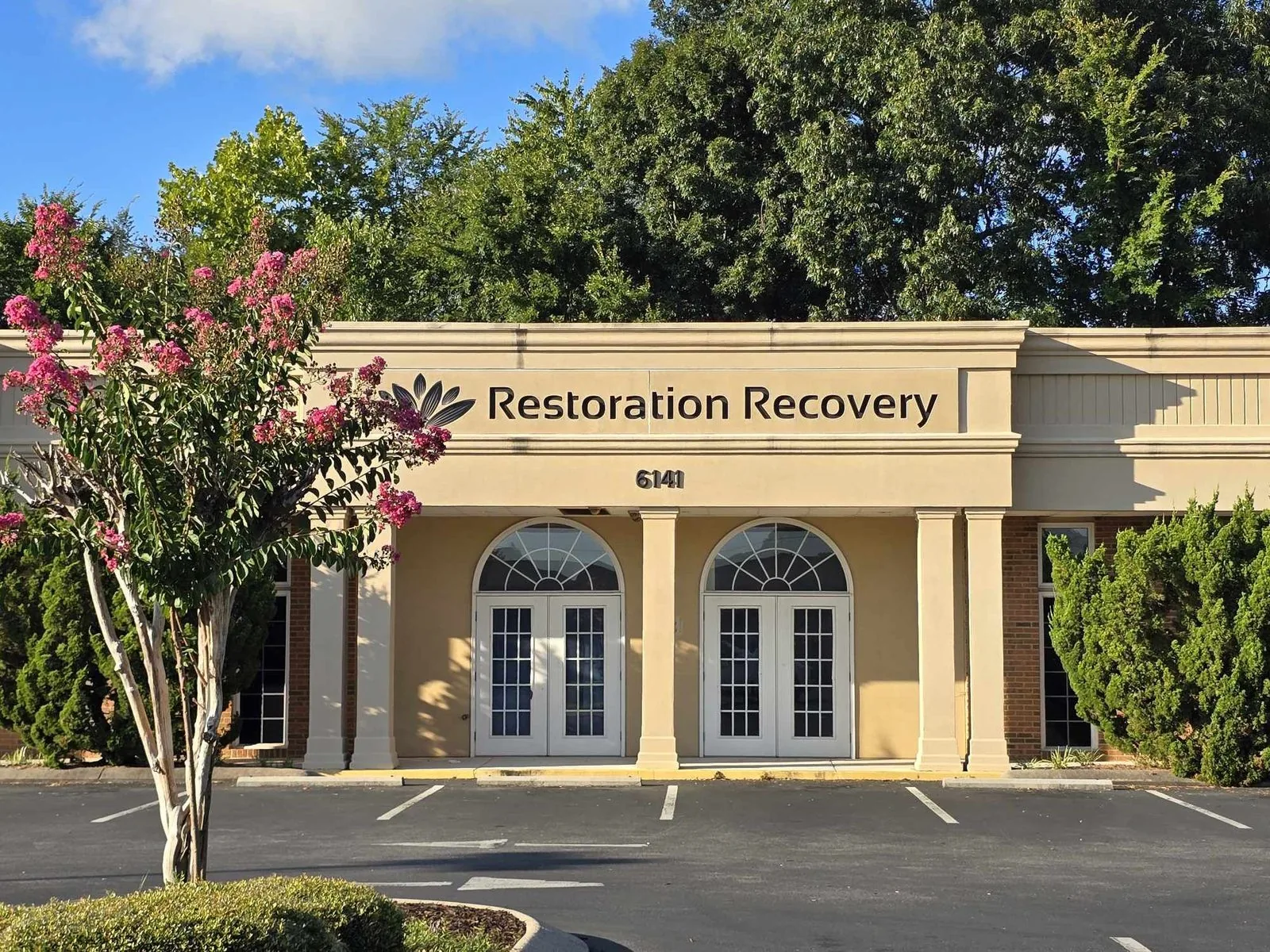
- Chattanooga, TN — 6141 Shallowford Rd, Suite 100, Chattanooga, TN 37421
- Cleveland, TN — Serving Bradley County and surrounding areas
- Soddy-Daisy, TN — Serving Hamilton County north and the Sequatchie Valley
- Ringgold, GA — Serving Catoosa County and Northwest Georgia
Telehealth follow-up visits are available for established patients who have completed their initial in-person evaluation. For directions, hours, and contact information, visit our locations page.
Frequently Asked Questions
What if I’ve only been taking pills, not using fentanyl or heroin?
Prescription-pill patients are a large share of our opioid caseload. Hydrocodone use disorder doesn’t have to progress to fentanyl or heroin to justify treatment — if you’re dependent on pills, you qualify. Many of our patients have never touched an illicit opioid in their lives, and the clinical approach is the same evidence-based MAT with Suboxone, Sublocade, or Brixadi. Induction is often smoother for pill-first patients than for long-term fentanyl patients, because hydrocodone is shorter-acting and its clearance is more predictable.
Is hydrocodone withdrawal less severe than fentanyl withdrawal?
On balance, yes. Hydrocodone is shorter-acting (onset of withdrawal 6–12 hours after last dose versus 8–24+ hours for fentanyl), the peak phase is often shorter, and the clinical picture is more predictable. The peak discomfort at day 1–3 is still significant — body aches, sweats, nausea, diarrhea, anxiety, insomnia — and it’s more than enough to make an unmedicated quit attempt fail. MAT with buprenorphine prevents that phase rather than forcing you through it, and starting Suboxone same-day is often possible once your COWS score is in the right range.
Can I take Suboxone if I’ve only been using pills for a short time?
Yes, if a DSM-5 assessment confirms opioid use disorder. Duration of use isn’t the clinical threshold — meeting 2 or more of the 11 DSM-5 criteria in a 12-month period is. Physical dependence can develop in a matter of weeks of daily use, and plenty of hydrocodone patients come in after only a few months of escalating use and meet criteria. A short history doesn’t disqualify you from MAT, and catching dependence early almost always means a shorter, smoother recovery path than catching it years later.
I have chronic pain — will MAT make my pain worse?
Usually the opposite. Buprenorphine is itself a potent analgesic — it partially activates the same opioid receptors as hydrocodone but without the euphoria, the same overdose risk, or the daily peak-and-crash cycle. Many chronic-pain patients find their pain is better controlled on buprenorphine than it was on escalating hydrocodone doses, because their nervous system is no longer cycling through mini-withdrawal between doses. When appropriate, we coordinate with your pain provider so there’s one consistent plan rather than two contradicting medication lists.
What about counterfeit M30 pills — how do I know if the pills I’ve been using have fentanyl?
Assume they do. Counterfeit M30 pills — pressed to look like oxycodone 30mg tablets, and in some cases like hydrocodone products — are the dominant illicit pill supply nationally. In 2023, U.S. law enforcement seized roughly 115 million counterfeit pills, accounting for about half of all fentanyl seizures that year. Approximately 6 in 10 seized counterfeit pills in 2022 contained a potentially lethal dose (at least 2 mg of fentanyl). If you’ve been buying pills outside of a pharmacy — any pills, from anyone — fentanyl exposure should be assumed. This doesn’t change the treatment path, but it changes the urgency: the sooner you start MAT, the sooner that exposure stops.
Do I have to stop pills cold turkey before my first visit?
No. You shouldn’t stop cold turkey on your own, and you don’t need to be in full-blown withdrawal when you call. The COWS assessment at your first visit measures your current withdrawal state and tells the provider whether you’re ready to start buprenorphine that day. For hydrocodone specifically, the target induction window is typically 6–24 hours after your last dose — your provider will guide the exact timing at intake. Starting too early risks precipitated withdrawal; your provider’s job is to make sure that doesn’t happen.
Take the Next Step
Hydrocodone addiction is survivable, and treatment works — whether your use started with a Vicodin prescription after surgery, a Lortab script for back pain that never quite went away, or somewhere messier than that. You don’t have to figure this out alone, you don’t need to have all the answers before you call, and you don’t need to be clean before your first appointment. Our team will walk you through the process from your first phone call to your first visit and every follow-up after that.
Same-day appointments are available in most cases. Contact us today to schedule your evaluation, or call 423-498-2000 to speak with our team directly.