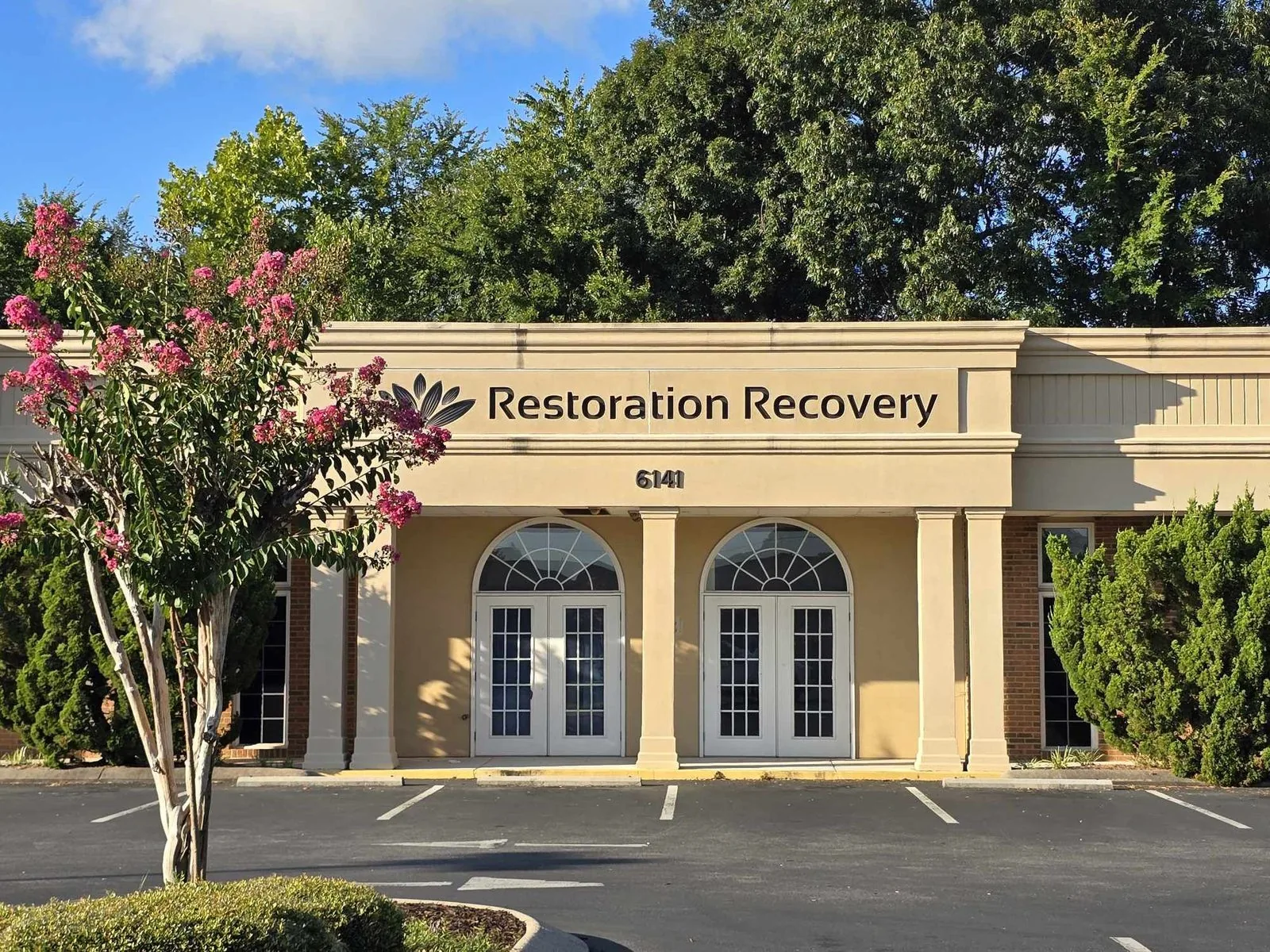
Evidence-based outpatient care for fentanyl use disorder — combining medication-assisted treatment and counseling at four clinics across Southeast Tennessee and North Georgia. Built for the reality that most fentanyl exposure now comes through counterfeit pills and a contaminated supply, and that starting buprenorphine safely takes a different plan than it did in the heroin era.
You don’t have to be in withdrawal to callConfidential from your first call
CARF AccreditedServing Chattanooga since 2017
CARF AccreditedLicensed in Tennessee & GeorgiaSame-day appointments availableConfidential from your first call
What Is Fentanyl?
Fentanyl is a synthetic opioid originally developed for severe pain management in medical and surgical settings. It is 50 to 100 times more potent than morphine, which is why even very small amounts can cause serious harm. Prescribed forms include transdermal patches, lozenges, and intravenous formulations used in hospitals and hospice care.
The overwhelming majority of fentanyl-related harm today does not come from prescribed medication. Illicitly manufactured fentanyl — often produced overseas and trafficked into the United States — has become the leading driver of opioid overdose deaths nationwide since 2016. It is frequently mixed into counterfeit pills designed to look like oxycodone (the familiar round blue “M30” is the most common), Xanax, or Adderall, and it contaminates supplies of heroin, cocaine, and methamphetamine. In 2024, the DEA seized more than 55 million fentanyl-laced counterfeit pills along with nearly 8,000 pounds of fentanyl powder — over 380 million potentially lethal doses by the agency’s own estimate. Many people who develop fentanyl use disorder were first exposed to it without knowing.
Clinically, fentanyl behaves differently from other opioids in ways that matter for treatment. It is highly lipophilic — it accumulates in muscle and fat tissue with regular use and takes roughly seven days to fully clear the body, compared to less than a day for heroin. That tissue storage is the reason why “wait until you’re in withdrawal and then start treatment” — the rule that worked in the heroin era — often fails for fentanyl users. The Clinical Opiate Withdrawal Scale (COWS) score that reliably predicted safe buprenorphine induction for heroin users does not reliably predict it for fentanyl. A 2024 JAMA Network Open cohort of 226 hospitalized patients found that 16.3% of fentanyl users developed precipitated withdrawal during standard buprenorphine initiation — and pre-induction COWS score was not associated with which patients would. That is why the way fentanyl is treated clinically has evolved (more on that below).
Overdose presents differently too. Fentanyl’s speed of onset can cause “wooden chest syndrome” — a rapid rigidity of the chest wall that impedes breathing even before a bystander can recognize the overdose. The share of EMS overdose patients requiring more than one dose of naloxone doubled from 14% in 2012 to 28% in 2020 nationally, a trend that tracks the rise of fentanyl in the drug supply. Standard 4 mg intranasal Narcan still reverses the overwhelming majority of cases — a CDC MMWR analysis of 354 law-enforcement reversals reported 99% survival. But rescue breathing, multiple doses, and calling 911 are increasingly important.
Tennessee has been hit especially hard, and the data for Southeast Tennessee is worth seeing clearly.
Hamilton County fatal overdoses
First half of year, 2023 – 2025
105H1 2023
81H1 2024
66H1 2025↓ 38% vs 2023
Total overdoses dropped from 105 (H1 2023) to 66 (H1 2025) — a 38% decrease in two years.
Hamilton County fentanyl-attributed deaths
First half of year, 2023 – 2025
77H1 2023
61H1 2024
42H1 2025↓ 45% vs 2023
Fentanyl-attributed deaths in Hamilton County fell 45% from H1 2023 to H1 2025.
The Tennessee & Hamilton County Picture
Fentanyl is the driver of overdose mortality both statewide and locally — and the numbers are finally moving in the right direction.
2,720 of Tennessee’s 3,616 overdose deaths involved fentanyl in 2023 (75%) — roughly three-quarters of every fatal overdose in the state involved fentanyl specifically.
206 fatal overdoses in Hamilton County in 2023, down from 226 in 2022. Fentanyl has been the primary driver of Hamilton County overdose deaths every year since 2018.
3,616 total Tennesseans died from drug overdose in 2023 — a 5.5% decrease from 2022, and the first year-over-year decrease since Tennessee began overdose surveillance in 2013.
Stimulant-and-opioid polysubstance is the Tennessee pattern. In 2023, 79% of stimulant-involved overdose deaths in Tennessee also involved an opioid, and 97% of those specifically involved fentanyl. In practice, a stimulant bought on the street now frequently contains fentanyl, even when no opioid is expected.
Nationally, synthetic-opioid overdose deaths fell 35.6% between 2023 and 2024 (72,776 → 47,735 per CDC NCHS) — the steepest single-year decline on record since illicit fentanyl became the dominant driver.
The trend is shifting locally too. Naloxone administrations by Hamilton County EMS fell roughly 10% from 2024 to 2025, and suspected overdose-related emergency room visits dropped from 1,003 (H1 2023) to 797 (H1 2025). Tennessee’s Regional Overdose Prevention Specialists (ROPS) program distributed approximately 854,000 naloxone units between October 2017 and June 2024, with more than 103,000 documented lives saved through voluntary reporting alone — and Narcan has been available over-the-counter since March 2023.
The data tells two stories at once. Fentanyl remains a serious public health emergency in Southeast Tennessee — and treatment access, naloxone saturation, and a shifting drug supply are starting to move the numbers in the right direction. If you or someone you love is using fentanyl today, you don’t have to wait to get help. Same-day appointments are available.
Sources: TDH, 2023 Tennessee Drug Overdose Deaths (Office of Informatics and Analytics, 2025); Hamilton Counted 2023 Year End Report and 2025 Mid-Year Report (Hamilton County Medical Examiner & Hamilton County Health Department); CDC NCHS Data Brief No. 549, Drug Overdose Deaths in the United States, 2023–2024 (January 2026); Tennessee Regional Overdose Prevention Specialists program data (University of Tennessee Institute for Public Service).
Recognizing it
Signs of Fentanyl Use Disorder
Fentanyl use disorder is a medical condition, not a moral failing. Because fentanyl is so potent, physical dependence can develop quickly — sometimes within weeks of regular use. Common signs include:
Physical tolerance. Needing more of the drug to achieve the same effect, or finding that the previous amount no longer prevents withdrawal.
Withdrawal symptoms. Experiencing muscle aches, sweating, nausea, diarrhea, anxiety, or insomnia within hours of the last dose.
Preoccupation. Spending significant time thinking about, obtaining, or recovering from fentanyl use.
Loss of control. Using more than intended, or being unable to stop despite repeated attempts.
Continued use despite consequences. Maintaining use even when it damages health, relationships, work, or finances.
Isolation. Withdrawing from family, friends, or activities that used to matter.
If several of these apply to you or someone you care about, a professional evaluation can help clarify what is happening and what options exist. You do not have to meet every criterion to benefit from treatment, and you do not have to hit a “rock bottom” before reaching out. If you’re wondering whether what you’re experiencing is “bad enough” to warrant help, reaching out for an evaluation is a reasonable next step.
Fentanyl Withdrawal: Timeline & Symptoms
Fentanyl withdrawal is medically uncomfortable but not typically life-threatening in healthy adults. It can, however, be severe enough that many people relapse to stop the symptoms. This is one of the main reasons medication-assisted treatment is so important — it prevents withdrawal rather than forcing patients to endure it.
First 8 to 24 hours
Early symptoms
Anxiety, restlessness, muscle aches, yawning, watery eyes, and runny nose.
Acute symptoms gradually subside. Sleep remains disrupted. Cravings are still strong.
Week 2 and beyond · Post-acute
Post-acute withdrawal
Low energy, difficulty concentrating, mood changes, and intermittent cravings. These can last weeks to months if unmanaged.
Fentanyl changes the induction window
Because fentanyl stores in body fat and clears more slowly than heroin for some patients, the window before buprenorphine-based medication can be started is often longer — typically 36 to 72 hours after last use, compared to 12 to 24 hours for short-acting opioids. Your provider will assess your specific situation to determine the right timing and avoid precipitated withdrawal.
How We Treat Fentanyl Addiction
At Restoration Recovery, fentanyl use disorder is treated with a combination of medication and psychosocial support. Every opioid patient is evaluated for medication-assisted treatment, because the evidence is overwhelming: a much lower risk of fatal overdose while patients remain on medication, longer retention in treatment, and lower rates of illicit opioid use. The medication options available are:
A combination of buprenorphine and naloxone taken sublingually — available as a dissolving film or tablet placed under the tongue. Buprenorphine reduces cravings and prevents withdrawal by partially activating opioid receptors without producing euphoria. Naloxone is included to discourage misuse.
A long-acting form of buprenorphine administered once per month at our Chattanooga, Cleveland, and Ringgold clinics. Many patients prefer Sublocade because there’s no daily dose to take, and blood levels stay steady through the month.
Brixadi (weekly or monthly)
Another extended-release buprenorphine injection with flexible dosing intervals, given at our Chattanooga, Cleveland, and Ringgold clinics. Patients who want a weekly injection instead of Sublocade’s monthly one, or who are still finding the right maintenance dose, often use Brixadi’s weekly option and switch to monthly once they’re stable.
Individual counseling
Licensed therapists experienced in substance use disorder. In sessions, you work out what tends to set off your use and practice what to do instead.
Intensive outpatient (IOP)
Our IOP serves patients who benefit from a more structured treatment schedule — delivered in a group format by design. IOP is the only group-setting service we offer.
Integrated care for co-occurring conditions
Anxiety, depression, trauma, and hepatitis C — addressed alongside MAT rather than handed off to a separate referral track.
Restoration Recovery is an outpatient clinic, and most patients with fentanyl use disorder start medication-assisted treatment with us — you leave your first visit with a Suboxone prescription, and your provider explains when to take your first dose at home based on your last use. Some situations do need medical stabilization first: a serious medical or psychiatric emergency needs hospital-level care before outpatient treatment, so get it evaluated urgently and we’ll get you started on MAT as soon as you’re medically cleared.
Why Fentanyl Induction Is Different
For patients whose primary opioid was heroin or prescription pills, the traditional induction rule — wait until you reach a COWS score around 12, then take your first dose of buprenorphine — worked reliably. For fentanyl users, it often does not. Fentanyl accumulates in body fat and muscle tissue with regular use and takes roughly seven days to fully clear (Kelty et al., J Addict Med 2023). A 2024 JAMA Network Open multi-site cohort of 226 hospitalized patients, 123 of them confirmed fentanyl users, found that 16.3% of fentanyl users developed precipitated withdrawal during standard buprenorphine initiation — and the strongest predictors were urine fentanyl concentration and elevated BMI, not pre-induction COWS score (Thakrar et al., 2024). The American Society of Addiction Medicine’s 2023 clinical considerations explicitly acknowledge this: patients exposed to high-potency synthetic opioids require individualized induction planning, not a one-size-fits-all waiting period.
The practical consequence: our providers will not ask you to “just get to COWS 12 and come in.” We assess recent use history, any prescription co-use, BMI, and what a safe induction pathway looks like for you specifically — the timing is often different from the standard protocol you may have read about online.
The Counterfeit Pill Landscape
A significant portion of the fentanyl exposure we see at intake comes through counterfeit pills, not powder. The most common is the “M30” — a round, typically light-blue tablet stamped “M” on one side and “30” on the other, designed to look like legitimate 30 mg oxycodone. It is, in almost every case, pressed fentanyl. According to DEA laboratory testing, as of 2024 about 5 in every 10 counterfeit pills tested contained a potentially lethal dose of fentanyl (down from 7 in 10 in 2023 and 6 in 10 in 2022, but still far too many). The lethal threshold is roughly 2 mg; counterfeit pills average 2.4 mg and range from 0.2 to 9 mg per pill. A CDC MMWR review of counterfeit-pill-related overdose deaths found that 93% involved illicitly manufactured fentanyl, and 57% of decedents were under age 35.
For treatment, pills-vs-powder doesn’t change the medication that works — buprenorphine still treats fentanyl exposure the same way regardless of delivery route. What it changes is that pill-only users often arrive with higher tolerance than they realize (because the pill they “took two of” may have contained anywhere from a mild dose to a lethal one). That tolerance matters for induction planning.
Not sure where to start?
You don’t have to be in withdrawal, and you don’t have to have stopped. Call and we’ll walk you through the first visit.
Some researchers now favor long-acting injectable buprenorphine as first-line for active fentanyl users, rather than a step after stabilizing on daily Suboxone. At our clinics you still start on Suboxone first. The research points to two reasons:
The induction-timing problem partly disappears. Brixadi (extended-release buprenorphine) was studied in a 100-patient multi-site emergency-department trial (D’Onofrio et al., JAMA Network Open 2024) that initiated patients at COWS scores under 8 — below the threshold traditionally required — with approximately 7% precipitated-withdrawal rates, comparable to standard induction. The steady plasma level from an injection protects against the receptor-competition dynamic that drives precipitated withdrawal with daily sublingual dosing.
Retention is better. An FDA-approved rapid-induction protocol for Sublocade (a single 4 mg transmucosal dose followed one hour later by the 300 mg injection) has shown 62.8% month-2 retention in fentanyl-positive patients, versus 47.9% with standard 7-day stabilization (Lee et al., Subst Abuse Rehabil 2025 review). Steady blood levels also reduce the risk of respiratory depression from any continued fentanyl exposure during the transition window.
Whether an injection is right for you depends on your insurance authorization, clinical history, and preference. We walk through the options at your first visit. At our clinics, if you choose Sublocade or Brixadi, you start on Suboxone and switch once you are stable and the injection has arrived. For Sublocade, that is at least a week of Suboxone, and the first injection usually comes about a month after you start.
Which pathway fits you?
The right path depends on your recent use, tolerance, and insurance, and we work it out with you at your first visit.
Xylazine — a veterinary alpha-2 agonist sedative, informally called “tranq” — has become the dominant fentanyl adulterant in parts of the country since 2019. The FDA issued a public health advisory in November 2022. In April 2023, the White House Office of National Drug Control Policy designated fentanyl mixed with xylazine an “emerging drug threat” — the first time that designation has ever been used. CDC data show xylazine co-detection in illicit-fentanyl overdose deaths rose from 2.9% (January 2019) to 10.9% (June 2022), a 276% increase, with further rises every year in every region. DEA laboratory testing of 2022 seizures found xylazine in 23% of fentanyl powder samples but only 7% of fentanyl pills — xylazine exposure remains more of a powder-era problem than a pill-era one, but the trajectory is expanding.
Two clinical facts matter for patients at intake:
Naloxone does not reverse xylazine. Xylazine is not an opioid, so naloxone has no effect on the sedation or respiratory depression it causes. In a xylazine-complicated overdose, naloxone should still be given (for the fentanyl component) and rescue breathing continued until emergency services arrive.
Xylazine withdrawal is distinct from opioid withdrawal. Anxiety, agitation, hypertension, and dysphoria that buprenorphine alone will not relieve. Clinicians in heavily-affected regions (Philadelphia, Puerto Rico) have used adjunctive alpha-2 agonists like clonidine or lofexidine with published case-level evidence of benefit (Ehrman-Dupre et al., J Addict Med 2023). We evaluate for suspected xylazine exposure at intake and coordinate adjunctive support when indicated.
Chronic xylazine exposure has also been associated with severe necrotic skin ulcerations, often on limbs and distant from any injection site — distinct from typical injection-site abscesses. If you have wounds you’re concerned about, we can connect you with wound care at the same visit.
What to Expect at Your First Appointment
Your first visit typically lasts 2 to 3 hours and follows a four-step clinical flow. For fentanyl, you leave the same day with a Suboxone prescription, and your provider explains when to take your first dose at home.
01
Intake
Paperwork and a clinical intake, including a DSM-5 assessment to confirm the diagnosis and its severity, and a COWS (Clinical Opiate Withdrawal Scale) score to measure your current withdrawal state. For fentanyl, your provider also looks at your recent use history, because a COWS score alone does not reliably predict precipitated withdrawal.
02
Counseling
You meet with a counselor to discuss your substance use history, any previous treatment, and your personal recovery goals.
03
Doctor evaluation
A medical provider reviews your intake, COWS score, and counselor notes. They walk you through medication options (Suboxone, Sublocade, Brixadi), explain side effects and timing, and answer your questions.
04
Prescription
You leave the same day with a Suboxone prescription. If you prefer the extended-release route, your provider orders Sublocade or Brixadi during this visit — we don’t stock injections on-site — and you bridge on Suboxone until your injection appointment.
About 2–3 hours.You leave the same day with a Suboxone prescription.Bring a photo ID, insurance card, and a list of any medications.
More on injection ordering and what to bring+
Injection ordering. If you prefer the extended-release route, your provider orders Sublocade or Brixadi during your first visit — we don’t stock injections on-site — and you continue on Suboxone as a bridge. Your injection appointment is scheduled for a follow-up once the medication arrives, typically after a stabilization period on Suboxone. For Sublocade, that’s at least a week, and the first injection usually comes about a month after you start.
What to bring. A valid photo ID, your insurance card if applicable, and a list of any medications you currently take. If you’d like to see the full process walked through step by step before your visit, our guide on what to expect at your first Suboxone appointment covers it in more detail.
Why Medication-Assisted Treatment Works for Fentanyl
For many patients, the fear of withdrawal is what keeps them stuck. MAT removes that barrier: buprenorphine prevents withdrawal, so patients do not have to push through it. Medication-assisted treatment is endorsed as the standard of care for opioid use disorder by the Substance Abuse and Mental Health Services Administration (SAMHSA), the National Institute on Drug Abuse (NIDA), the American Society of Addiction Medicine (ASAM), and the World Health Organization. Large-scale evidence shows that patients with opioid use disorder who receive buprenorphine-based MAT:
Have a much lower risk of fatal opioid overdose while they remain on medication
Stay in treatment significantly longer than those receiving counseling alone
Report fewer cravings and lower rates of illicit opioid use
Are more likely to maintain employment and stable housing during recovery
Have lower rates of infectious disease transmission associated with injection use
With fentanyl in particular, the difference between a dose you’ve taken before and a fatal one can be very small — potency varies enormously between batches, and contamination is common. MAT dramatically reduces both cravings and overdose risk. MAT is evidence-based medical care for a medical condition. Medication stabilizes brain chemistry enough that patients can engage in counseling, rebuild relationships, and return to work without the daily cycle of cravings and withdrawal.
Evidence base: Sordo et al., 2017 (BMJ) mortality meta-analysis; SAMHSA, NIDA, ASAM, and WHO treatment guidelines for opioid use disorder.
Why Restoration Recovery
Serving Chattanooga since 2017. Our providers have decades of clinical experience treating opioid and substance use disorders in Southeast Tennessee.
CARF accredited. The Commission on Accreditation of Rehabilitation Facilities is an independent, nonprofit accreditor that reviews treatment programs on-site against its published standards.
Four clinic locations across Southeast Tennessee and North Georgia, with telehealth follow-up available for established patients.
Most major insurance accepted — TennCare, Georgia Medicaid, commercial plans, Medicare, and supplemental Medicare. Our patient services team verifies your benefits before your first visit so there are no surprises.
Same-day Suboxone appointments. You don’t have to wait weeks to start.
One integrated team. Medical providers and counselors at every clinic, with psychiatric care at our Chattanooga clinic. Your providers coordinate your care with each other.
Licensed in both states. Licensed in Tennessee and Georgia, HIPAA compliant, 42 CFR Part 2 compliant — your treatment is confidential from the first phone call.
CARF-accredited outpatient addiction care
TennCare, BlueCare, BCBS, UHC, Medicare & most commercial insurance accepted. We verify your benefits before your first visit. Licensed in TN & GA · HIPAA · 42 CFR Part 2.
Insurance and Access
Restoration Recovery accepts most major insurance plans, including TennCare, Georgia Medicaid, a broad range of commercial plans, and Medicare (plus supplemental Medicare plans). Our patient services team can verify your benefits before your first appointment so you know exactly what to expect in terms of cost.
Don’t have insurance? Contact us anyway. Self-pay for medication-assisted treatment (MAT) is a flat $250 a month, with medication billed separately, and our team will go over the cost with you before you start. For a full list of accepted carriers and details on the verification process, visit our insurance page.
We operate four outpatient clinics across Southeast Tennessee and North Georgia. All four offer fentanyl addiction treatment, with same-day appointments on the days each is open.
Telehealth follow-up visits are available for established patients who have completed their initial in-person evaluation. For directions, hours, and contact information, visit our locations page.
Questions
Frequently Asked Questions
I’ve been using counterfeit M30 pills, not powder. Am I a different kind of patient than someone using heroin or injected fentanyl?+
Clinically, no — you have fentanyl use disorder either way, and the same medications work. Practically, yes, in one specific way: counterfeit pills vary wildly in how much fentanyl they actually contain (DEA testing in 2024 found 0.2 to 9 mg per pill, averaging 2.4 mg, with the 2 mg lethal threshold sitting in the middle of that range). Pill-only users often arrive at intake with higher opioid tolerance than they realize, because the “two pills a day” they thought they were taking may have delivered anything from a mild dose to a near-lethal one. That matters for how we plan your induction — not whether treatment works.
What is precipitated withdrawal, and why is it more of a concern with fentanyl?+
Precipitated withdrawal happens when buprenorphine enters opioid receptors that are still partially occupied by another opioid, displacing that opioid and causing sudden, severe withdrawal. The traditional “wait until COWS 12” rule was developed for heroin users, where the opioid clears within hours. Fentanyl accumulates in body fat and muscle and takes roughly seven days to fully clear, which is why a 2024 JAMA Network Open cohort of 226 patients found that 16.3% of fentanyl users developed precipitated withdrawal during standard induction — and COWS score did not predict who. Your provider can time your induction to your recent use. We go over that timing with you at your first visit.
Should I just start with the Sublocade or Brixadi injection instead of daily Suboxone?+
Not at our clinics. Everyone who chooses Sublocade or Brixadi takes Suboxone first. We order the injection at your first visit, and you switch once you are stable on Suboxone and the injection has arrived. For Sublocade, that means at least a week of Suboxone, and the first injection usually comes about a month after you start. Once you are on the injection, it keeps your blood levels steady, which lowers overdose risk.
I’ve heard about xylazine “tranq.” How does it change my treatment?+
Xylazine is a veterinary sedative that’s been increasingly mixed with fentanyl — DEA lab testing of 2022 seizures found it in 23% of fentanyl powder and 7% of fentanyl pills, concentrated most heavily in the Northeast but expanding across the country. Three things matter clinically. First, xylazine is not an opioid, so naloxone does not reverse its sedation effects (though naloxone should still be given for the fentanyl component, along with rescue breathing). Second, xylazine has a distinct withdrawal profile — anxiety, agitation, hypertension — that buprenorphine alone does not relieve; adjunctive alpha-2 agonists like clonidine are used in published case literature. Third, chronic exposure can cause distinctive skin ulcerations. At intake we evaluate for suspected xylazine exposure and coordinate care accordingly. Statewide data on xylazine in Tennessee is limited so far, but treatment should be planned with the possibility in mind.
If I overdose on fentanyl, will one dose of Narcan be enough to save me?+
Usually yes — a CDC MMWR analysis of 354 law-enforcement-administered reversals found 99% survival with standard 4 mg intranasal Narcan, and the study found no survival benefit from the 8 mg version (just more post-reversal withdrawal). But be prepared for the possibility of more than one dose: the share of EMS overdose patients requiring multiple naloxone administrations doubled from 14% to 28% between 2012 and 2020 nationally. Rescue breathing matters too, especially if xylazine may be involved. Narcan has been available over-the-counter since March 2023, and Tennessee Harm Reduction provides it free to all 95 counties via mail; any Tennessee pharmacist can dispense it without a prescription under the statewide collaborative pharmacy practice agreement. If you or someone you love is using fentanyl, carry it.
4 clinics across Tennessee & North Georgia
Ready to start fentanyl addiction treatment?
Same-day appointments available, and most major insurance is accepted. You don’t need all the answers before you call, and you don’t need to be clean before your first appointment. Our team will walk you through every step, from your first phone call to your first visit and every follow-up after.