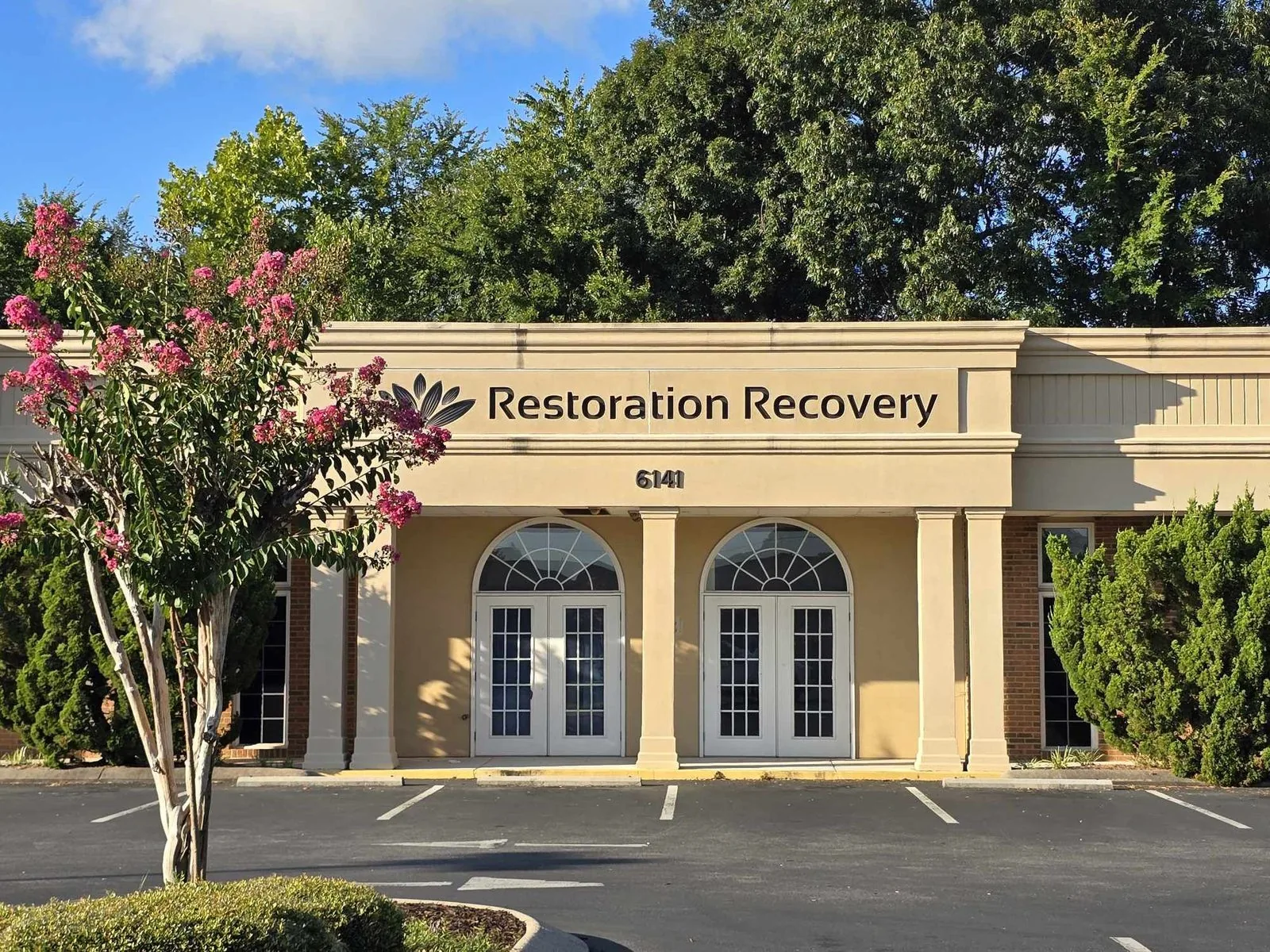
Outpatient medication-assisted treatment for Percocet dependence — oxycodone plus acetaminophen, the prescription combination most patients first encountered at the dentist, after surgery, or after an injury. MAT, counseling, and liver-function review at four clinics across Southeast Tennessee and North Georgia, with same-day appointments on the days each clinic is open.
You don’t have to be in withdrawal to callConfidential from your first call
CARF AccreditedServing Chattanooga since 2017
CARF AccreditedLicensed in Tennessee & GeorgiaSame-day appointments availableConfidential from your first call
What Is Percocet?
Percocet is the brand name for a two-ingredient prescription combination pill: oxycodone, a Schedule II opioid, plus acetaminophen, the same non-opioid analgesic sold over the counter as Tylenol. The combination is intended for short-term management of moderate-to-severe pain, and it is one of the most commonly prescribed opioid products in the United States. Post-operative. Post-dental. Post-partum. Fracture and trauma recovery. Flare-ups of moderate chronic pain. If someone you know has ever left a hospital, surgery center, or dental office with a small orange pill bottle marked “take 1–2 every 6 hours as needed for pain,” there’s a reasonable chance it contained Percocet or its generic equivalent.
Today, every Percocet tablet contains 325 mg of acetaminophen, paired with varying amounts of oxycodone. The common strengths are 2.5/325, 5/325, 7.5/325, and 10/325 — the first number is the oxycodone dose in milligrams, the second is the acetaminophen. Generic oxycodone-acetaminophen is chemically identical. “Percocet” is the brand name; most pills dispensed today are generic. The 325 mg acetaminophen ceiling is not a historical accident — it’s the result of a 2011 FDA mandate we’ll come back to. Before 2011, Percocet and similar combination opioid pills were commonly made with 500 mg, 650 mg, or even 750 mg of acetaminophen per tablet, which turned out to be a public health problem in its own right.
Clinically, Percocet was designed for short-term acute pain. The oxycodone component is a full opioid agonist: it binds to the same mu-opioid receptors as morphine, heroin, hydrocodone, and fentanyl, producing analgesia, sedation, and — at higher doses — euphoria. Because it’s immediate-release rather than extended-release, the peak effect comes on faster (usually within 30–60 minutes) and wears off faster (3–6 hours of useful duration) than extended-release oxycodone products like OxyContin. That profile is what makes it useful for acute pain. It’s also what makes it pharmacologically easy to become dependent on, especially with frequent re-dosing over weeks.
Percocet use disorder usually doesn’t start with someone deciding to chase a high. It starts with a real pain course, a real prescription, and a nervous system that responded more strongly to the medication than expected. What happens after that — the dose creep, the early refills, the running out, the transition to whatever pill is available when the real prescription runs out — is what this page is about, and what we treat every day.
Acetaminophen & acute liver failure
U.S. annual burden, recent estimates
~500Deaths / yr
~56KER visits / yr
~50%Of U.S. ALF casesleading cause
Acetaminophen overdose is the leading cause of acute liver failure in the United States — implicated in nearly half of all cases in the U.S. Acute Liver Failure Study Group registry. Combination opioid products (Percocet, Vicodin, Norco) are one of the documented exposure sources.
FDA 2011 APAP cap in combo opioids
Max acetaminophen per prescription tablet
750 mgPre-2011 max
500 mgCommon Rx
325 mgPost-2014 capFDA mandate
In January 2011, the FDA mandated that prescription combination products (Percocet, Vicodin, Lortab, Norco) contain no more than 325 mg of acetaminophen per dosage unit, citing severe liver injury from chronic use. All manufacturers complied by 2014. A 2023 study in JAMA Internal Medicine linked the mandate to measurable declines in APAP-related acute liver failure hospitalizations.
From the Dentist’s Office to Dependence
Many people dependent on Percocet don’t look like the stock image of “addiction.” They had a wisdom-tooth extraction in college. They had a C-section. They broke an ankle playing basketball. They were discharged from day surgery with a 20-count bottle and instructions to take 1–2 every 6 hours as needed. That’s the front door to Percocet use disorder for a majority of the people walking through it, and the data makes clear that front door is wider than most people realize.
A University of Michigan study of wisdom-tooth patients ages 13 to 30 found that those who filled their post-extraction opioid prescription were nearly three times as likely to still be filling opioid prescriptions weeks or months later than peers who didn’t fill the script. A separate analysis of 56,686 young wisdom-tooth patients put the persistent-use rate at 1.3% in the filled group versus 0.5% in the didn’t-fill group. Those aren’t astronomical percentages — but scaled across millions of dental and post-surgical prescriptions issued every year, it’s thousands of new persistent-use cases, quietly, almost entirely originating from medically appropriate short-term prescribing.
What happens after persistent use is the story of the second chart on this page. Every tablet of Percocet also contains acetaminophen, and physical dependence tends to involve using more pills than originally prescribed. A patient taking 8–12 Percocet 10/325 tablets a day is also taking 2,600–3,900 mg of acetaminophen a day — below the 4,000 mg FDA-recommended ceiling on a good day, but often quietly over it once OTC Tylenol, cold medicines, or Nyquil enter the picture. Acetaminophen toxicity became prominent enough as a public health issue that in January 2011 the FDA ordered manufacturers to cap prescription combination products at 325 mg of acetaminophen per dose. Before then, combination pills commonly contained 500, 650, or 750 mg of acetaminophen. By 2014 all manufacturers had complied, and a 2023 study in JAMA Internal Medicine linked the mandate to measurable reductions in acetaminophen-related acute liver failure hospitalizations.
The takeaway for any patient on this page is practical. You probably didn’t think of Percocet as dangerous to your liver. Most people don’t. The opioid dependence is the part that gets your attention first — the running out, the withdrawal, the needing the pill to feel normal. The acetaminophen exposure is the quieter second clinical problem that runs alongside it, and the one we check at intake so we know your starting point. Liver function is often normal or mildly elevated and recovers once the ongoing exposure stops. MAT with buprenorphine stops the exposure automatically. That’s one of the reasons the clinical picture tends to improve on multiple dimensions at once.
Sources: FDA Drug Safety Communication, Prescription Acetaminophen Products to be Limited to 325 mg Per Dosage Unit (January 13, 2011); FDA, “All manufacturers of prescription combination drug products with more than 325 mg of acetaminophen have discontinued marketing”; Acute Liver Failure Study Group registry data (NIDDK); LiverTox: Clinical and Research Information on Drug-Induced Liver Injury (NIH/NLM); Schroeder AR et al., “Association of FDA Mandate Limiting Acetaminophen in Prescription Combination Opioid Products and Subsequent Hospitalizations and Acute Liver Failure,” JAMA Internal Medicine (2023); Harbaugh CM et al., IHPI / JAMA, persistent opioid use after wisdom-tooth prescriptions; Chua KP et al., JAMA Network Open (2020), Persistent Opioid Use Associated With Dental Opioid Prescriptions; DEA, counterfeit pill seizure data (2023).
Recognizing it
Signs of Percocet Use Disorder
Percocet use disorder is a medical condition, not a character failing, and it often looks less dramatic than people expect. The DSM-5 defines opioid use disorder by a cluster of behaviors and physiological changes — two or more of eleven criteria in a twelve-month period. For Percocet specifically, the picture usually combines classic opioid-dependence signs with some that are specific to the combination-pill pathway.
Tolerance and dose escalation. The 5/325 tablets that worked for the first week aren’t enough by month two. Two tablets becomes three becomes four. The daily total quietly drifts above what was originally prescribed — even though no one decision to take more was ever especially dramatic.
Running out early. The 30-day bottle lasts 24 days. Then 19. Then 14. Lost-prescription, stolen-bottle, or “flushed them by mistake” stories start becoming more frequent. This is one of the most reliable patterns clinicians see.
Asking multiple providers for refills. An ER visit here, an urgent-care visit there, a call back to the original prescribing surgeon, a prescription from a dentist for unrelated tooth pain. Tennessee’s CSMD (Controlled Substance Monitoring Database) now flags this pattern in real time, which tends to push patients toward the next sign on this list.
Using someone else’s prescription. A family member’s leftover surgical pills. A friend’s script. The Percocet from last year’s dental procedure that was supposed to have been thrown out. Roughly half of people who misuse prescription opioids obtained them from a friend or relative.
Using for anxiety, mood, or sleep rather than pain. The original pain event may be long over, but the pills have become load-bearing for something else — quieting an anxious evening, getting through a hard work week, falling asleep. This shift from pain management to emotional management is a common pivot point in prescription-opioid use disorder.
Withdrawal symptoms between doses. Muscle aches, yawning, sweating, runny nose, anxiety, and GI upset showing up 8–12 hours after the last dose. Many Percocet patients describe “needing the morning dose to feel normal” long before they would call what they’re experiencing “withdrawal.”
Transitioning to stronger or cheaper alternatives. When prescription access closes — typically when a prescriber declines a refill or the CSMD flag goes up — the next step is often illicit pills (“30s,” counterfeit pressings), heroin, or fentanyl-contaminated product. The same patient who never imagined buying drugs on the street can end up there because the alternative is withdrawal.
Hiding use. Taking pills in private. Switching where bottles are stored. Minimizing or lying about how many are left. Family members often notice this before they notice the quantity involved — the behavior around the medication, more than the medication itself.
Liver-related signs in long-term high-dose users. Persistent fatigue, right-upper-quadrant abdominal discomfort, nausea, easy bruising, or yellowing of the skin or eyes (jaundice) can reflect acetaminophen-related liver strain. These tend to be late-stage signs, but they’re worth naming specifically because they’re one of the things that differentiates long-term Percocet use from other opioids and because they’re the reason we run LFTs at intake.
Continued use despite consequences. Use that persists through financial strain, job instability, damaged relationships, or medical concerns is one of the DSM-5 criteria and one of the clearest signals that pills have moved past being a pain management tool.
You don’t have to hit every item on this list. You don’t need to have lost a job, a relationship, or a custody arrangement. The DSM-5 threshold for opioid use disorder is 2 of 11 criteria in a 12-month period. Mild, moderate, and severe are all treatable — and earlier is almost always easier than later.
Percocet Withdrawal: Timeline & Symptoms
Because Percocet’s opioid component is oxycodone, Percocet withdrawal is clinically oxycodone withdrawal. The acetaminophen half doesn’t produce dependence or withdrawal — it’s a non-opioid analgesic that wouldn’t have made the pills hard to stop on its own. It’s the oxycodone that your nervous system built tolerance and dependence around, and it’s the oxycodone that the withdrawal picture reflects. For most healthy adults, opioid withdrawal is not directly life-threatening the way alcohol or benzodiazepine withdrawal can be. It is, however, severe enough that most unmedicated quit attempts fail. That’s the physiology of dependence, and medication-assisted treatment is built to prevent the withdrawal phase instead of forcing you through it. One caveat worth naming up front: Percocet patients tend to have a lower total daily opioid load than long-term chronic-pain or OxyContin patients, which usually means a milder acute course, but the pattern is the same.
First 8–12 hours after last dose
Early symptoms
Anxiety, restlessness, irritability, muscle aches, yawning, watery eyes, runny nose, mild sweating, and cravings. Sleep is usually disrupted the first night. This is about the same onset window as other short-acting full-agonist opioids — faster than fentanyl (8–24+ hours) and slower than very short-acting opioids.
Day 1 – Day 3 · Peak
The peak
Full symptom picture: nausea, vomiting, diarrhea, abdominal cramping, alternating chills and sweating, dilated pupils, goosebumps, deep muscle and bone aches, profound fatigue, and intense cravings. Heart rate and blood pressure rise. Insomnia persists or worsens. This is the window in which most unmedicated quit attempts fail.
This is the stretch MAT is built for — buprenorphine prevents these symptoms, so most patients never go through the peak unmedicated.
Acute GI symptoms gradually subside and appetite may start to return. Sleep remains fragmented and cravings remain strong. Mood and anxiety often worsen here as the body re-regulates.
Week 2 and beyond · Post-acute
Post-acute withdrawal
Low energy, difficulty concentrating, mood changes, anhedonia, and intermittent cravings can last weeks to several months unmedicated. This doesn’t mean treatment isn’t working. It’s the nervous system recalibrating after months or years of opioid exposure, and MAT dramatically shortens and softens this phase.
Two things matter for Percocet specifically
Induction timing: starting buprenorphine (Suboxone, Sublocade, Brixadi) too soon after your last Percocet dose can trigger precipitated withdrawal — a sudden, severe worsening of symptoms. For Percocet, the target window is usually 8–24 hours after the last dose, once your withdrawal reaches a moderate level; if you’ve been exposed to counterfeit pills pressed with fentanyl, the window is often longer (36–72 hours) because fentanyl clears more slowly than oxycodone. Acetaminophen exposure stops at induction: the moment you switch from Percocet to buprenorphine-based MAT, your daily acetaminophen dose drops to zero from whatever it had been — and for patients running chronically high APAP loads, that single change begins the liver’s recovery. We run baseline LFTs at intake so we know what we’re starting from.
How We Treat Percocet Addiction
At Restoration Recovery, Percocet use disorder is treated with a combination of medication, behavioral support, and — when warranted — liver-function monitoring given the acetaminophen component of the exposure history. Every opioid patient we see is evaluated for medication-assisted treatment because the evidence is overwhelming: a much lower risk of fatal overdose while patients remain on medication, longer retention in treatment, and lower rates of illicit opioid use.
Buprenorphine + naloxone taken sublingually as a dissolving film or tablet under the tongue. Buprenorphine is a partial opioid agonist: it stabilizes cravings and prevents withdrawal at the same receptors oxycodone was acting on, but with a ceiling on euphoria and respiratory depression. Percocet-first patients leave their first visit with a Suboxone prescription and take the first dose at home, which is dramatically easier than a cold-turkey attempt. The naloxone is inactive when the medication is taken correctly; it’s included to discourage misuse by injection.
A long-acting extended-release form of buprenorphine administered once per month at our Chattanooga, Cleveland, and Ringgold clinics. Many patients who start with Suboxone transition to Sublocade because there’s no daily dose to take and blood levels stay steadier through the month. For patients whose dependence began with pill-taking, it also removes the pill ritual entirely. We have you take Suboxone for at least a week before the first Sublocade injection, which usually comes about a month after you start.
Brixadi (weekly or monthly)
Another extended-release buprenorphine injection with flexible dosing intervals, given at our Chattanooga, Cleveland, and Ringgold clinics. Brixadi’s weekly option can help patients still finding the right maintenance dose. Like Sublocade, Brixadi is ordered per-patient and administered at a follow-up visit once the medication arrives.
Individual counseling
Licensed therapists experienced in substance use disorder. For Percocet patients, counseling tends to surface material specific to the prescription-opioid pathway — the original pain event, the relationship with the original prescribing provider, the shame of needing pills to function, and what the combination pill represented before it became a problem.
Intensive outpatient (IOP)
Clinician-led sessions for patients who benefit from a more structured treatment schedule — delivered in a group format by design. IOP is the only group-setting service we offer, and it’s a separate, structured program rather than an informal group activity.
Liver-function monitoring
For Percocet patients with long daily histories, we run baseline LFTs (ALT, AST, ALP, bilirubin) at intake. In most cases results are normal or mildly elevated and improve after MAT starts and daily acetaminophen exposure stops. When results warrant closer follow-up, we coordinate with primary care or hepatology.
Integrated behavioral health
Co-occurring conditions — anxiety, depression, trauma, and hepatitis C — are common in prescription-opioid patients and directly affect how long people stay in treatment. Behavioral health visits are at our Chattanooga clinic; the first is in person, and later ones can be by telehealth.
Most patients with Percocet use disorder can start MAT as outpatients. You leave your first visit with a Suboxone prescription, and your provider explains when to take your first dose at home. Some situations do need medical stabilization first: a severe untreated co-occurring psychiatric illness, or a serious medical complication, is an emergency that needs hospital-level evaluation before outpatient treatment. Get those evaluated urgently, and we’ll get you started on MAT as soon as you’re medically cleared.
Not sure where to start?
You don’t have to be in withdrawal, and you don’t have to have stopped. Call and we’ll walk you through the first visit.
Your first visit typically lasts 2 to 3 hours and follows a four-step clinical flow. You leave the same day with a Suboxone prescription, and your provider explains when to take your first dose at home.
01
Intake
Paperwork, a DSM-5 assessment to confirm diagnosis and severity, and a COWS score to measure your current withdrawal state. For patients with a long daily Percocet history, a baseline liver function panel (LFTs) is also part of the standard intake workup given the chronic acetaminophen exposure.
02
Counseling
You meet a counselor to discuss your substance use history — including the original prescription pathway if that’s how your use started — prior treatment, co-occurring conditions, and recovery goals. Any active pain-management relationship or concern gets documented here.
03
Doctor evaluation
A medical provider reviews your intake, COWS score, counselor notes, and lab findings if available, and walks you through Suboxone, Sublocade, and Brixadi. For long Percocet histories, this is where any liver-function result or acetaminophen concern is addressed specifically.
04
Prescription
You leave the same day with a Suboxone prescription. If you prefer the extended-release route, your provider orders Sublocade or Brixadi during this visit and you bridge on Suboxone until your injection appointment.
About 2–3 hours.You leave the same day with a Suboxone prescription.Bring a photo ID, insurance card, and a list of any medications.
What each step covers in detail+
Intake. A DSM-5 assessment to confirm opioid use disorder and its severity (mild, moderate, or severe, based on how many of the 11 criteria you meet in a 12-month period), plus a COWS (Clinical Opiate Withdrawal Scale) score to measure your current withdrawal state. Starting buprenorphine too soon after your last Percocet dose can cause precipitated withdrawal, so your provider explains when to take your first dose at home. For Percocet patients with a long daily use history, a baseline liver function panel (LFTs) is also part of the standard intake workup given the chronic acetaminophen exposure.
Counseling and doctor evaluation. You meet with a counselor to discuss your use history — including the original prescription pathway, any previous treatment, co-occurring mental health conditions, and recovery goals — and any active pain-management relationship is documented. A medical provider then reviews your intake, COWS score, counselor notes, and lab findings, walks you through the medication options, and explains onset, side effects, and timing.
Prescription and injection ordering. You leave the same day with a Suboxone prescription. If you prefer the extended-release route, your provider orders Sublocade or Brixadi during this visit — we don’t stock injections on-site — and you continue on Suboxone as a bridge. Your injection appointment is scheduled for a follow-up once the medication arrives, typically after a stabilization period on Suboxone. For Sublocade, that’s at least a week, and the first injection usually comes about a month after you start.
What to bring. A valid photo ID, your insurance card if applicable, and a list of any medications you currently take — including the Percocet strength and daily dose, the original prescribing reason, any OTC acetaminophen-containing products like Tylenol or Nyquil, and any pain medications or benzodiazepines. Our guide on what to expect at your first Suboxone appointment walks through the process in more detail.
Why Medication-Assisted Treatment Works for Percocet
For many patients, the fear of withdrawal is what keeps them stuck. MAT removes that barrier: the medication prevents withdrawal. MAT is endorsed as the standard of care for opioid use disorder, including prescription opioid use disorder specifically, by SAMHSA, NIDA, ASAM, and the World Health Organization. Buprenorphine-naloxone has also been tested in this population directly: the multisite POATS trial enrolled outpatients dependent on prescription opioids. Large-scale evidence shows that patients on buprenorphine-based MAT:
Have a much lower risk of fatal opioid overdose while they remain on medication
Stay in treatment significantly longer than those receiving counseling alone
Report fewer cravings and lower rates of illicit opioid use
Are more likely to maintain employment and stable housing during recovery
Have lower rates of infectious disease transmission associated with injection use
There’s a second medical benefit specific to Percocet patients that’s worth naming plainly: MAT removes the daily acetaminophen exposure entirely. Buprenorphine contains no acetaminophen, and neither does Suboxone, Sublocade, or Brixadi. For a patient who has been taking 8–12 combination pills a day for months or years, switching to buprenorphine means their daily acetaminophen dose drops from 2,600–3,900 mg to zero, and their liver — which has been quietly metabolizing that exposure the whole time — gets a break in addition to the opioid dependence being addressed. For most patients, mildly elevated baseline LFTs trend back toward normal over the weeks that follow. Buprenorphine’s partial-agonist pharmacology also gives it a ceiling on euphoria and respiratory depression that full agonists like oxycodone, hydrocodone, and fentanyl don’t have, so blood levels stabilize, the daily peak-and-crash cycle disappears, and patients can engage in counseling, rebuild relationships, and return to work.
Evidence base: Sordo et al., 2017 (BMJ) mortality meta-analysis; SAMHSA, NIDA, ASAM, and WHO treatment guidelines for opioid use disorder; the POATS prescription-opioid buprenorphine-naloxone trial (Weiss et al., 2011, Archives of General Psychiatry); and 20+ years of buprenorphine cohort and trial data.
Chronic Pain Considerations
Many people with a Percocet problem started with real pain — low back pain, post-surgical pain that didn’t fully resolve, a joint injury that kept flaring. We treat the opioid use disorder. We do not treat chronic pain or prescribe Suboxone for it, so your pain care stays with your own doctor or pain provider. If you have a pain provider, we coordinate with them so there is one consistent plan between us, the pain provider, and you, instead of two medication lists that contradict each other.
Why Restoration Recovery
Serving Chattanooga since 2017. Our providers have decades of clinical experience treating opioid and substance use disorders in Southeast Tennessee — through the prescription-opioid era, the FDA 2011 APAP mandate, the heroin transition, and now the fentanyl contamination of the pill supply.
Liver-aware care for combination-pill patients. We run baseline LFTs at intake and address the acetaminophen side of Percocet dependence directly — not as an afterthought — coordinating with primary care or hepatology when results warrant it.
CARF accredited. The Commission on Accreditation of Rehabilitation Facilities is an independent, nonprofit accreditor that reviews treatment programs on-site against its published standards.
One integrated team. Medical providers and counselors at every clinic, with psychiatric care at our Chattanooga clinic. If you also have anxiety, depression, or hepatitis C, your providers coordinate that care with each other.
Four clinic locations across Southeast Tennessee and North Georgia, with telehealth follow-up for established patients.
Most major insurance accepted — TennCare, Georgia Medicaid, commercial plans, Medicare, and supplemental Medicare. We verify your benefits before your first visit.
Same-day Suboxone appointments. You don’t have to wait weeks to start.
Licensed in both states. Tennessee and Georgia, HIPAA compliant, 42 CFR Part 2 compliant — confidential from the first phone call.
CARF-accredited outpatient addiction care
TennCare, BlueCare, BCBS, UHC, Medicare & most commercial insurance accepted. We verify your benefits before your first visit. Licensed in TN & GA · HIPAA · 42 CFR Part 2.
Don’t have insurance? Contact us anyway. Restoration Recovery accepts most major insurance plans — TennCare, Georgia Medicaid, a broad range of commercial plans, and Medicare (plus supplemental Medicare plans) — and our patient services team can verify your benefits before your first appointment so you know exactly what to expect. If you don’t have coverage, self-pay for medication-assisted treatment (MAT) is a flat $250 a month, with medication billed separately, and our team will go over the cost with you before you start. For a full list of accepted carriers and the verification process, visit our insurance page.
Four Clinic Locations
We operate four outpatient clinics across Southeast Tennessee and North Georgia. All four offer Percocet addiction treatment, with same-day appointments on the days each is open.
Telehealth follow-up visits are available for established patients who have completed their initial in-person evaluation. Phones are answered Monday through Friday, 9am to 4:30pm Eastern. After hours? Leave a message or use the callback form and we’ll respond the next business day. If you need help right now, the 988 Suicide & Crisis Lifeline and the free, confidential SAMHSA National Helpline (1-800-662-4357) are available 24/7.
Questions
Frequently Asked Questions
I only take Percocet for pain — could I still have use disorder?+
Yes. Opioid use disorder isn’t defined by why you started taking the pills — it’s defined by whether your current relationship with them meets DSM-5 criteria: tolerance, withdrawal, unsuccessful efforts to cut down, running out early, using more than intended, and continued use despite consequences. Starting on a legitimate prescription doesn’t change the diagnosis, and it doesn’t change what treatment looks like. The pathway in doesn’t determine the pathway out.
Does long-term Percocet hurt my liver?+
It can. Every Percocet tablet contains 325 mg of acetaminophen (since the FDA’s 2011 mandate), and chronic high-dose use adds up quickly. The FDA-recommended maximum daily dose of acetaminophen is 4,000 mg, and people dependent on Percocet often exceed that without realizing it — especially if they’re also using OTC acetaminophen-containing products like Tylenol, Nyquil, or Excedrin. Acetaminophen is the single most common cause of acute liver failure in the United States, implicated in nearly half of all cases in the NIDDK-supported Acute Liver Failure Study Group registry. That doesn’t mean you’ve damaged your liver — your labs may well come back normal or only mildly elevated. It does mean checking LFTs at intake is worth doing so we know your starting point.
What if I’ve already damaged my liver from Percocet use?+
The liver is unusually good at recovering once the ongoing injury stops. In most cases, discontinuing daily acetaminophen exposure — which happens automatically when you transition from Percocet to buprenorphine-based MAT — lets the liver heal on its own over weeks to months. If intake labs flag something that needs closer workup, we coordinate with your primary care provider or a hepatologist, and we can also treat co-occurring hepatitis C if that’s part of the picture. The point isn’t to alarm you — it’s to understand the starting point and plan accordingly. The most powerful intervention for an acetaminophen-stressed liver is stopping the ongoing exposure. Starting MAT does exactly that.
What about fake Percocet pressed with fentanyl?+
If you’ve been buying pills outside of a pharmacy that look like Percocet — scored “Percocet 10,” oval white or yellow tablets marked with manufacturer numbers — you should assume fentanyl exposure. Counterfeit pressings flooded the illicit pill supply starting around 2016 and are now the dominant illicit pill product nationally. In 2023, U.S. law enforcement seized roughly 115 million counterfeit pills, accounting for about half of all fentanyl seizures that year, and approximately 6 in 10 contained a potentially lethal dose (2 mg or more of fentanyl). The treatment path is the same as for genuine Percocet dependence, but the induction timing is different: because fentanyl clears slowly, the buprenorphine induction window is typically 36–72 hours after last use instead of 8–24. Your COWS score at intake tells your provider exactly where you are.
Is my dental pain prescription why this happened?+
A short dental opioid prescription can be a first exposure, and the research shows it carries real risk. A University of Michigan analysis of wisdom-tooth patients 13–30 years old found that those who filled their post-extraction opioid prescription were nearly three times as likely to still be filling opioid prescriptions weeks or months later than peers who didn’t fill the script. A separate JAMA Network Open analysis of 56,686 wisdom-tooth patients put the persistent-use rate at 1.3% in the filled-prescription group versus 0.5% in the didn’t-fill group. It’s not that dental pain caused your dependence — it’s that a short acute pain course is sometimes the first contact with a medication your nervous system was going to respond strongly to. That’s neither unusual nor your fault. It is, however, treatable.
Should I get my liver checked before I start MAT?+
We handle that at intake. For patients with a long daily Percocet history, a baseline liver function panel (ALT, AST, ALP, bilirubin) is part of the standard intake workup so we know the starting point. You don’t need to arrange it beforehand. If results come back flagged, we coordinate with your primary care provider or a hepatologist; if results are normal, we document the baseline and move forward. Either way, starting buprenorphine-based MAT stops the ongoing acetaminophen exposure, which is the single most important liver-protective step most patients in this situation can take. Don’t let a liver concern delay the call. The right order of operations is: call us, start treatment, run labs at intake, plan from there.
4 clinics across Tennessee & North Georgia
Ready to start Percocet addiction treatment?
Same-day appointments available, and most major insurance is accepted. Percocet addiction is treatable — whether your use started with a post-surgical prescription, a dental extraction, a back injury that never quite healed, or somewhere messier than that. You don’t need all the answers before you call, and you don’t need to be clean before your first appointment. Our team will walk you through every step, from your first call to your first visit and every follow-up after.