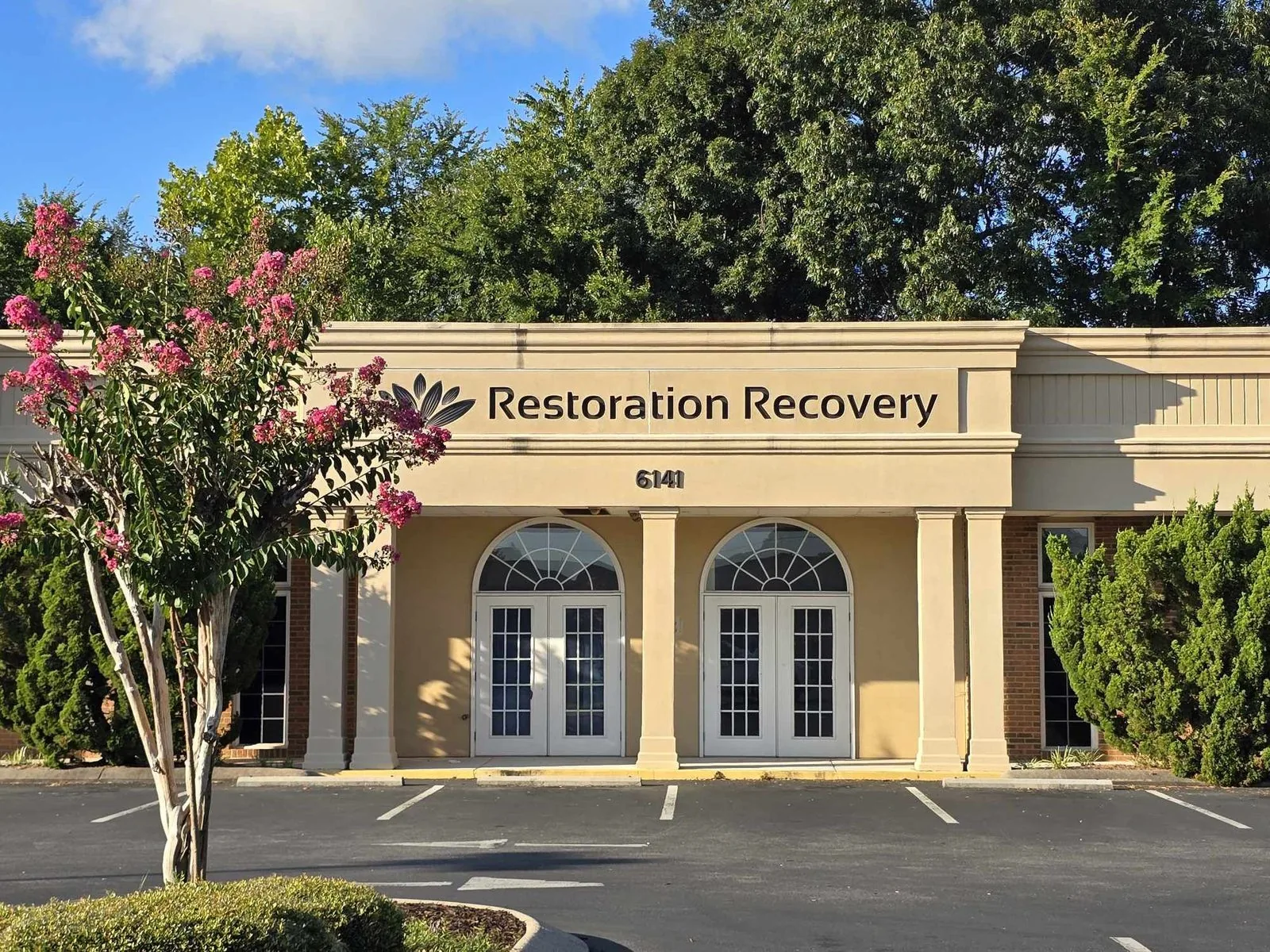
Outpatient medication-assisted treatment for tramadol (Ultram, ConZip) dependence — an unusual opioid with a dual-action profile that was marketed for years as “safer,” and a withdrawal that feels like two discontinuations at once. Four clinics across Southeast Tennessee and North Georgia, same-day appointments available.
Buprenorphine covers the opioid side of withdrawalConfidential from your first call
CARF AccreditedServing Chattanooga since 2017
CARF AccreditedLicensed in Tennessee & GeorgiaSame-day appointments availableConfidential from your first call
What Is Tramadol?
Tramadol is a synthetic analgesic prescribed for moderate to moderately-severe pain. It is sold in the United States under the brand names Ultram, Ultram ER, ConZip, and Ryzolt, and as generic immediate-release and extended-release tramadol hydrochloride. It is also combined with acetaminophen in Ultracet. Clinically, it is prescribed for osteoarthritis, chronic low back pain, post-surgical pain, fibromyalgia, neuropathic pain, and a long list of other chronic and sub-acute pain conditions — often as a first-line step before stronger opioids like hydrocodone or oxycodone.
Pharmacologically, tramadol is unusual. It is not a pure opioid. It has two active mechanisms running in parallel. First, it is a weak partial agonist at the mu-opioid receptor — its intrinsic opioid activity is modest, and much of its mu-opioid effect actually comes from its active metabolite O-desmethyltramadol (M1), produced by the liver enzyme CYP2D6. Second, it is a serotonin-norepinephrine reuptake inhibitor (SNRI) — the same mechanism that drives antidepressants like duloxetine (Cymbalta) and venlafaxine (Effexor). Tramadol is, in effect, a dual-action analgesic: part opioid, part antidepressant. That pharmacology is the reason for almost everything unusual on this page.
When tramadol launched in the United States as Ultram in 1995, the marketing around it stressed the dual mechanism specifically as a safety story: lower euphoric ceiling than pure opioids, ostensibly “low abuse potential,” and for almost twenty years it sat outside the Controlled Substances Act entirely. Pharmacies could refill tramadol freely, providers called it in by phone, and many long-term chronic-pain patients were on it for five, ten, or fifteen years before it was rescheduled. The claim was wrong. The DEA moved tramadol to Schedule IV of the Controlled Substances Act effective August 18, 2014, in direct response to documented evidence of dependence, misuse, diversion, and a growing volume of emergency department visits. For comparison, hydrocodone combination products became Schedule II in October 2014 — the two biggest opioid rescheduling events of that era landed within weeks of each other.
If you were put on tramadol before 2014, there is a good chance nobody told you it was addictive — because at the time, that was the official position. If you are finding it hard to stop now, that is common, and being stuck is not a personal failing. It reflects a pharmacology that was understood later than it should have been.
Tramadol prescribing after 2014 rescheduling
U.S. tramadol prescriptions, millions (retail)
43.8M2013 peak
41.7M2015 (post-CIV)
~22M2023↓ ~50% since peak
Tramadol was unscheduled in the U.S. from 1995 until August 18, 2014, when the DEA moved it to Schedule IV after documented evidence of dependence, misuse, and diversion. Retail dispensing peaked around 2013 and has been declining since, but millions of U.S. adults have been on daily tramadol for years or decades.
Tramadol seizure and serotonin-syndrome risk
Distinct from other opioids
<1%Therapeutic-dose seizure rate
>400mgDaily-dose seizure threshold
SNRI+ opioid interactionSerotonin-syndrome risk
Tramadol lowers the seizure threshold — a property it does not share with pure opioids like hydrocodone or oxycodone. Seizure risk is dose-dependent, higher above ~400 mg/day, in overdose, and in combination with SSRIs, SNRIs, tricyclics, bupropion, or other pro-convulsant drugs. The same combinations carry serotonin-syndrome risk.
The Opioid That Wasn’t Supposed to Be One
Most of the substance pages on this site describe a drug that was understood to be addictive from the moment it was approved. Tramadol is not one of those drugs. It was brought into the U.S. market in 1995 as a kind of third-path analgesic — real pain relief without, supposedly, the dependence profile of a Schedule II. For almost twenty years it was prescribed that way. Millions of patients were started on it by primary care, orthopedics, dentistry, rheumatology, and pain medicine, with the reasonable assumption that they could stop when the prescription ended. Many could not.
The rescheduling of tramadol to Schedule IV in August 2014 was the DEA’s formal acknowledgment that the original safety story was incomplete. The FDA had been collecting adverse-event reports for years — withdrawal syndromes on stopping, escalating doses, emergency department visits involving tramadol, and a distinctive problem that does not show up the same way with other opioids: seizures. Tramadol lowers the seizure threshold at high doses, in overdose, and in combination with a long list of other serotonergic or pro-convulsant medications. That signal was the wedge that moved tramadol out of “non-scheduled” status and into Schedule IV alongside benzodiazepines like alprazolam (Xanax).
Clinically, many people dependent on tramadol are older than the average opioid patient. They are often in their 50s, 60s, or 70s, with a decade or more of daily use for osteoarthritis, low back pain, fibromyalgia, or post-surgical pain that never quite resolved. They are often on one or more antidepressants (SSRI or SNRI) prescribed somewhere along the way, which creates a pharmacology worth naming: tramadol itself is serotonergic, and the combination of tramadol plus an SSRI, SNRI, tricyclic, bupropion, or triptan carries real serotonin-syndrome risk even at therapeutic doses. Many of them were not warned about this when the prescription was written, because in the pre-2014 environment the warning was far less prominent than it is now.
They are, by and large, people who followed their prescription. They went back to the provider when they were told to. They refilled when the prescription said they could. Many of them figured out they were stuck not when a pill bottle ran out early, but when a trip to the pharmacy was delayed by a day or two and something very unfamiliar started happening — flu-like aches, restlessness, sweats, and on top of that, something that did not feel like opioid withdrawal at all. Dizziness. Brain zaps. Crying spells. A sense that the world was slightly unreal. That is the SNRI-discontinuation component of tramadol withdrawal, and it is the reason a lot of tramadol patients describe coming off tramadol as harder than coming off oxycodone or hydrocodone would be.
Sources: Federal Register, Schedules of Controlled Substances: Placement of Tramadol Into Schedule IV (DEA, July 2014; effective August 18, 2014); FDA prescribing information for tramadol (Ultram) and tramadol ER; World Health Organization Expert Committee on Drug Dependence, Tramadol Critical Review Reports (WHO, 2014, 2018); IQVIA National Prescription Audit / CDC U.S. Opioid Dispensing Rate Maps; published reviews of tramadol-associated seizures (e.g., Boostani & Derakhshan, Clinical Neurology and Neurosurgery, 2012; Labate et al., CNS Drugs, 2005); published reviews of tramadol discontinuation syndrome and serotonergic interactions.
Recognizing it
Signs of Tramadol Use Disorder
Tramadol use disorder often looks different from a stereotypical opioid use disorder. Patients are not usually chasing euphoria; they are usually chasing function. The morning pill that makes the day survivable. The extra dose before a long drive or a family event. The pharmacy run that cannot wait. The anxiety in the stomach when the bottle is thin. It still meets the same DSM-5 criteria. It just wears a more respectable face. Common signs include:
Tolerance and dose escalation. The 50 mg that worked at the start of the prescription does not anymore. The prescribed dose does not last the way it used to, so you reach for an extra pill in the late afternoon. Over months or years, the total daily amount has quietly moved from 150 mg to 300 mg to 400 mg or above. The prescription may or may not have kept up.
Running out early. The 30-day prescription lasts 26 days. Then 22. Then 18. Calls for early refills. A pattern of lost prescriptions, stolen bottles, or doses “found” in a different pocket than you remember putting them in. Tennessee’s Controlled Substance Monitoring Database (CSMD) now tracks Schedule IV dispensing, which has made this pattern easier for providers to see than it was before 2014.
Using tramadol for mood or sleep, not pain. Because tramadol is an SNRI in addition to being a weak opioid, it has a mood-altering quality unlike most opioids. Patients describe “feeling more like themselves” on it, or describe using an evening dose for insomnia. When the reason for a dose is no longer the original pain indication, a shift has occurred.
Anxiety or dysphoria between doses. This is often the first SNRI-discontinuation signal. A low, unsettled feeling four or six hours after a dose, or a rebound anxiety that is worse than baseline. For patients who are also on an SSRI or SNRI for depression, this can be especially confusing because it overlaps with their primary mood condition.
Physical dependence and withdrawal on missed doses. Body aches, sweating, chills, GI symptoms, and insomnia after a skipped dose or two — plus, distinctively, brain zaps, dizziness, tearfulness, and a sense of unreality that does not fit the classic opioid-withdrawal picture. If the word “weird” comes up when you try to describe how missing a tramadol dose feels, the SNRI side is what you are describing.
Seizure history. This is a tramadol-specific red flag. Any seizure while on tramadol, a seizure history from before starting tramadol, very high daily doses (above ~400 mg/day), or combining tramadol with SSRIs/SNRIs/tricyclics/bupropion deserves extra clinical attention. Seizure history does not disqualify you from MAT; it makes getting off tramadol more urgent.
Loss of control. Deciding today will be a lower-dose day, and it is not. Deciding you will try one day off, and you cannot. Making and breaking the same “last dose” promise to yourself or a spouse, month after month, year after year.
Seeking new prescribers or transitioning to other opioids. When the primary tramadol script becomes unavailable — a prescriber retires, a new physician declines to continue it, a pharmacy fill is delayed — some patients try to fill the gap with other opioids (hydrocodone, oxycodone, codeine, or, more dangerously, illicit pills). That escalation is a clinical signal, and it is also a safety signal, because the street pill supply in 2026 is almost never what the pressing says it is.
Continued use despite consequences. Using even when it is costing you — sleep, cognition, mood, liver function (if the product is combined with acetaminophen, as in Ultracet), GI function, finances, or relationships. Two or more DSM-5 criteria in a 12-month period is the formal threshold for opioid use disorder; most patients who read this list and recognize themselves meet more than that.
You do not have to meet every item on the list. Mild, moderate, and severe tramadol use disorder are all treatable, and the earlier the treatment starts, the easier the treatment tends to be.
Tramadol Withdrawal: Timeline & Symptoms
Tramadol withdrawal is the most distinctive thing about this page. Most opioid-withdrawal pictures have a familiar shape — aches, sweats, GI, insomnia, cravings, peaking in the first few days, resolving over a week or two. Tramadol withdrawal has that shape stacked on top of a second, different withdrawal: the sudden removal of SNRI activity, which produces a discontinuation syndrome that looks like stopping an antidepressant abruptly. Most tramadol patients find the second layer more disabling than the first.
Opioid side
Opioid-withdrawal features
Muscle and bone aches, yawning, watery eyes, runny nose, sweating alternating with chills, nausea, vomiting, diarrhea, abdominal cramping, dilated pupils, goosebumps, restlessness, insomnia, and cravings. These look like any other opioid withdrawal, because tramadol does act on the mu-opioid receptor.
SNRI side
SNRI-discontinuation features
Brain zaps (brief electric-shock sensations, often triggered by eye movement), dizziness and vertigo, paresthesias (tingling, numbness, pins-and-needles), rebound anxiety, rebound depression, irritability, dysphoria, crying spells, derealization, depersonalization, vivid dreams, and a general sense of being “off” in a way that does not fit the opioid-withdrawal category. These look like SSRI or SNRI discontinuation syndrome, because the SNRI activity of tramadol is actually being withdrawn.
A general timeline for tramadol withdrawal looks like this:
First 6 to 12 hours after last dose
Early onset, both patterns
Anxiety, restlessness, early aches, yawning, watery eyes, and often the first brain zaps and dizziness. Sleep becomes difficult the first night.
Day 1 – Day 3 · Peak
Peak symptoms, stacked
Full opioid-withdrawal picture — GI symptoms, sweats, chills, cramping — on top of peak SNRI-discontinuation symptoms — brain zaps, vertigo, paresthesias, dysphoria, crying, derealization. This is the window when unmedicated attempts to stop tramadol most often fail, and when many patients resume tramadol not for the opioid symptoms but for the “weird” neurological ones.
This is the stretch MAT is built for — buprenorphine prevents the opioid-side symptoms, so most patients never go through the opioid peak unmedicated.
Acute opioid-withdrawal symptoms subside. GI function recovers. Cravings remain. SNRI-discontinuation symptoms soften but often persist — brain zaps may still appear with eye movement, mood remains fragile, sleep is still disrupted.
Week 2 to week 4 · Post-acute
SNRI tail re-regulates
The opioid piece is usually resolved. The SNRI-discontinuation piece can still produce intermittent dizziness, paresthesias, and mood instability for another 1 to 4 weeks as the serotonin and norepinephrine systems re-regulate. Some patients, especially those on high doses or long durations, describe a tail of low-grade symptoms that lasts longer than that.
Two clinical considerations matter for tramadol patients specifically:
Induction timing. Buprenorphine (Suboxone, Sublocade, Brixadi) works on the opioid receptor and replaces the opioid activity of tramadol effectively. Starting it too early after last tramadol use can trigger precipitated withdrawal. The COWS (Clinical Opiate Withdrawal Scale) assessment at intake measures your current withdrawal state, and your provider explains when to take your first dose at home. For tramadol specifically, the induction window is usually 6 to 12 hours after last dose for immediate-release tramadol and longer for extended-release formulations or for patients on very high daily doses.
COWS does not capture the SNRI side. COWS was designed to measure opioid withdrawal. It does not score brain zaps, paresthesias, dizziness, dysphoria, or derealization. That means a tramadol patient can look clinically ready on COWS and still feel profoundly unwell from the SNRI-discontinuation side. Our intake providers review SNRI-discontinuation symptoms in addition to COWS and plan accordingly — sometimes with a bridging serotonergic medication coordinated through our psychiatric care, sometimes with supportive management alone.
Tramadol withdrawal is two discontinuations at once
Buprenorphine resolves the opioid-side symptoms (aches, sweats, GI, insomnia) within hours to a day. The SNRI-discontinuation side — brain zaps, dizziness, dysphoria — is separate and usually settles over 1 to 4 weeks; when it’s severe, we coordinate a bridging serotonergic medication through psychiatric care. A good tramadol plan is a two-pronged plan.
How We Treat Tramadol Addiction
At Restoration Recovery, tramadol use disorder is treated as an opioid use disorder clinically, with full medication-assisted treatment on the opioid side and additional attention to the SNRI-discontinuation component that tramadol’s pharmacology produces. Every one of our opioid patients is evaluated for MAT because the evidence supporting MAT is overwhelming — a much lower risk of fatal overdose while patients remain on medication, longer retention in treatment, and lower rates of illicit opioid use. The medication options are:
A combination of buprenorphine and naloxone taken sublingually — available as a dissolving film or tablet placed under the tongue. Buprenorphine is a partial opioid agonist that binds the same mu-opioid receptor tramadol was partially activating, at a much higher affinity. It stabilizes cravings and prevents opioid-side withdrawal within hours. Tramadol patients leave the first visit with a Suboxone prescription, and their provider explains when to take the first dose at home. After that first dose, the subjective shift is often dramatic — the aches, GI, sweats, and restlessness lift, and the day becomes workable again.
A long-acting extended-release form of buprenorphine administered once per month at our Chattanooga, Cleveland, and Ringgold clinics. Many tramadol patients eventually prefer Sublocade because it removes the daily pill ritual, which is emotionally important when your original problem was a daily pill. We have you take Suboxone for at least a week before the first injection, and that first injection usually comes about a month after you start.
Brixadi (weekly or monthly)
Another extended-release buprenorphine injection with flexible dosing intervals, given at our Chattanooga, Cleveland, and Ringgold clinics. Brixadi’s weekly option can be helpful for patients who are still finding the right maintenance dose. Like Sublocade, Brixadi is ordered per-patient and administered at a follow-up visit once the medication arrives.
Individual counseling
Licensed therapists experienced in substance use disorder. Tramadol counseling often surfaces specific material — the chronic pain that started everything, the relationship with the original prescriber, the years of being told this drug was safe, the shame of needing it to function, and the practical question of what rebuilding a pain plan without tramadol actually looks like.
Intensive outpatient (IOP)
Our IOP serves patients who benefit from a more structured treatment schedule — delivered in a group format by design. IOP is the only group-setting service we offer, and it is a separate, structured program rather than an informal group activity.
Integrated care for co-occurring conditions
Anxiety, depression, trauma, and hepatitis C — addressed alongside MAT. For tramadol patients, depression and anxiety are particularly common — both as the original reason for an SSRI/SNRI prescription and as a rebound feature of SNRI discontinuation. Behavioral health visits are at our Chattanooga clinic; the first is in person, and later ones can be by telehealth.
Psychiatric medication management
For the SNRI-discontinuation component when it is significant. For some tramadol patients, bridging with an SSRI or SNRI (duloxetine, venlafaxine, or another agent) during the transition is clinically useful — particularly for patients already on a serotonergic medication before tramadol was added. Others do fine with supportive care only. That call is made patient by patient and coordinated with any outside psychiatric provider you already have. Psychiatric medication management is also based at our Chattanooga clinic.
Chronic Pain Considerations
Many people dependent on tramadol have a legitimate chronic pain history and a reasonable concern about what happens to their pain plan when tramadol stops. We treat the opioid use disorder. We do not treat chronic pain or prescribe Suboxone for it, so your pain care stays with your own doctor or pain provider. If you have a pain provider, we coordinate with them so you have one consistent plan.
Seizure Safety Considerations
Because tramadol lowers the seizure threshold at high doses and in combination with several common medications, we flag specific scenarios at intake: any prior seizure on tramadol, any seizure history before starting tramadol, a current daily tramadol dose above roughly 400 mg, and concurrent use of SSRIs, SNRIs, tricyclic antidepressants, bupropion, or triptans. None of these disqualify you from MAT. If anything, they strengthen the case for getting off tramadol sooner. What they change is how your provider plans your induction and follow-up, including how any concurrent serotonergic medication is coordinated.
Not sure where to start?
Restoration Recovery is an outpatient clinic, and most patients with tramadol use disorder start medication-assisted treatment right here — they leave the first visit with a Suboxone prescription and take the first dose at home at the appropriate point after last use. Call and we’ll walk you through the first visit.
Your first visit typically lasts 2 to 3 hours and follows a four-step clinical flow. You leave the same day with a Suboxone prescription.
01
Intake
Paperwork and a clinical intake. For opioid use disorder, this includes a DSM-5 assessment to confirm the diagnosis and its severity (mild, moderate, or severe based on how many of the 11 criteria you meet in a 12-month period), and a COWS (Clinical Opiate Withdrawal Scale) score to measure your current opioid-withdrawal state. For tramadol specifically, your provider will also ask about SNRI-discontinuation symptoms that COWS doesn’t capture — brain zaps, dizziness, paresthesias, dysphoria — because those are part of the clinical picture and they change the plan.
02
Counseling
You meet with a counselor to discuss your substance use history, the original pain indication if tramadol started that way, previous treatment, any co-occurring mental health conditions (depression and anxiety are especially common in this population), and your personal recovery goals. This is also where any active pain management relationship or psychiatric prescription gets documented.
03
Doctor evaluation
A medical provider reviews your intake, COWS score, SNRI-discontinuation picture, and counselor notes. They walk you through the medication options (Suboxone, Sublocade, Brixadi), explain onset, side effects, and timing, and answer your questions. For patients on SSRIs, SNRIs, or other serotonergic medications, this is where the coordinated plan is sketched.
04
Prescription
You leave the same day with a Suboxone prescription. If you prefer the extended-release route, your provider will order Sublocade or Brixadi during this visit — we don’t stock injections on-site — and you’ll continue on Suboxone as a bridge until your injection appointment.
About 2–3 hours.You leave the same day with a Suboxone prescription.Bring a photo ID, insurance card, and a list of any medications.
More on injection ordering and what to bring+
Injection ordering. If you prefer the extended-release route, your provider orders Sublocade or Brixadi during this visit — we don’t stock injections on-site — and you continue on Suboxone as a bridge. Your injection appointment is scheduled for a follow-up once the medication arrives, typically after a stabilization period on Suboxone. For Sublocade, that’s at least a week, and the first injection usually comes about a month after you start.
What to bring. A valid photo ID, your insurance card if applicable, and a list of any medications you currently take (including the tramadol product and dose, the original prescribing reason, any SSRI or SNRI, any benzodiazepine, and any other pain medication). If you’d like to see the full process walked through step by step before your visit, our guide on what to expect at your first Suboxone appointment covers it in more detail.
Why Medication-Assisted Treatment Works for Tramadol
For many patients, the fear of withdrawal is what keeps them stuck. That is especially true for tramadol, because tramadol withdrawal includes a second, non-opioid component that most patients have never heard of and didn’t expect. MAT removes the opioid side of that barrier: buprenorphine prevents opioid withdrawal, so patients do not have to push through it.
Medication-assisted treatment is endorsed as the standard of care for opioid use disorder by the Substance Abuse and Mental Health Services Administration (SAMHSA), the National Institute on Drug Abuse (NIDA), the American Society of Addiction Medicine (ASAM), and the World Health Organization. The WHO Expert Committee on Drug Dependence has reviewed tramadol specifically on multiple occasions and identified dependence and misuse as established risks. Large-scale evidence shows that patients with opioid use disorder who receive buprenorphine-based MAT:
Have a much lower risk of fatal opioid overdose while they remain on medication
Stay in treatment significantly longer than those receiving counseling alone
Report fewer cravings and lower rates of illicit opioid use
Are more likely to maintain employment and stable housing during recovery
Have lower rates of infectious disease transmission associated with injection use
There is a tramadol-specific clinical consideration worth naming directly. Buprenorphine’s high receptor affinity and partial-agonist profile are well-suited to replace tramadol’s weak mu-opioid activity — the opioid side of tramadol withdrawal typically resolves within hours of induction. But MAT alone does not treat the SNRI-discontinuation component, because buprenorphine has no serotonergic or noradrenergic activity. The SNRI side has to be managed separately — with supportive care and time for most patients, or with a bridging serotonergic medication for patients where the symptoms are severe enough to destabilize recovery. That is why a good tramadol treatment plan is a two-pronged plan, and why coordinated psychiatric care matters for this population in a way it does not for most other opioid pages.
Buprenorphine’s ceiling effect on euphoria and respiratory depression gives it a safety profile the original tramadol prescription did not have. Blood levels stabilize, and the daily cycle of peak-and-crash that drove continued use disappears.
Evidence base: Sordo et al., 2017 (BMJ) mortality meta-analysis; SAMHSA, NIDA, ASAM, and WHO treatment guidelines for opioid use disorder; WHO Expert Committee on Drug Dependence, Tramadol Critical Review Reports.
Why Restoration Recovery
Serving Chattanooga since 2017. Our providers have decades of clinical experience treating opioid and substance use disorders in Southeast Tennessee — including the full arc of the pre-2014 tramadol era, the rescheduling, and the patients it left behind.
CARF accredited. The Commission on Accreditation of Rehabilitation Facilities is an independent, nonprofit accreditor that reviews treatment programs on-site against its published standards.
Four clinic locations across Southeast Tennessee and North Georgia, with telehealth follow-up available for established patients.
Most major insurance accepted — TennCare, Georgia Medicaid, commercial plans, Medicare, and supplemental Medicare. Our patient services team verifies your benefits before your first visit so there are no surprises.
Same-day Suboxone appointments. You don’t have to wait weeks to start.
One integrated team. Medical providers and counselors at every clinic, with psychiatric care at our Chattanooga clinic. For tramadol patients the opioid plan and the psychiatric plan overlap, and our team keeps the two coordinated.
Licensed in both states. Licensed in Tennessee and Georgia, HIPAA compliant, 42 CFR Part 2 compliant — your treatment is confidential from the first phone call.
CARF-accredited outpatient addiction care
TennCare, BlueCare, BCBS, UHC, Medicare & most commercial insurance accepted. We verify your benefits before your first visit. Licensed in TN & GA · HIPAA · 42 CFR Part 2.
Insurance and Access
Restoration Recovery accepts most major insurance plans, including TennCare, Georgia Medicaid, a broad range of commercial plans, and Medicare (plus supplemental Medicare plans). Our patient services team can verify your benefits before your first appointment so you know exactly what to expect in terms of cost.
Don’t have insurance? Contact us anyway. Self-pay for medication-assisted treatment (MAT) is a flat $250 a month, with medication billed separately, and our team will go over the cost with you before you start. For a full list of accepted carriers and details on the verification process, visit our insurance page.
We operate four outpatient clinics across Southeast Tennessee and North Georgia. All four offer tramadol addiction treatment, with same-day appointments on the days each is open.
Telehealth follow-up visits are available for established patients who have completed their initial in-person evaluation. For directions, hours, and contact information, visit our locations page.
Questions
Frequently Asked Questions
My doctor told me tramadol wasn’t addictive. Is that true?+
It was widely marketed that way when tramadol launched in the U.S. as Ultram in 1995, and for almost twenty years it sat outside the Controlled Substances Act entirely. The DEA moved tramadol to Schedule IV in August 2014 in direct response to evidence of dependence, misuse, and diversion. Daily tramadol use for weeks to months can produce real physical dependence, and tramadol use disorder is diagnosed with the same DSM-5 framework as any other opioid use disorder. If you feel stuck on tramadol, the marketing you heard wasn’t wrong about you — it was wrong about the drug.
Is tramadol withdrawal different from other opioid withdrawal?+
Yes, in a way that surprises most patients. Tramadol acts on opioid receptors AND blocks the reuptake of serotonin and norepinephrine, so stopping it produces two overlapping withdrawal pictures at once. The opioid side looks familiar — aches, sweats, GI upset, insomnia, cravings. The SNRI-discontinuation side looks like stopping an antidepressant abruptly — brain zaps, dizziness, paresthesias, dysphoria, tearfulness, derealization, rebound anxiety. Many tramadol patients say the antidepressant-withdrawal piece is harder on them than the opioid piece, because buprenorphine handles the opioid symptoms quickly but the SNRI-discontinuation symptoms can linger for weeks.
What are “brain zaps”?+
Brain zaps are brief electric-shock-like sensations in the head — often triggered by eye movement — commonly reported by people stopping SSRIs, SNRIs, or tramadol. They aren’t dangerous, they’re not a seizure, and they’re not a sign of brain damage. They’re a well-documented transient symptom of abrupt serotonin/norepinephrine discontinuation and they resolve on their own as the nervous system re-regulates. A bridging serotonergic medication can reduce them; your provider will discuss options at intake.
Can I still take an SSRI while I’m on Suboxone?+
Yes, with coordination. Many people on tramadol also take SSRIs or SNRIs for depression or anxiety, and buprenorphine does not prevent that — Suboxone, Sublocade, and Brixadi are routinely used alongside antidepressants. What matters is that every prescriber knows the full medication list, because tramadol itself is serotonergic and a handful of combinations carry serotonin-syndrome risk. Once tramadol is off the list and you’re stabilized on buprenorphine, ongoing SSRI or SNRI care is usually straightforward. We coordinate with your psychiatric provider if you have one and can add psychiatric medication management at our Chattanooga clinic when needed.
I’ve been on tramadol for years for chronic pain — is that really addiction?+
Physical dependence and addiction are not the same thing, and the DSM-5 is careful about the difference. If you’ve been taking tramadol as prescribed for years with no dose escalation, no hidden use, no craving, and no consequences — you have physical dependence, which is a predictable effect of long-term opioid use, not opioid use disorder. If the picture has shifted — doses creeping up, running out early, using tramadol for mood or sleep, anxiety between doses, hiding it, or feeling unable to stop — that’s when dependence has moved into use-disorder territory. Either way, coming off tramadol after years of daily use is a clinical event that deserves medical help.
Will buprenorphine cover tramadol withdrawal?+
Yes, for the opioid component — which is what most patients are most afraid of. Buprenorphine binds the same mu-opioid receptors tramadol was partially activating and typically resolves the opioid-side symptoms (aches, sweats, GI, insomnia) within hours to a day. The SNRI-discontinuation component is separate and buprenorphine does not treat it directly; that piece usually resolves on its own over 1–4 weeks, and for patients with significant SNRI-discontinuation symptoms we can coordinate a bridging serotonergic medication through psychiatric care. That’s why the treatment plan for tramadol is often a two-pronged plan rather than a one-medication plan.
Is it true tramadol can cause seizures?+
Yes. Tramadol lowers the seizure threshold — a property that sets it apart from other opioids — and seizures have been reported both at therapeutic doses and (more commonly) at supratherapeutic doses, in overdose, and in combination with other serotonergic or pro-convulsant medications. If you’ve ever had a seizure on tramadol, a seizure history before starting tramadol, or have been taking more than about 400 mg per day, flag it at intake. It doesn’t disqualify you from MAT — if anything, it makes getting off tramadol more urgent — but your provider will take it into account when planning induction and follow-up.
A place for hope & healing
Ready to start tramadol addiction treatment?
Tramadol addiction is survivable, and treatment works — whether your use started with a 1998 Ultram prescription for back pain, a more recent ConZip script for osteoarthritis, or somewhere messier than that. Same-day appointments available, and most major insurance is accepted. You don’t need all the answers before you call, and you don’t need to be clean before your first appointment. Our team will walk you through the process from your first phone call to your first visit and every follow-up after.