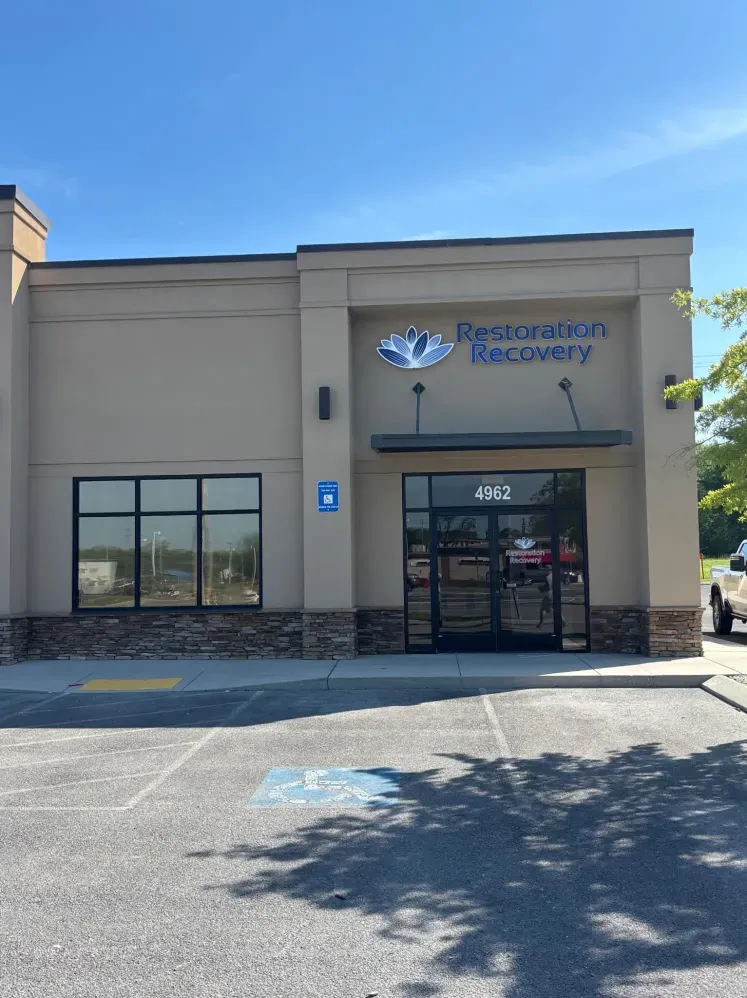
Why Murray County residents come to us
Starting treatment from Chatsworth, Eton, and north Murray
The carpet-industry and manual-work profile
Murray County's economy is tied directly to the Dalton floor-covering corridor — Shaw Industries, which is headquartered next door in Whitfield County but has operated plants in Chatsworth and Eton for decades, and the broader network of carpet, yarn, and flooring manufacturers across both counties. That means many people here have been on a factory floor, a forklift, a loading dock, or a construction crew for ten, twenty, thirty years. Knees that are shot. A back that hasn't been right since a 2015 injury. A shoulder that got surgery, then physical therapy, then a prescription. If you started on a legitimate pain prescription, tapered or got cut off, and found yourself reaching for something to take the edge off, buprenorphine at the right dose stops the cravings and withdrawal without stopping your ability to function on the job. Sublocade or Brixadi — the long-acting injections — add a second advantage for manufacturing workers: no daily film to remember, no pill to lose, no bottle to explain to anyone.
The "I can't take time off for residential" patient
Murray County is a working county. Shift work at a carpet mill or a poultry processor doesn't accommodate two weeks away for a residential program, and you may not be able to absorb the lost wages even if your employer would hold the job. Our treatment is entirely outpatient: a 2-to-3-hour first visit in Ringgold, a Suboxone prescription in hand when you leave, and short follow-ups thereafter. Nobody at work has to know. Nobody at church has to know. The medical record is protected under 42 CFR Part 2, which is the strictest federal privacy standard for substance use treatment — your employer, your family, and other providers cannot obtain it without your written consent, except in limited cases the law allows, such as a medical emergency or a court order.
Georgia Medicaid (not TennCare) — and what that means for you
Because Murray County is in Georgia, the Medicaid program that covers most lower-income patients here is Georgia Families, the state's Medicaid managed care program. We are an in-network Georgia Medicaid provider. The CMO lineup can change as the state settles its next round of contracts — call us with your specific plan and we'll verify in-network status before scheduling. If you're not sure which CMO you're enrolled in, the card in your wallet will say; if you don't have the card, Georgia Families can look it up at 888-423-6765. For working families above the Medicaid threshold, PeachCare for Kids covers minors and most commercial plans active in Whitfield and Murray counties — BlueCross BlueShield of Georgia, Cigna, Aetna, Ambetter, UnitedHealthcare — cover MAT under standard behavioral health benefits. We verify coverage before your first visit so there are no surprises.
Why telehealth matters so much here
From a county this far out, telehealth is how most of your care actually happens after the first in-person visit in Ringgold. Most follow-up medication management, counseling sessions, and check-ins can happen via secure, HIPAA-compliant telehealth from your phone, tablet, or computer. If you choose Sublocade (monthly buprenorphine injection) or Brixadi (weekly or monthly injection), the injection is ordered for you and you take Suboxone until it arrives. After that you only need to come to Ringgold for the injections, and counseling and dose adjustments can happen online. For patients on daily Suboxone film or tablets, follow-up is even more flexible: your prescriber can see you over telehealth, confirm stability, and send the refill electronically to a pharmacy near you — Walgreens, CVS, Walmart in Chatsworth or Dalton, or the independent pharmacy you already use.
The AdventHealth Murray / local-provider gap
AdventHealth Murray is the 42-bed community hospital in Chatsworth and it handles emergencies, but it doesn't run an ongoing MAT program — if you walk into the ER mid-withdrawal, they can stabilize you, but they're going to send you out with a referral, not with a Suboxone prescription you can stay on. The handful of general-practice and family-medicine offices in Chatsworth and Dalton who will write buprenorphine either don't take new MAT patients or have long waitlists. That's the gap our clinic fills for Murray County — we're structured around opioid use disorder specifically, our providers are experienced in MAT, we take same-week appointments, and we don't have a six-month waitlist.
Kratom, 7-OH, and the rural-gas-station market
In rural North Georgia, kratom and 7-hydroxymitragynine (7-OH) dependence is a real risk. Kratom powder and 7-OH extract products are widely sold at gas stations, smoke shops, and convenience stores along US-411 and throughout the Dalton-Chatsworth corridor. They're marketed as herbal supplements or "natural energy," but 7-OH in particular acts on the same opioid receptors as prescription opioids, with a withdrawal profile that looks similar to oxycodone or heroin withdrawal. Our providers treat kratom and 7-OH dependence with the same MAT tools we use for any other opioid — if you've tried to quit kratom and can't, or if you're drinking 7-OH tonics daily and starting to recognize withdrawal between doses, we can help.

 CARF Accredited