
Restoration Recovery outpatient addiction treatment logo
Medication-Assisted Treatment · Chattanooga, TN · Updated June 2026

Suboxone Treatment in Chattanooga, TN

FDA-approved Suboxone (buprenorphine) therapy for opioid use disorder at our Chattanooga clinic on Shallowford Road. Same-week first appointments, Monday–Friday, prescribed by certified providers in a CARF-accredited outpatient program — with most insurance accepted.

Same-week appointments · CARF-accredited · In-person & telehealth follow-ups · TennCare, BlueCare, BCBS, UHC, and most commercial insurance accepted.

At a glance

Suboxone treatment in Chattanooga

Restoration Recovery prescribes Suboxone (buprenorphine/naloxone) for opioid use disorder at its flagship Chattanooga clinic, 6141 Shallowford Road, Suite 100. It is an outpatient medication-assisted treatment (MAT) clinic — you live at home while in treatment — open Monday through Friday, with the full buprenorphine formulary on site: daily Suboxone film or tablet plus the long-acting Sublocade and Brixadi injections, Intensive Outpatient Programming, and integrated behavioral health. Suboxone is first-line treatment for opioid use disorder per the ASAM National Practice Guideline, and the Chattanooga clinic typically books a first appointment within the same week, with a same-day prescription once your COWS score confirms you are ready.

Buprenorphine cuts overdose mortality roughly in half per Sordo 2017 BMJ, with a built-in ceiling effect that makes it substantially safer than full-agonist opioids. TennCare is typically $0 through BESMART; BlueCare, BCBS, UHC, and most commercial insurance accepted.

Suboxone treatment at our Chattanooga clinic

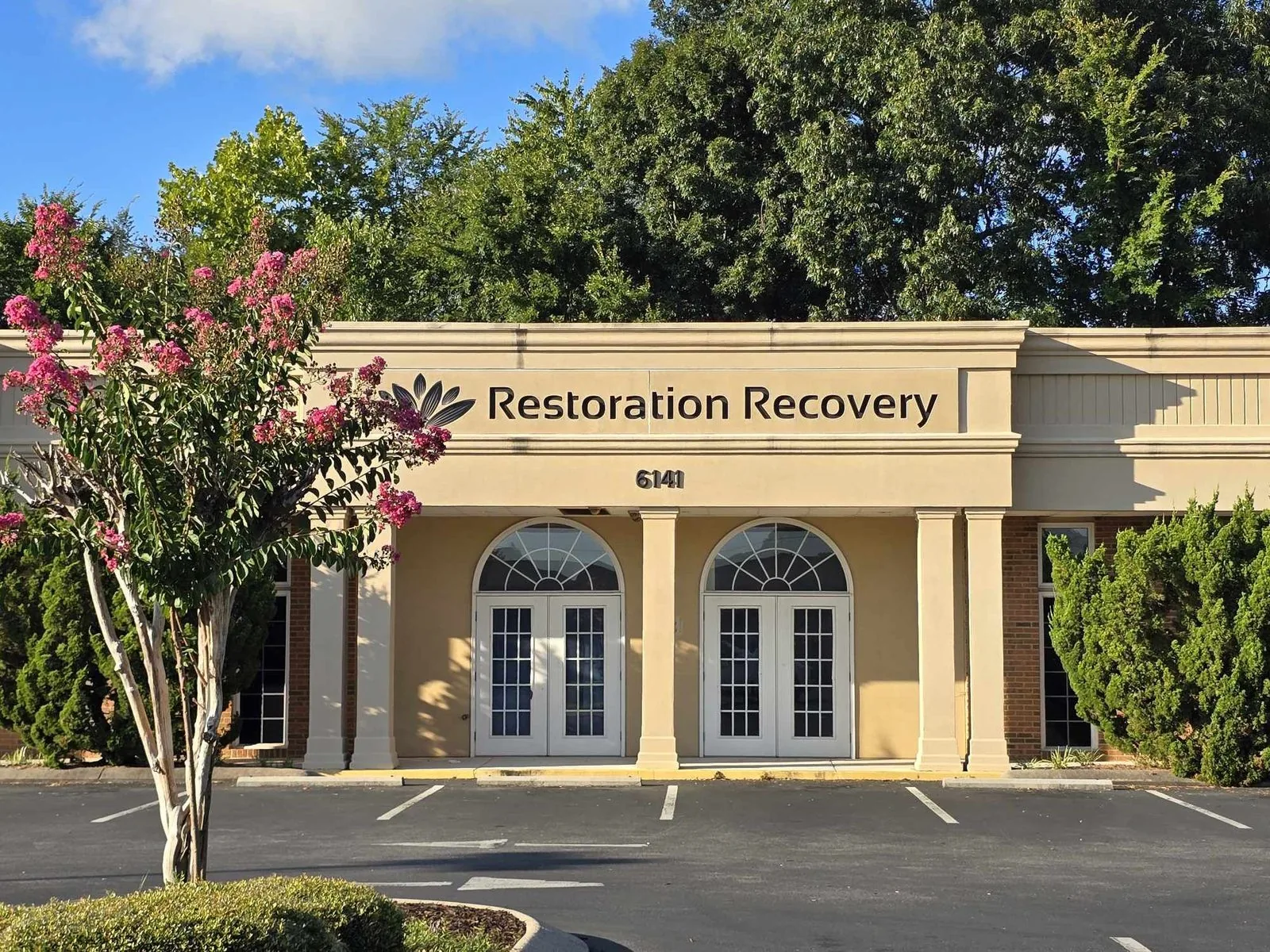
Restoration Recovery's Chattanooga clinic is our flagship location, at 6141 Shallowford Road, Suite 100, Chattanooga, TN 37421 — in the Shallowford Road corridor near I-75, in Hamilton County. It is open Monday through Friday and carries the full buprenorphine formulary on site: daily Suboxone film or tablet, plus the long-acting Sublocade (monthly) and Brixadi (weekly, bi-weekly, or monthly) injections, on-site Intensive Outpatient Programming (IOP), integrated behavioral health, and Hepatitis C care.

The Chattanooga clinic serves patients across Hamilton County and the surrounding communities — Hixson, East Ridge, Red Bank, Ooltewah, Signal Mountain, and Soddy-Daisy. If you are closer to another part of the region, Restoration Recovery also has clinics in Cleveland, TN, Soddy-Daisy, TN, and Ringgold, GA, all reachable at one number: 423-498-2000.

How Suboxone works

Suboxone combines two ingredients: buprenorphine and naloxone. It is taken sublingually — placed under the tongue to dissolve — as a daily film or tablet. Buprenorphine is a partial opioid agonist: it activates opioid receptors enough to reduce cravings and prevent withdrawal, but without the euphoria of full agonists like heroin, fentanyl, or prescription painkillers. Naloxone is included to discourage misuse of the medication itself.

That partial activation does two things at once:

  • Craving reduction. The brain stops sending urgent signals demanding more opioids, so the constant preoccupation with finding and using drugs eases.
  • Withdrawal prevention. Suboxone stabilizes brain chemistry enough to prevent the nausea, muscle aches, anxiety, and insomnia that drive relapse — so you can function at work, at home, and in daily life.

Buprenorphine also has a ceiling effect: taking more than the prescribed dose does not increase its effects, which makes it lower-risk than full opioid agonists. At Restoration Recovery, Suboxone is prescribed for opioid use disorder. For the full clinical deep-dive — the pharmacology, the long-term-outcomes research, and how Suboxone compares to the monthly injection — see our statewide Suboxone treatment guide, the Sublocade vs. Suboxone comparison, and Is Suboxone Right for Me?

Starting Suboxone in Chattanooga: what to expect

Day 1 — Call 423-498-2000 or request a callback

The intake call is short: 5–10 minutes covering a few basic questions — what you’ve been using and when your last dose was — plus insurance verification and scheduling. There’s no commitment to start treatment. We book the soonest available appointment at the Chattanooga clinic.

Day 1–3 — First appointment in Chattanooga

Bring a valid photo ID, your insurance card (if applicable), and a list of any medications you currently take. The visit takes 2 to 3 hours and follows a four-step intake: a DSM-5 substance use disorder assessment plus a COWS (Clinical Opiate Withdrawal Scale) score, then counseling intake, then doctor evaluation, then your prescription. You leave the same day with a Suboxone prescription once your COWS score confirms you are clinically ready — if you prefer the monthly injection route, your provider orders Sublocade or Brixadi at this visit and bridges you on Suboxone in the meantime.

Day 3–7 — First stabilization week

Buprenorphine induction typically begins the same day or the day after your first appointment, once your COWS score confirms you are ready. Withdrawal eases as the dose stabilizes over the first week or two. Follow-ups during stabilization are typically telehealth, so you do not have to take additional time off work. Anything you share at any point is protected under HIPAA and 42 CFR Part 2.

In-Person vs. Telehealth

In-person or telehealth Suboxone in Chattanooga: how to choose

A lot of patients start here wondering whether they can do Suboxone treatment entirely online. The honest answer is that you get both ways at our Chattanooga clinic. Current federal rules call for one in-person evaluation to start buprenorphine, so your first visit is on Shallowford Road, and after that most follow-ups move to secure-video telehealth — you are not taking time off work for routine check-ins. Even routine drug monitoring is handled remotely: mailed urine screens for weekly telehealth patients, and at-home finger-stick tests for monthly and bi-monthly patients.

Telehealth-only services — the ones offering Suboxone by video across the whole state — can be a reasonable fit for a stable, established patient who never needs to be seen in person. Where they fall short is the moment a local patient actually needs a clinic:

  • Starting treatment. An in-person induction and a same-day Suboxone prescription happen with a provider in the room. A video-only service sends a prescription to your pharmacy and leaves you to coordinate the start on your own.
  • Fentanyl inductions. Fentanyl complicates the start, and our team can run a microinduction or a direct-to-injectable plan in person — not something a video-only visit handles well.
  • Injections. Sublocade and Brixadi injections are given at the clinic; a telehealth-only provider cannot administer them.
  • Our IOP program. The intensive outpatient program runs in person at the Chattanooga clinic.
  • A hard week. When recovery gets rocky, some people just want to sit across from their provider. A clinic 15–30 minutes away can do that; a statewide video service cannot.

That is why a local clinic that also offers telehealth tends to serve a Chattanooga patient better than a telehealth-only service: you keep the convenience of video follow-ups and you have a real clinic behind you for the parts of treatment that work better in person. You book one in-person visit this week at 6141 Shallowford Road, leave with a same-day prescription once your provider confirms you are ready, and handle most visits after that from home. For how the video visits themselves work, see our telehealth treatment page.

In-person or telehealth — where to start?

Tell us your situation and we will tell you whether to start in person or by video. Book one in-person visit this week, then move your follow-ups to telehealth. Most major insurance — including TennCare — is accepted.

Book Appointment → Call 423-498-2000
The Evidence

Why medication-assisted treatment works

Suboxone is the standard of care for opioid use disorder — and one of the most rigorously studied interventions in all of addiction medicine. It is endorsed by SAMHSA, the National Institute on Drug Abuse (NIDA), the American Society of Addiction Medicine (ASAM), and the World Health Organization. Three findings have been replicated repeatedly across the research.

Staying on Suboxone cuts overdose deaths

Overdose deaths per 1,000 patients, per year

4.6 Without Suboxone
1.4 With Suboxone 70% fewer deaths

Source: Sordo L et al. BMJ. 2017;357:j1550. Pooled across 19 cohort studies, 15,831 patients.

Patients stay in treatment far longer with Suboxone

Still in treatment one year later

0% Without Suboxone
75% With Suboxone 3 in 4 patients stayed

Source: Kakko J et al. Lancet. 2003;361(9358):662–668. Randomized placebo-controlled trial; both groups received counseling.

Staying on Suboxone longer works much better than a quick trial

Patients who successfully stopped using opioids

7% Short course of Suboxone
49% 12 weeks of Suboxone 7× better success

Source: Weiss RD et al. Arch Gen Psychiatry. 2011;68(12):1238–1246. POATS trial, 653 patients across 10 U.S. sites.

What these numbers mean

Patients engaged in buprenorphine treatment experience overdose mortality at roughly one-third the rate seen among untreated peers. The Sordo meta-analysis in BMJ pooled nearly 16,000 patients across 19 cohort studies — the most-cited mortality evidence point in modern addiction medicine.

The POATS trial tested whether a short course of Suboxone plus a taper could resolve prescription opioid dependence. Only 7% succeeded; the same patients maintained on Suboxone for 12 weeks reached 49%. Longer time on the medication is the single most consistent predictor of staying off opioids.

These outcomes are documented across decades of independent peer-reviewed research, published in The Lancet, BMJ, Archives of General Psychiatry, and the Cochrane Database of Systematic Reviews. The same way insulin manages diabetes, medication is a legitimate tool for managing opioid use disorder. (Full citations in References.)

Why patients choose Restoration Recovery in Chattanooga

Suboxone works — the research is clear. What keeps patients in treatment is the care around the prescription: in-person providers, counseling, and follow-up. Here is what patients find at our Chattanooga clinic:

  • A real clinic on Shallowford Road. You see a provider in person at 6141 Shallowford Road. Telehealth follow-ups come later, after your first in-person visit.
  • Same-week appointments. When you are ready to begin, most patients are seen within the same week they call.
  • MAT-certified providers and a CARF-accredited program. CARF accreditation is the gold standard in addiction-treatment scrutiny — a level most outpatient clinics do not pursue.
  • One of Chattanooga’s longest-running outpatient MAT clinics. Some patients have been with us for more than five years — you see the same care team over time.
  • 4.6 stars across 49 verified Google reviews. You can read them before you call.
  • Integrated counseling and behavioral health. Medication is only part of a plan; we provide both in-house. Many patients are also managing co-occurring anxiety, depression, or trauma, which we treat alongside recovery.
  • Confidential by federal law. Your treatment is protected under HIPAA and 42 CFR Part 2, which shields addiction-treatment records from most forms of disclosure.

From a verified Google review:

“I owe my entire recovery to this place. I had tried so many times in the past, but not until I found these guys did I succeed.”
— Hope N., verified Google review

Cost & insurance for Suboxone in Chattanooga

TennCare patient cost is typically $0 (BlueCare, Wellpoint, and UHC Community Plan) via the BESMART preferred-buprenorphine program at our TennCare-enrolled Chattanooga clinic, which removes prior-authorization delays and supports same-day Suboxone prescriptions for eligible members. Commercial insurance is covered by major Tennessee carriers including BCBS, UHC, Aetna, Cigna, and Humana, and traditional Medicare and Medicare Advantage cover Suboxone as well — verify your specific plan. If you do not have insurance, self-pay is a flat $250 per month.

Not sure what your plan covers?

Most major insurance — including TennCare — covers Suboxone treatment here. Send your name and number and our team verifies your benefits and calls you back, usually within one business day. It takes about two minutes, and you don’t need to share any medical details.

Verify my coverage → Call 423-498-2000

Chattanooga Suboxone treatment FAQ

Where do you provide Suboxone treatment in Chattanooga?

Our Chattanooga clinic is at 6141 Shallowford Road, Suite 100, Chattanooga, TN 37421, in the Shallowford Road corridor near I-75 in Hamilton County. It is open Monday through Friday and is our flagship location, with the full buprenorphine formulary on site including Suboxone film and tablet, Sublocade, and Brixadi, plus IOP and integrated behavioral health. Call 423-498-2000 to book.

How fast can I start Suboxone in Chattanooga?

Same-week intake is standard at the Chattanooga clinic. The typical timeline: first call to first appointment is 1–3 days; you leave your first appointment with a Suboxone prescription that same day, provided your COWS (Clinical Opiate Withdrawal Scale) score confirms you are clinically ready; full stabilization on the medication takes 1–2 weeks. Follow-ups during stabilization are typically telehealth.

Do I have to be in withdrawal before my first appointment?

For patients using shorter-acting opioids (heroin, pills), yes — you need to be in mild-to-moderate withdrawal at the time of your first dose (typically a COWS score around 12 or higher) so buprenorphine doesn’t cause precipitated withdrawal. That usually means 6 to 24 hours since your last dose of a short-acting opioid, or longer for long-acting ones. For fentanyl users the rules are different because fentanyl accumulates in body tissue — we offer microinduction and direct-to-injectable protocols that don’t require you to be in deep withdrawal first. Your provider plans the right approach at your first visit.

Will my insurance cover Suboxone in Chattanooga?

Most plans cover Suboxone. TennCare patient cost is typically $0 (BlueCare, Wellpoint, and UHC Community Plan) through the BESMART program at our TennCare-enrolled Chattanooga clinic. Commercial plans from BCBS, UHC, Aetna, Cigna, and Humana are accepted, and traditional Medicare and Medicare Advantage cover Suboxone as well. Self-pay is a flat $250 per month. Verify your specific plan here.

Will Suboxone make me feel high?

For most people, no — especially once you’re stabilized on an appropriate dose. Buprenorphine has a ceiling effect that limits how strong the opioid response can be, which is exactly what makes it safer than full agonists. In the first week or two, some people notice mild subjective effects that resolve as the dose stabilizes. Most patients describe being on Suboxone as feeling normal again rather than intoxicated, and remain able to work, drive, and function throughout treatment.

How long do people stay on Suboxone?

There’s no one-size-fits-all answer. Research shows longer treatment duration correlates with better outcomes — the Weiss 2011 POATS trial found patients maintained on Suboxone for 12 weeks had 49% success versus 7% for a short taper. Many patients stay on Suboxone for years, some indefinitely. Treatment length is a conversation between you and your provider. We don’t push tapers; we support whatever duration works clinically.

Is Suboxone treatment confidential?

Yes. Everything you share is protected by HIPAA and by 42 CFR Part 2, the federal rule that specifically shields addiction-treatment records from disclosure without your written consent — including from many subpoenas, employers, and family members. Be honest about your current use at intake; clinical decisions depend on accurate information, and the conversation is protected.

How to start

You don’t need all the answers before you call. Our team walks you through the process from your first phone call to your first appointment and every visit after.

Same-week appointments are available at our Chattanooga clinic. Request an appointment or call 423-498-2000 to speak with our team directly. Phones are answered Monday through Friday, 9am to 4:30pm Eastern; after hours, leave a message or use the callback form and we’ll respond the next business day. If you need help right now, the 988 Suicide & Crisis Lifeline and the free, confidential SAMHSA National Helpline (1-800-662-4357) are available 24/7.

References

The statistics on this page come from peer-reviewed medical research. Patients, family members, and providers are welcome to verify any claim against the original source.

  1. Sordo L, Barrio G, Bravo MJ, et al. Mortality risk during and after opioid substitution treatment: systematic review and meta-analysis of cohort studies. BMJ. 2017;357:j1550. [PubMed]
  2. Kakko J, Svanborg KD, Kreek MJ, Heilig M. 1-year retention and social function after buprenorphine-assisted relapse prevention treatment for heroin dependence in Sweden: a randomised, placebo-controlled trial. Lancet. 2003;361(9358):662–668. [PubMed]
  3. Weiss RD, Potter JS, Fiellin DA, et al. Adjunctive counseling during brief and extended buprenorphine-naloxone treatment for prescription opioid dependence: a 2-phase randomized controlled trial. Arch Gen Psychiatry. 2011;68(12):1238–1246. [PubMed]
  4. American Society of Addiction Medicine (ASAM). National Practice Guideline for the Treatment of Opioid Use Disorder: 2020 Focused Update. [ASAM]
A place for hope & healing

Ready to start Suboxone treatment in Chattanooga?

Same-week appointments at our Shallowford Road clinic. Most major insurance plans accepted.