Frequently Asked Questions
How far is your Cleveland clinic from Benton?
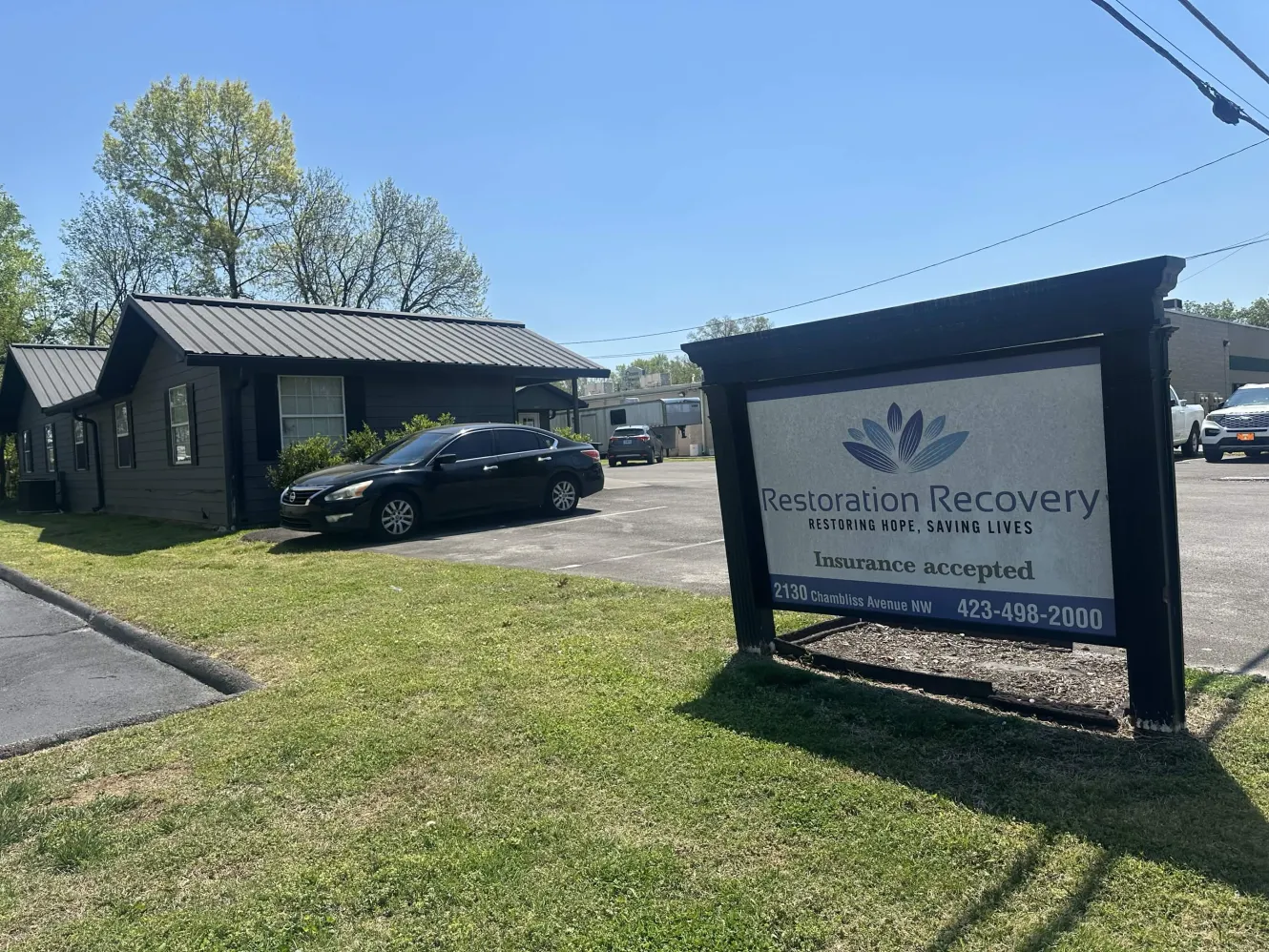
About 25 minutes in light traffic. From downtown Benton and the Polk County Courthouse, follow US-411 North roughly 18 miles through Hiwassee, across the Bradley County line, and into Cleveland. Turn left on 25th Street and the clinic is a short jog to 2130 Chambliss Avenue NW. From the south end of the county (Old Fort) figure closer to 18 to 20 minutes. From the Ocoee / Ducktown / Copperhill end of Polk County figure 35 to 45 minutes, since you have to run US-64 west into Benton first.
I live out toward the Ocoee or the Cherokee National Forest — is a 45-minute drive really sustainable for treatment?
For most patients it becomes sustainable because only the first visit has to be a full clinic trip. After your initial in-person evaluation, follow-ups can usually run on secure telehealth from home, which in practice means a round trip only for an injection, while patients on daily Suboxone film do not have to come in unless their provider asks. For seasonal whitewater guides, Forest Service staff, and anyone living deep in Polk County, that cadence is genuinely workable.
Does Benton or Polk County have a higher-than-average opioid burden, and does that affect my care?
East Tennessee as a region has historically had one of the highest opioid dispensing rates in the country — Tennessee's average of 68.5 prescriptions per 100 residents already ran about 58% above the national average, and several rural East Tennessee counties reached 191 per 100 during the peak prescribing years. Polk County shares that context. What it means for your care is that your story is not unusual, your clinical presentation is familiar to our providers, and there is nothing about a rural East Tennessee patient profile that complicates MAT. If anything, buprenorphine works particularly well for the legacy-prescription / legitimate-injury picture that is common here.
I have a Narcan reversal on my record — will that affect my care or insurance?
No. A prior overdose reversal is not a disqualifier, a red flag, or something your insurance will hold against you for MAT coverage. In fact, it is one of the clearest clinical indications for starting Suboxone or a long-acting buprenorphine injection. Your records are protected by HIPAA and 42 CFR Part 2, which means no employer, family member, or outside provider sees anything without your written consent, except in limited cases the law allows, such as a medical emergency or a court order.
How quickly can I start treatment?
Most Benton-area patients are seen within the same week. Call 423-498-2000 or request an appointment online. You leave your first visit with a Suboxone prescription and take your first dose at home (Sublocade and Brixadi injections are ordered during the first visit and administered at a short follow-up). If you are in withdrawal or close to it when you call, we will work to get you in the same week.
I work shift work or seasonal outdoor-recreation hours — can you actually accommodate my schedule?
Yes. Our Cleveland clinic runs Tuesdays and Thursdays, 9 am to 4:30 pm, which is a tight window but very predictable — patients who work variable seasonal hours can usually plan around two fixed weekdays far more easily than around a rolling Monday-through-Friday schedule. After the first visit, you can usually move to telehealth follow-ups that can be done on a lunch break, between river runs, or from home on a day off. The only appointments that have to happen in person after intake are the long-acting injections (Sublocade and Vivitrol every four weeks, Brixadi weekly or monthly).
Will my treatment be confidential?
Yes. All treatment at Restoration Recovery is protected by HIPAA and 42 CFR Part 2 — the strictest federal privacy standard for substance use treatment. Your records cannot be shared without your written consent, including with family members, employers, or other providers, except in limited cases the law allows, such as a medical emergency or a court order. In a town Benton's size, it can help that the clinic you visit is 25 minutes away in Cleveland.
What insurance do you accept?
We accept TennCare (a large share of Polk County residents), Medicaid, BlueCross BlueShield of Tennessee, Cigna, Aetna, Ambetter, United Healthcare, and most major commercial plans — including the employer coverage used by county-government workers, school-district employees, TVA-adjacent contractors, and patients who commute into Bradley County or Athens for work. Check your coverage here or call to verify before your first visit.
Do I need to stop using opioids before my first appointment?
You do not need to be completely off opioids before coming in. Your provider will evaluate where you are and guide you through a safe transition onto Suboxone. In most cases, you should be in early withdrawal (usually 12–24 hours since last use of short-acting opioids, longer for long-acting opioids) before your first dose — your provider will explain exactly what to expect and when to take that first dose at home.
Can I do follow-up appointments from home?
Yes. After your initial in-person evaluation, many follow-up visits can be conducted via secure, HIPAA-compliant telehealth from your phone, tablet, or computer — useful for Benton and Polk County residents who work seasonal outdoor jobs, live deep in the Cherokee National Forest, or just want to avoid the drive once they are stable on medication.


 CARF Accredited