
Why Red Bank residents come to us
What we see most often from 37415 patients
The longtime homeowner
Red Bank is one of Chattanooga's original mid-century streetcar-and-automobile suburbs. The housing stock is heavy with 1940s, 1950s, and 1960s brick ranches and bungalows, and a surprising number of our patients from the Duncan Hills, Midvale, and Brookmoor blocks have lived in the same house for 30, 40, or 50 years. The median age in Red Bank is older than Hamilton County as a whole, and about one in six residents is 65 or older. For older homeowners who developed a dependence later in life — usually after a joint replacement, a back surgery, or a series of tapering prescription refills — the idea of leaving the house for a residential program is a non-starter. You have a lawn to mow, a dog to let out, and a grandchild to pick up from Alpine Crest or Red Bank Elementary on Tuesdays. Our outpatient MAT model is built for exactly that situation: a first visit of 60 to 120 minutes, a same-day prescription in most cases, and follow-ups that can mostly move to telehealth after the initial in-person evaluation.
The Medicare and Medicare Advantage patient
Because Red Bank skews older and a lot of our patients are on fixed income, the insurance question on a first call is almost always about Medicare. Good news: Restoration Recovery accepts traditional Medicare and most Medicare Advantage plans, including Aetna MA, BCBS BlueAdvantage, Cigna MA, Humana MA, and UnitedHealthcare MA. MAT is a covered Medicare Part B benefit, which means for most patients the out-of-pocket cost for Suboxone, Sublocade, Brixadi, or Vivitrol is minimal after the Part B deductible. If you have been worried that addiction treatment is going to be the bill that wrecks your retirement — that is almost never how it plays out in practice. Call and we will run your coverage before the first appointment.
The post-injury pain patient
Red Bank has a long-standing population of current and former industrial, construction, trades, and hospital-support workers — a lot of whom grew up in the manufacturing and warehousing economy that shaped the north-Chattanooga-and-riverbank corridor through the second half of the 20th century. The trades leave injuries: rotator cuffs, backs, knees, wrists. Many of our Red Bank patients had a legitimate prescription for oxycodone, hydrocodone, or Percocet after a surgery or an on-the-job injury, and when the prescription ended they were already physically dependent. Some tapered and failed. Some bought from a friend or family member. Some ended up on the street supply. The clinical picture is almost always more straightforward than the story. Buprenorphine at the right dose handles the withdrawal and the craving and frees the underlying pain conversation to resume with your primary care provider or orthopedist.
The adult child who moved back home
A pattern we see frequently from Red Bank: an adult son or daughter in their 30s or 40s has moved back into the family home, either to help with an aging parent or because their own situation shifted. Sometimes both of them are our patients. Sometimes the parent's chronic-pain prescription history is tangled up with the adult child's fentanyl or heroin history. Either way, getting both generations on stable MAT and into a calmer daily routine is one of the more satisfying parts of what we do. We can see family members on the same day when scheduling allows and share clinical notes between providers as long as each patient has signed the appropriate consent.
The quiet privacy concern
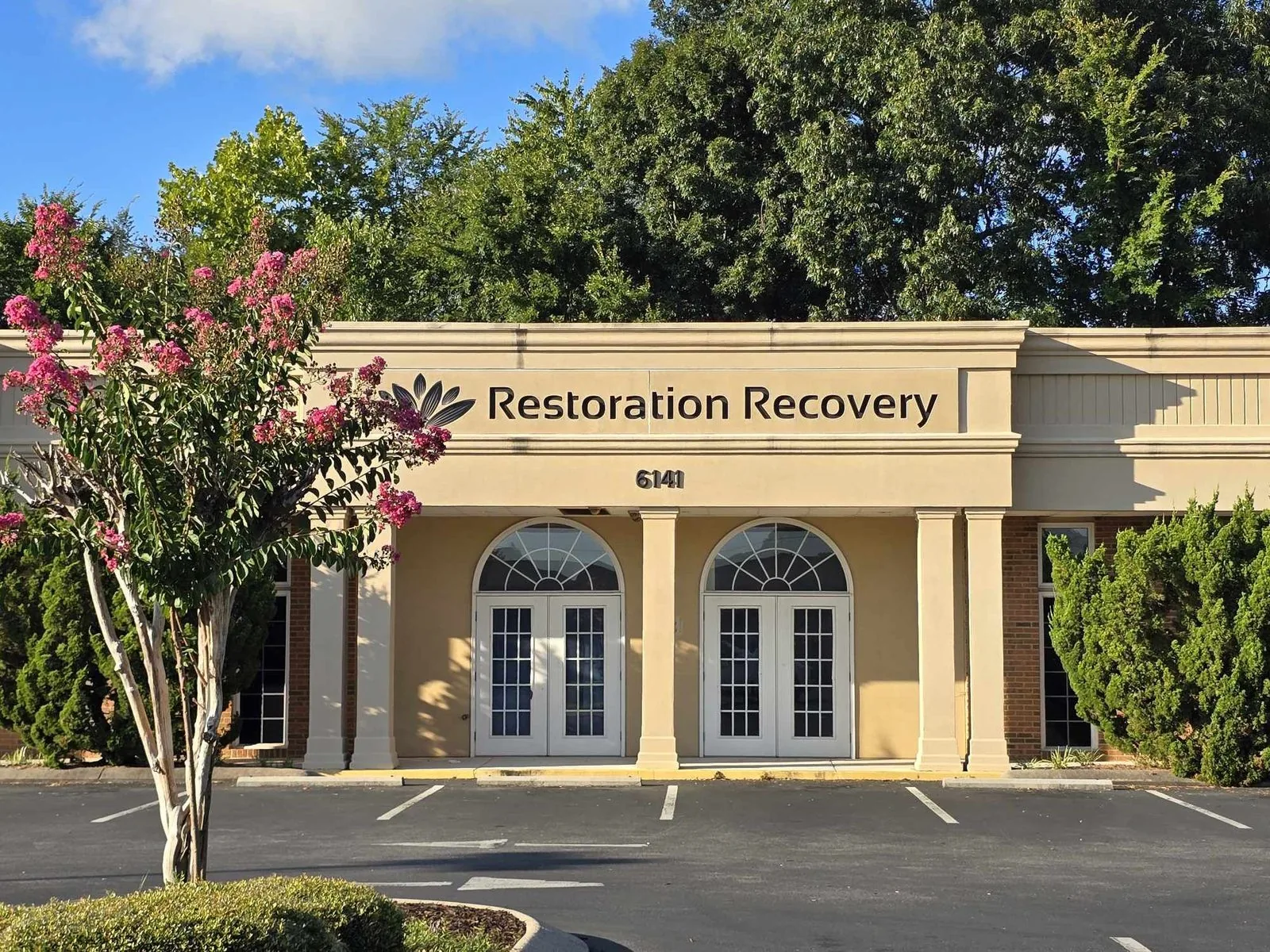
Red Bank is a small, closely connected community with a short main street, a couple of long-standing churches, and the kind of local network where your neighbor's sister works at your dentist's office. A lot of our patients from 37415 have told us, in the first appointment, that one reason they did not start treatment sooner was that they did not want to run into a neighbor in a waiting room. Our Chattanooga clinic sits on Shallowford Road, across the river and east of downtown — close enough to be convenient, far enough from your block that the odds of bumping into someone from church are basically zero. Your entire chart is covered by HIPAA and 42 CFR Part 2, the strictest federal privacy standard for substance use treatment; nothing in your record can be released to an employer, a family member, or another provider without your written consent.
The Narcan-save patient
Red Bank Fire Department and Hamilton County EMS both carry naloxone, and a meaningful share of our referrals over the past 18 months have come from patients who were revived in their own house, in a church parking lot on Dayton Boulevard, or at home by an adult child who keeps Narcan on the kitchen counter. The 24 hours after a reversal are the most important window we ever work with — the person is awake, physically safe, and usually shaken enough to actually want a different outcome. If that happened in your home in the last year, a first visit at our clinic does not wait for a "rock bottom" or a period of abstinence. We can usually get you in within the same week, and we structure the first appointment around your withdrawal timing so you leave stable.
Telehealth for Red Bank residents on fixed transportation
If you no longer drive regularly, or if the US-27 traffic is something you would rather avoid twice a month, telehealth follow-ups let you keep the entire medication-management piece of your care on your phone or tablet after the first in-person visit. Several of our Red Bank patients have done exactly one in-person appointment and then handled everything remotely from their own living room. The initial evaluation and the injection visits (Sublocade, Brixadi, Vivitrol) have to happen in person. Everything else can usually run online.