Restoration Recovery outpatient addiction treatment logo
Near Signal Mountain, TN · 37377

Addiction Treatment Near Signal Mountain, TN

For the roughly 8,500 residents of the City of Signal Mountain, the neighboring Town of Walden, and the Fairmount community sitting atop Walden Ridge, Restoration Recovery's Chattanooga clinic on Shallowford Road is about 20 minutes down the mountain — via the W Road (Signal Mountain Boulevard) or Taft Highway to Signal Mountain Road. Same-week appointments, Suboxone / Sublocade / Brixadi / Vivitrol, and most commercial insurance accepted, including BlueCross BlueShield of Tennessee. Your entire chart is protected by HIPAA and 42 CFR Part 2 — the strictest federal privacy standard for substance use treatment.

CARF CARF Accredited Accepting New Patients Same-Week Appointments Most Insurance Accepted Telehealth Available
The Signal Mountain Picture

What recovery looks like from the 37377 ZIP

If you live on Signal Mountain — anywhere from Olde Town and the original Signal Mountain grid, out along Taft Highway toward Pruett's and the Walden town line, or up on the ridgeline in Shackleford Ridge, the Palisades, Boulder Point, Carriage Hill, St. Ives, or the older homes along Signal Mountain Boulevard — you already know that "nearby" is a relative term. The clinic that is twenty minutes away for the rest of Hamilton County is still twenty minutes away for you, but those twenty minutes include two thousand feet of elevation change and a stretch of switchbacks that can look very different at 7 am in December than at 2 pm in June. If you have been quietly wondering whether there is a private, medically-sound option for addiction treatment that will not require you to move, to take time off work, or to explain a long absence to the people in your Sunday school class, the honest answer is that there is — and the logistics are more workable than they look at first.

The patients we see most often from 37377 do not fit the stereotype that the general public associates with the word "addiction." They are retired executives who took a prescription after a rotator cuff repair and never quite stopped. They are attorneys, physicians, teachers, accountants, and business owners who built careers while a dependency grew in parallel. They are spouses of well-known professionals who have been filling prescriptions quietly for years. A significant share started on a legitimate script after a surgery, an injury, or a chronic pain workup — and ran into trouble when the prescription ended, or when tolerance crept up faster than the prescribing physician was comfortable chasing. Residential rehab has almost never been realistic for this population: the job, the household, the community role, and the reputation cannot be paused for a thirty-day stay. Outpatient buprenorphine at the right dose keeps all of that intact while the medical problem gets treated.

Hamilton County fentanyl-attributed deaths

Annual totals, 2022 – 2024

77 2022
61 2023
42 2024 ↓ 45% vs 2022

Source: Hamilton County Medical Examiner's Office.

Suspected overdose ER visits

Hamilton County first half, 2023 – 2025

1,003 H1 2023
947 H1 2024
797 H1 2025 ↓ 21% vs 2023

Source: Hamilton Counted report, Hamilton County syndromic surveillance.

Why the county-wide numbers matter on the mountain

Fentanyl-attributed deaths in Hamilton County fell from 77 in 2022 to 42 in 2024 — a 45% drop in two years. Suspected-overdose ER visits followed the same curve, down 21% over the same window. The easy read is that Signal Mountain sits outside that story, because the mountain is not where fentanyl gets sold, shared, or conspicuously used. That read is incomplete. The fentanyl decline coincides with a population-wide shift where more people who would have died are now surviving, more Narcan is in circulation, and more people with prescription-origin dependencies are recognizing what the drug supply actually looks like in 2025 — even in households where nobody is buying anything off the street.

The pattern we see from Signal Mountain is rarely the fentanyl storyline. It is the pill storyline. A patient who has been on hydrocodone or oxycodone for five, ten, or twenty years post-surgery. A patient whose primary care physician recently retired and whose new provider is not comfortable continuing the script at the previous dose. A patient whose spouse noticed the count was off. A patient whose adult child moved home and started asking questions. The numbers on this page describe the county. The patients they describe are almost always people like your neighbors, not people unlike your neighbors.

If you or someone in your household has been quietly managing a prescription dependency for longer than anyone intended, a first appointment with us is a clinical conversation — not a crisis intervention, not a public statement, and not a transfer of care away from the physicians you already trust for everything else.

Nearest Location · 20 min from Signal Mountain

Chattanooga Clinic

Address6141 Shallowford Rd, Suite 100
Chattanooga, TN 37421
HoursMonday – Friday · 9:00 am – 4:30 pm
Fax423-498-2001
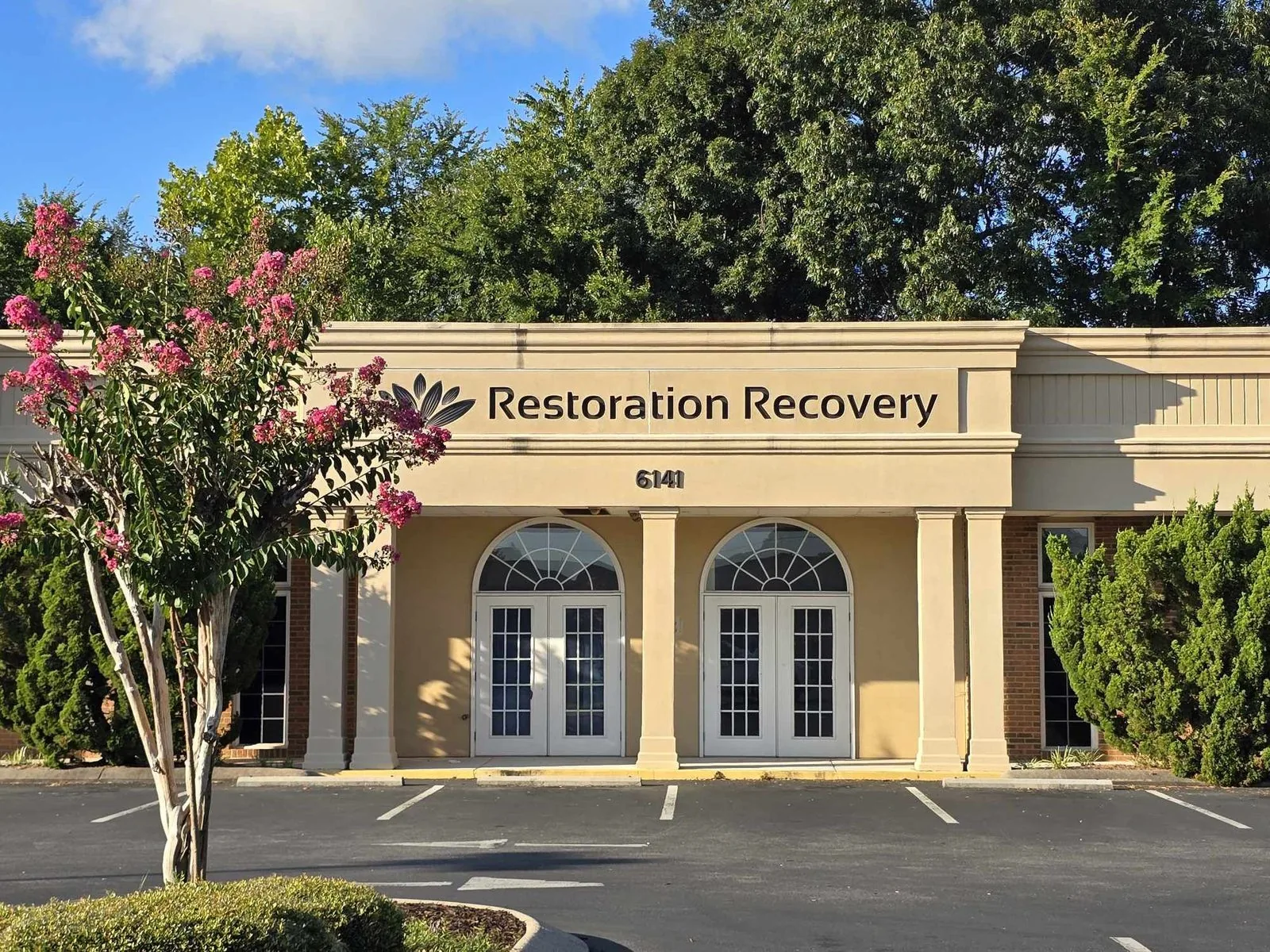
Restoration Recovery Chattanooga clinic near Signal Mountain, TN
From your Signal Mountain neighborhood

The realistic drive from the top of the mountain to our Shallowford clinic

Getting off Signal Mountain is the part of the trip people from 37377 actually think about. Everything south of the ridgeline happens at interstate speeds on flat ground; everything north of it is a question of which two-lane road you trust in which season and at which hour. Two main routes lead down to the valley. Knowing which one to take out of your neighborhood, and when, is the single biggest factor in whether a twice-monthly appointment stays sustainable.

The W Road (Signal Mountain Boulevard) — the south-side descent

Most Olde Town residents, anyone on the south-facing side of the ridge, and anyone near the schools will take the W Road down. This is the classic Signal Mountain descent — three switchbacks carved into the face of the mountain, dropping from the plateau onto US-127 in Red Bank. In clear, dry conditions the descent takes about six minutes; from the bottom of the W Road to our Shallowford clinic is another twelve to fourteen minutes via US-127, Dayton Boulevard, and Highway 153 east to Shallowford Road. The W Road is narrow, has no shoulder in places, and the switchbacks are genuinely tight — so it is the route most people avoid in ice, freezing rain, or hard fog. The county salts it promptly but cannot always salt it first. In a normal week, though, it is the fastest way down from the south end of the mountain.

Taft Highway / Signal Mountain Road — the north-side descent

If you live on Taft Highway out toward Walden, anywhere near Pruett's Market, the Bachman Community Center area, Shackleford Ridge, or the neighborhoods pushing north toward Fairmount, your natural descent is Taft Highway south to Signal Mountain Road. Signal Mountain Road drops off the plateau on a longer, more gradual grade than the W Road — more curves, fewer switchbacks, better for drivers who do not love the hairpins. It lands in Red Bank near the Red Food area, and from there you connect to Highway 153 east to Shallowford. Figure eighteen to twenty-two minutes door to door. In winter this is the route most Walden and north-mountain patients prefer; the grade is kinder and the county tends to treat it earlier.

Shackleford Ridge / Palisades / Carriage Hill / St. Ives — the top of the ridge

If you live up toward the state forest side of the mountain — Shackleford Ridge Park, the Palisades overlooks, Carriage Hill, St. Ives, Boulder Point, or any of the wooded neighborhoods that back up to Prentice Cooper State Forest — you have a longer initial leg getting to either descent. Most residents in this zone cut across Taft Highway to either the W Road or Signal Mountain Road depending on destination. For our Shallowford clinic, Signal Mountain Road is usually the marginally faster choice because it deposits you closer to Highway 153. Plan on a door-to-door time of twenty-two to twenty-eight minutes in normal traffic.

Town of Walden — the northeast end of the plateau

Walden is its own incorporated town of roughly 2,000 people, sitting northeast of the City of Signal Mountain on the same ridgeline. If your address is on Timesville Road, near Bachman Community Center, or up toward the Walden town hall, your fastest route to us is Taft Highway south across the Signal Mountain line, then down Signal Mountain Road to 153. Walden-to-Shallowford generally runs twenty-three to twenty-seven minutes. For an established patient on a monthly injection cadence, this is a genuinely manageable drive twelve times a year. For a new patient who may need weekly visits for the first month or two, the telehealth follow-up option becomes important — more on that below.

Fairmount — the north end, beyond Walden

The unincorporated Fairmount community sits north of Walden on the same plateau. Your drive time is a few minutes longer than Walden — closer to twenty-five to thirty minutes to our Shallowford clinic — but the route is identical: Taft Highway south, Signal Mountain Road down, Highway 153 east. Some Fairmount patients find that our Soddy-Daisy clinic on Walmart Drive is actually a shorter drive for Monday and Wednesday appointments, since you can take Highway 27 north instead of dropping into Chattanooga. If you are stable on a Sublocade or Brixadi injection cadence, we can switch your in-person visits between locations depending on which works better for your week.

Winter weather — the honest version

Hamilton County averages three to six ice events per year severe enough to affect the mountain roads while leaving the valley floor functional. On those days, both the W Road and Signal Mountain Road can be closed, closed to through traffic, or technically open but genuinely unsafe. If your appointment falls on one of those days, call the clinic at 423-498-2000 and we will convert to a telehealth visit on the spot. For ongoing care — meaning every visit after your first in-person evaluation — most Signal Mountain patients do the majority of follow-ups on secure video from home regardless of weather, which eliminates the drive-down question entirely outside of injection visits.

Already commuting down for work?

A large share of working-age Signal Mountain residents commute down every weekday to downtown Chattanooga, the North Shore, UTC, an area hospital, the BlueCross campus, or the Hamilton Place / Shallowford corridor. If you already drive Highway 153 or Shallowford Road to work, our clinic is genuinely on your path — and a 9 am slot before a 10 am start, or a 4 pm slot before heading home, fits the existing commute without adding a dedicated trip off the mountain.

How Treatment Works

Restoration Recovery provides outpatient addiction treatment — no residential stay, no detox facility. You visit our Chattanooga clinic for appointments and go home the same day. Treatment is built around your schedule, not the other way around.

Your first visit typically takes 60 to 120 minutes and follows a four-step flow: intake (DSM-5 assessment + COWS score for opioid use disorder), counseling, a doctor evaluation, and — if clinically appropriate — a same-day Suboxone prescription (Sublocade and Brixadi injections are ordered per-patient and administered at a follow-up visit). Follow-up visits are shorter and can often be done via telehealth from home.

What We Treat

We provide evidence-based treatment for addiction to opioids and opioid-like substances including heroin, fentanyl, oxycodone (OxyContin, Percocet), hydrocodone (Vicodin, Norco), morphine, codeine, tramadol, and prescription painkillers.

We also treat alcohol use disorder, stimulant dependence (cocaine, methamphetamine, Adderall, Ritalin, Vyvanse), benzodiazepine dependence (Xanax, Klonopin, Ativan, Valium), cannabis use disorder, and co-occurring mental health conditions including anxiety, depression, and trauma.

Kratom & 7-Hydroxymitragynine (7-OH) Addiction

Kratom and its concentrated derivative 7-OH are increasingly available and can cause opioid-like physical dependence with severe withdrawal symptoms. Our providers have experience treating kratom and 7-OH dependence with MAT and clinical support tailored to its distinct withdrawal profile. If you are struggling with kratom or 7-OH products, we can help.

Medications We Prescribe

  • Suboxone (buprenorphine/naloxone) — daily film or tablet for opioid use disorder. Reduces cravings and prevents withdrawal so you can function normally.
  • Sublocade (extended-release buprenorphine) — once-monthly injection for patients who prefer not to take daily medication. No pills, no films, no daily decisions.
  • Brixadi (extended-release buprenorphine) — weekly, bi-weekly, or monthly injection for opioid use disorder. Flexible dosing intervals for patients who want a shorter cadence than monthly, or who are still titrating to a maintenance dose.
  • Vivitrol (naltrexone) — once-monthly injection for alcohol use disorder. Blocks the reward pathway that drives compulsive drinking.

Insurance & Cost

We accept most major insurance plans including TennCare, Medicaid, BlueCross BlueShield of Tennessee, Cigna, Aetna, Ambetter, and United Healthcare. Most patients pay little to nothing out of pocket. Verify your coverage or call 423-498-2000 before your first visit.

Why Choose Restoration Recovery

  • CARF accredited (Commission on Accreditation of Rehabilitation Facilities)
  • Licensed in Tennessee and Georgia
  • HIPAA and 42 CFR Part 2 compliant — your treatment is confidential
  • MAT-certified providers
  • Four clinic locations with same-week appointments
  • Telehealth available for follow-up care from home
  • Integrated hepatitis C treatment for enrolled patients
Why Signal Mountain residents come to us

What we see most often from 37377 patients

The long-prescription patient

The single most common presentation we see from the mountain is a patient who has been on a prescription opioid for years — sometimes more than a decade — for a legitimate medical reason, and who has quietly recognized that the relationship with the medication has changed. Hydrocodone after a spinal fusion. Oxycodone after knee and hip replacements. Percocet for chronic migraines. Tramadol that slowly escalated from "as needed" to "every day." The original prescription was appropriate. The prescriber was competent. The dependency developed without anyone making a mistake, because that is how tolerance and physical dependence work. The conversation we have is a clinical one about transitioning safely to buprenorphine, not a conversation about fault. In most cases, the primary care physician or specialist who has been managing the prescription is relieved to coordinate with us on the transition, and your other medical care continues exactly as it has been.

The high-functioning professional

A meaningful share of our Signal Mountain patients hold positions where the public-facing version of their lives cannot accommodate a visible treatment episode. The partner at the law firm. The physician on a hospital staff. The executive with a board of directors. The retired superintendent or judge. The schoolteacher or the school administrator. The spouse of someone whose name is in the paper. For these patients, residential treatment was never a realistic option — a thirty-day absence is not explainable in their work or social context — and that is one of the reasons the dependency went on as long as it did. Outpatient buprenorphine, with most visits after the first one conducted via telehealth from a home office, is the model specifically designed for this situation.

The small-community privacy concern

Signal Mountain is, in the functional sense, a small town. People recognize each other's cars. Kids go to school together for twelve years. Church memberships overlap. The grocery store on Taft is a social space as much as a commercial one. More than one of our Signal Mountain patients has told us, at the first visit, that the reason they did not start treatment earlier was that they did not want to sit in a waiting room where someone might see them. Our Chattanooga clinic sits on Shallowford Road, twenty minutes off the mountain and well outside the orbit of anyone you would expect to encounter at Pruett's, at the MACC (Mountain Arts Community Center), at a school pickup, or at the Signal Mountain Golf and Country Club. More importantly, every record in your chart is covered by HIPAA and 42 CFR Part 2 — the strictest federal privacy standard for substance use treatment. Nothing in your chart can be released to a family member, an employer, a colleague, or another provider without your explicit written consent. That is a federal guarantee, not a policy we choose.

The spouse who noticed

A recurring pattern in the patients we see from 37377 is that the person coming in is not the person who first recognized the problem. A spouse noticed the count was off. An adult child home from college noticed medication in unexpected places. A partner reviewed the credit card statement and counted the number of different pharmacies. In most of these cases, by the time the patient arrives at our clinic, the family conversation has already happened. What is needed at that point is a medically-sound next step that does not blow up the rest of the household, and we are built for that. First visits are scheduled discreetly. Paperwork references Restoration Recovery, not the nature of the treatment. The clinic itself sits in a medical-professional building that looks like any other outpatient office.

The prescription-to-supply transition

A smaller but important share of our Signal Mountain patients have experienced the transition from prescription supply to non-prescription supply — usually reluctantly, usually after a provider tapered or discontinued the prescription faster than the physical dependency allowed for. Some have bought pills from a friend, a former coworker, a housekeeper, a contractor. Some have used the internet. A handful have purchased what was sold as a pharmaceutical pill and turned out to be something else, which is an increasingly common and increasingly dangerous scenario given how much of the current illicit pill supply contains fentanyl. None of this is a disqualifier for treatment. The evaluation is the same. The medication is the same. The clinical conversation is the same. We start where you are.

Telehealth for the mountain

For Signal Mountain specifically, telehealth is the single most useful feature of our model. After your initial in-person evaluation, the majority of ongoing care — medication management, counseling, check-ins — can happen on secure video from your home office, your car on a lunch break, or a quiet room at work. The only appointments that have to happen in person after intake are the long-acting injections (Sublocade, Brixadi, Vivitrol), which are typically once a month. For a stable patient, that means one drive down the mountain every four weeks, with everything else remote. Several of our Signal Mountain patients have settled into that exact pattern and have described it as the first form of addiction treatment that felt like it respected the privacy and schedule constraints they actually live with.

Frequently Asked Questions

How far is your Chattanooga clinic from Signal Mountain?

About 20 minutes in normal conditions. Most Olde Town and south-mountain residents take the W Road (Signal Mountain Boulevard) down to US-127 in Red Bank, then Highway 153 east to Shallowford Road. Taft Highway and Walden residents typically prefer Signal Mountain Road, which has a longer, gentler grade and lands in the same area. Either way, the clinic is at 6141 Shallowford Rd, Suite 100 in Chattanooga 37421.

Is the drive down the mountain a problem in winter?

It can be during ice events. Both the W Road and Signal Mountain Road can get icy before the valley floor does, and Hamilton County occasionally closes them during severe weather. On those days we simply convert your scheduled appointment to a telehealth visit on the spot — call the clinic at 423-498-2000 and we handle the switch. For ongoing care, most Signal Mountain patients already do the bulk of their follow-ups on secure video from home regardless of weather, so winter is usually a non-issue after the first in-person visit.

Can I do most of my care from home on the mountain?

Yes, and for Signal Mountain patients this is usually the preferred pattern. After your initial in-person evaluation, medication management, counseling, and routine check-ins can all happen via telehealth from your home, home office, or any private space with a phone or computer. The only appointments that must happen in person after intake are the long-acting injections (Sublocade, Brixadi, Vivitrol), which run about every four weeks for a stable patient. That pattern works out to roughly one drive off the mountain per month.

I live in the Town of Walden, not the City of Signal Mountain. Does that matter?

Not for your treatment. Walden is its own incorporated town of about 2,000 residents sitting on the same ridgeline, and it shares the 37377 ZIP code with the City of Signal Mountain. The two communities have separate town governments, separate property tax structures, and separate zoning, but for the purposes of insurance networks, provider availability, and drive routes, they function as one medical market. Both are in Hamilton County and both sit on the same two roads off the mountain.

Will my treatment be confidential in a community this small?

Yes. The clinic sits twenty minutes down the mountain on Shallowford Road, well outside the social geography of anywhere you are likely to run into a neighbor. More importantly, every record in your chart is covered by HIPAA and 42 CFR Part 2 — the strictest federal privacy standard for substance use treatment in the United States. Nothing in your record can be released to a family member, an employer, a colleague, a pastor, or another provider without your written consent. That is a federal protection that applies to every MAT provider and every licensed substance use treatment program in the country.

Do you treat people whose dependency started with a legitimate prescription?

Yes. This is the most common presentation we see from the Signal Mountain ZIP. A post-surgical prescription that went on longer than planned, a chronic pain script that slowly escalated, a specialist-managed regimen where tolerance caught up with the maintenance dose. The clinical picture is treatable, and the evaluation does not require you to relitigate the original prescription or explain how you got where you are. We start where you are today.

How quickly can I start treatment?

Most Signal Mountain-area patients can be seen within the same week. Call 423-498-2000 or request an appointment online. Many patients begin Suboxone on their first visit; Sublocade and Brixadi injections are ordered during the first visit and administered at a short follow-up. If you are in withdrawal or close to it when you call, we will work to get you in the same week.

What insurance do you accept?

We accept BlueCross BlueShield of Tennessee (the dominant employer plan across Hamilton County professionals), Cigna, Aetna, United Healthcare, Ambetter, TennCare, Medicaid, and most major commercial plans — including the employer coverage offered by most downtown Chattanooga employers and the large health systems where many mountain residents work. Check your coverage here or call to verify before your first visit.

Do I need to stop using before my first appointment?

No. Your provider will evaluate where you are and guide you through a safe transition onto Suboxone. In most cases, you should be in early withdrawal (usually 12–24 hours since last use of short-acting opioids, longer for long-acting opioids) before your first dose — your provider will explain exactly what to expect and time the first appointment accordingly. If you are on a long-prescribed dose and have never had a lapse, we handle the transition as a planned medical taper rather than a withdrawal induction.

Other Restoration Recovery Locations

In addition to our Chattanooga clinic, Restoration Recovery operates three other outpatient locations across Tennessee and Georgia.

  • Cleveland, TN — 2130 Chambliss Avenue NW, Cleveland, TN 37311 (Tue & Thu, 9am–4:30pm)
  • Soddy-Daisy, TN — 210 Walmart Drive, Suite 100, Soddy-Daisy, TN 37379 (Mon & Wed, 9am–4:30pm)
  • Ringgold, GA — 4962 Battlefield Pkwy, Ringgold, GA 30736 (preparing to begin scheduling; wait list open)

View all locations →

Resources

Also serving: Hixson, Red Bank, East Ridge, Lookout Mountain

A place for hope & healing

Starting is the
hardest part.
We’ll take it from there.

Same-day appointments available in most cases. Confidential from your first call.