Restoration Recovery outpatient addiction treatment logo
Near Whitwell, TN · Marion County · Sequatchie Valley

Addiction Treatment Near Whitwell, TN

For the roughly 1,700 residents of Whitwell and the wider Marion County stretch of the Sequatchie Valley — from Coal Creek and the old mine-slope holler up toward Dunlap, down the valley floor to Jasper and Kimball, and the hill farms up Tom Pack Road toward Burrow Cove — Restoration Recovery's Chattanooga clinic sits about 35 minutes south. The drive is US-28 down the valley to Jasper, then I-24 east over Raccoon Mountain into Chattanooga, off at Exit 181A for Shallowford Road. Same-week appointments, TennCare plus most commercial insurance accepted, and after the first in-person visit most Whitwell patients run their follow-ups on telehealth so one monthly trip down the valley covers the rest.

CARF CARF Accredited Accepting New Patients Same-Week Appointments Most Insurance Accepted Telehealth Available
The Whitwell Picture

What recovery looks like from the Sequatchie Valley

If you live in Whitwell — along Main Street where the old rail bed cuts through, up the hollers off SR-108 toward Dunlap, out on the farm roads between Ketner's Mill and Burrow Cove, or down near the Whitwell Middle School where the Paper Clips Memorial still draws busloads of visitors every summer — you already know that practical medical care almost always means a drive. The nearest hospital (an area hospital Bledsoe) is in Pikeville. Specialty care, most Medicaid-contracted clinics, and anything involving controlled-substance prescribing routes down US-28 to Jasper or over to Chattanooga. For addiction treatment the same geography is true, but the drive is surprisingly manageable: about 35 minutes door-to-door from Main Street Whitwell to our Shallowford Road clinic, most of it interstate once you clear Jasper. A lot of Whitwell residents have already figured out that a 35-minute drive once a month, plus telehealth in between, is easier than they expected when they first called us.

The patients we see most often from Whitwell are not the stereotype of "addiction." They are retired coal miners on disability whose old back, shoulder, and knee injuries left them on a long-running pain prescription that was later tapered or pulled. They are second- and third-generation mining families whose lungs and joints are paying the price of the 1960s, 70s, and 80s mine floor. They are factory workers from the plants in Jasper, Kimball, and South Pittsburg; school employees; farm help; folks who drive trucks for the quarry operations. Many held the prescription for years under a legitimate pain diagnosis, then lost access when a provider retired, a clinic closed, or a state crackdown on pill mills cut everyone off at once. What almost all of them share is that they never stopped working until the withdrawal made it impossible. Outpatient Suboxone at the right dose lets you put the prescription piece on stable footing without giving up the job, the house, or the grandchildren you're helping raise.

Tennessee overdose death rate

Per 100,000 residents, 2005 vs. 2025

18 2005
54 2025 ↑ 3× over 20 years

Source: Tennessee Department of Health drug overdose surveillance; figure sits 72% above the national average.

Rural Appalachian meth death rate

Vs. urban counties, most recent available year

Urban TN
Rural Appalachia 3× the urban rate

Source: CDC urban-rural differences in drug overdose death rates; rural Appalachian counties carry a disproportionate stimulant burden alongside opioids.

Why these numbers matter in Marion County

Tennessee's overdose death rate tripled over twenty years — from 18 per 100,000 in 2005 to 54 per 100,000 in 2025 — and now sits about 72% above the national average. That statewide number is carried disproportionately by rural counties, and Marion County is squarely in Tennessee's Southeast High Impact Area as designated by the state's Overdose Response Coordination Office. What that means in everyday terms is that the odds of knowing someone in Whitwell who has overdosed, been revived with Narcan, or died from the supply are not abstract; for a town of roughly 1,700 people, the background rate is high enough that most residents can name at least one.

The second number on this side matters because Whitwell's local supply isn't just opioids. Rural Appalachian counties show methamphetamine-involved death rates about three times the urban Tennessee rate, and the meth-and-fentanyl combination is the pattern our clinical team sees most often when a Marion County patient comes in. We treat both. Buprenorphine (the active ingredient in Suboxone, Sublocade, and Brixadi) handles the opioid side; our counselors, peer support specialists, and psychiatric care handle the stimulant-use disorder and the co-occurring anxiety or depression that nearly always rides along. You do not need to pick which substance to address first. We work the whole picture.

If you or someone in your household has been revived with naloxone in the last year — or has narrowly avoided it — a first appointment with us is almost always the right next step. We do not require a period of abstinence before you come in, and we do not require you to have tried anything else first.

Nearest Location · 35 min from Whitwell

Chattanooga Clinic

Address6141 Shallowford Rd, Suite 100
Chattanooga, TN 37421
HoursMonday – Friday · 9:00 am – 4:30 pm
Fax423-498-2001
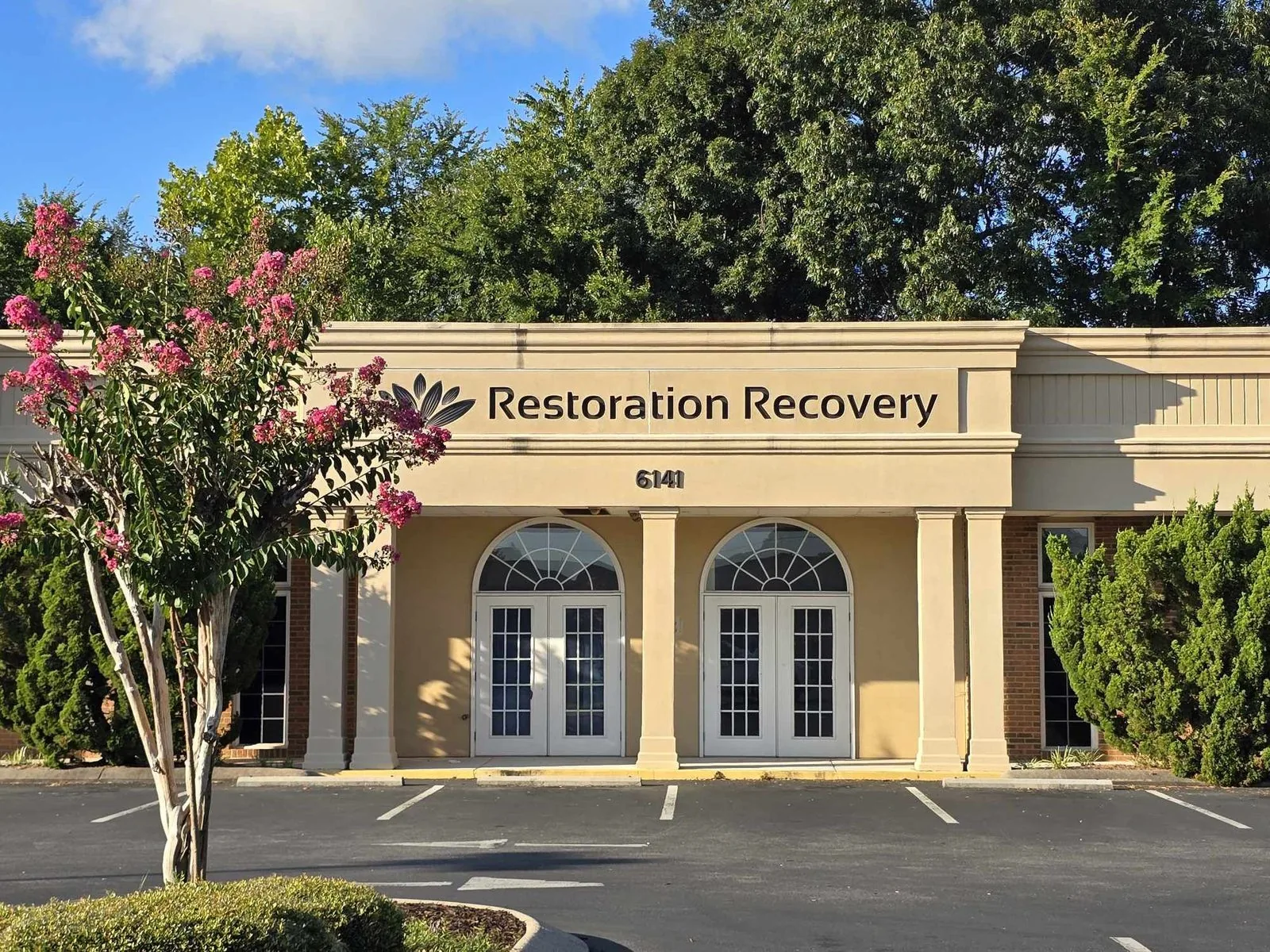
Restoration Recovery Chattanooga clinic near Whitwell, TN
From small-town Whitwell

The realistic drive from your corner of the valley to our Chattanooga clinic

Whitwell sits on the floor of the Sequatchie Valley, tucked between the Cumberland Plateau to the west and Walden's Ridge / Signal Mountain to the east. The valley is long and narrow, and it has shaped every practical decision in this town for 150 years — where the coal was, where the rail line ran, where the coke ovens fired, where the bell from Queen Victoria still hangs in the Coal Miners Museum. For an outpatient medical appointment, the valley shapes your drive. There is essentially one good route south and it is the one most of you already take when you need anything in Chattanooga: US-28 south.

The standard route: US-28 south, then I-24 east

From the heart of Whitwell — Main Street, the old Cheekville rail corridor, the Whitwell Middle School, or anywhere off Highway 108 in the town proper — the route is US-28 south. You'll pass through New Home, past the old tipple landmarks, through the gap toward Powells Crossroads, and down into Jasper. In Jasper you pick up I-24 east, climb over Raccoon Mountain, drop into downtown Chattanooga, and take Exit 181A onto Moore Road / Shallowford Road. Allow 35 minutes door-to-door outside of rush hour. On a clear Saturday morning with no construction on I-24 it is closer to 32; during a weekday 5 pm rush into Chattanooga the last five miles can add ten minutes.

If you are already running errands in Jasper or shopping in Kimball, you are about 25 minutes from the clinic. Several of our Whitwell patients schedule their monthly in-person visit for the same day they do the Walmart run in Kimball and the pharmacy pickup in Jasper, which turns the whole trip into a single afternoon loop rather than a dedicated drive.

From up the valley: Dunlap, Pikeville, and the Sequatchie County line

If you live north of Whitwell proper — up toward Daus, out in the Coal Creek / Ketner's Mill area, or across into Sequatchie County toward Dunlap — the math changes only slightly. US-28 still carries you down the valley floor. Add 10 to 15 minutes from Dunlap; add another 20 from Pikeville if you are coming in from that end of the valley. Because the highway is the only realistic option, this drive is remarkably predictable: you will not hit serious traffic until you merge onto I-24 east in Jasper. For patients up the valley we almost always recommend the Suboxone or Sublocade / Brixadi cadence that maximizes telehealth between in-person visits; once a month in-person is very different from once a week when US-28 is your only way out.

From the hill farms and hollers

If you live up in the coves — Tom Pack Road, Burrow Cove, up on the plateau rim off Sewanee Highway, or out toward the Fiery Gizzard end of Grundy County — your drive starts with whichever route brings you down to US-28. From most of these addresses the Whitwell-to-Chattanooga leg is already locked in; the first ten minutes are just getting down the mountain. Winter weather can add time here: the rim roads ice before the valley floor does, so if you are starting a cadence of weekly visits in January we will always try to schedule mid-day after the sun has been on the road.

The Whitwell heritage context

The town was originally called Cheekville when the first mines opened in 1877. It was renamed for Thomas Whitwell, the British metallurgist and co-founder of the Southern States Coal, Iron and Land Company that bought the operations. Immigrants came in from Wales, Ireland, Scotland, and the coal districts of England; when the British company took over, Queen Victoria herself donated a bell for the local church — the same bell now housed in the Marion County Coal Miners Museum on Main Street. The last deep mine didn't close until 1997. In 1998, middle-school students in this same town launched the Paper Clips Project — collecting one paperclip for every Jew killed in the Holocaust — which eventually drew international attention, a documentary, and a memorial built around an authentic German rail car that still sits behind the middle school today.

We mention all of this because it matters to the patients we see. Whitwell is not a nameless map dot. It is a town with a long memory of hard work, a long memory of injury, and a long memory of looking after its own. When we talk to a patient from this community, we take that seriously. The 35-minute drive south to our clinic is worth treating as exactly what it is: a practical errand, like any other, that you are willing to run because the outcome matters.

Already commuting to Chattanooga for work?

Plenty of Whitwell and Jasper residents already drive to Chattanooga daily for work — Volkswagen, an area hospital, McKee Foods operations, Amazon at Enterprise South, or the Hamilton Place retail cluster. If that is you, the clinic on Shallowford Road is genuinely on your path, and a 9 am first-visit slot before a 10:30 clock-in works for most first-shift schedules. Follow-up visits are shorter (15 to 30 minutes) and most qualify for telehealth after the initial in-person evaluation, so the drive-every-time pattern only lasts one visit.

How Treatment Works

Restoration Recovery provides outpatient addiction treatment — no residential stay, no detox facility. You visit our Chattanooga clinic for appointments and go home the same day. Treatment is built around your schedule, not the other way around.

Your first visit typically takes 60 to 120 minutes and follows a four-step flow: intake (DSM-5 assessment + COWS score for opioid use disorder), counseling, a doctor evaluation, and — if clinically appropriate — a same-day Suboxone prescription (Sublocade and Brixadi injections are ordered per-patient and administered at a follow-up visit). Follow-up visits are shorter and can often be done via telehealth from home.

What We Treat

We provide evidence-based treatment for addiction to opioids and opioid-like substances including heroin, fentanyl, oxycodone (OxyContin, Percocet), hydrocodone (Vicodin, Norco), morphine, codeine, tramadol, and prescription painkillers.

We also treat alcohol use disorder, stimulant dependence (cocaine, methamphetamine, Adderall, Ritalin, Vyvanse), benzodiazepine dependence (Xanax, Klonopin, Ativan, Valium), cannabis use disorder, and co-occurring mental health conditions including anxiety, depression, and trauma.

Kratom & 7-Hydroxymitragynine (7-OH) Addiction

Kratom and its concentrated derivative 7-OH are increasingly available and can cause opioid-like physical dependence with severe withdrawal symptoms. Our providers have experience treating kratom and 7-OH dependence with MAT and clinical support tailored to its distinct withdrawal profile. If you are struggling with kratom or 7-OH products, we can help.

Medications We Prescribe

  • Suboxone (buprenorphine/naloxone) — daily film or tablet for opioid use disorder. Reduces cravings and prevents withdrawal so you can function normally.
  • Sublocade (extended-release buprenorphine) — once-monthly injection for patients who prefer not to take daily medication. No pills, no films, no daily decisions.
  • Brixadi (extended-release buprenorphine) — weekly, bi-weekly, or monthly injection for opioid use disorder. Flexible dosing intervals for patients who want a shorter cadence than monthly, or who are still titrating to a maintenance dose.
  • Vivitrol (naltrexone) — once-monthly injection for alcohol use disorder. Blocks the reward pathway that drives compulsive drinking.

Insurance & Cost

We accept most major insurance plans including TennCare, Medicaid, BlueCross BlueShield, Cigna, Aetna, Ambetter, and United Healthcare. Most patients pay little to nothing out of pocket. Verify your coverage or call 423-498-2000 before your first visit.

Why Choose Restoration Recovery

  • CARF accredited (Commission on Accreditation of Rehabilitation Facilities)
  • Licensed in Tennessee and Georgia
  • HIPAA and 42 CFR Part 2 compliant — your treatment is confidential
  • MAT-certified providers
  • Four clinic locations with same-week appointments
  • Telehealth available for follow-up care from home
  • Integrated hepatitis C treatment for enrolled patients
Why Whitwell residents come to us

What we see most often from Marion County patients

The legacy-injury retiree

Deep mining closed around Whitwell in 1997, but the bodies that worked those mines are still here. We see a steady stream of men in their 60s and 70s from the Sequatchie Valley with the same physical profile: lumbar disc disease from decades of stooping in low seams, rotator cuff damage from overhead work, knees that took a beating on the mine floor, and in many cases black-lung-adjacent breathing problems. Several are on disability. Most have been on and off controlled-substance pain prescriptions since the 1990s. When Tennessee tightened pill-mill enforcement in the 2010s, a lot of these patients were cut off suddenly. Some tapered themselves. Some didn't. The clinical story we hear over and over starts with a work injury in 1988 or 1994 and ends, quietly, at our intake desk thirty years later. Buprenorphine takes the withdrawal and the craving off the table so the underlying pain conversation can resume with whichever provider is still managing it — and in most cases, that original provider is relieved to have the controlled-substance piece handled elsewhere.

The post-manufacturing household

The jobs that replaced mining in and around Whitwell were manufacturing and warehousing in Jasper, Kimball, and South Pittsburg — heavy work with its own injury profile. We see injured line workers from the industrial parks, truck drivers who pulled coal and now pull dry freight, small-engine mechanics, and a lot of people who do construction and seasonal work across Marion and Grundy counties. The economic story in this valley is that when mining left, high-wage union work largely left with it. The jobs that remain are often piecework, seasonal, or contracted, which means a two-week inpatient rehab stay would mean losing the job outright. Our outpatient model is built for that reality: a 60 to 120 minute first visit, a same-day prescription if clinically appropriate, and 15 to 30 minute follow-ups thereafter — most of which can happen by telehealth so the work week never gets interrupted.

The TennCare patient worried about cost

Marion County has one of the higher TennCare-enrollment shares in the Chattanooga metro. The short version for Whitwell patients is this: TennCare (BlueCare, Amerigroup, UnitedHealthcare Community Plan, TennCare Select) covers MAT at our clinic, and most TennCare patients pay nothing out of pocket for Suboxone, Sublocade, Brixadi, or Vivitrol. The main cost for a Whitwell patient is gas, not copays. If you've been putting off a call because you assumed you couldn't afford it, please actually call: 423-498-2000. The most common thing we tell new patients from this valley is "your coverage is better than you thought." For uninsured patients, we can walk through the fee structure and the sliding options during the first call.

The telehealth-heavy patient

Because Whitwell is 35 minutes from the clinic on a good day and up to an hour during rough weather or heavy traffic on I-24, telehealth follow-ups are the backbone of how our Marion County patients run their care. After the initial in-person evaluation at the Chattanooga clinic, most Whitwell patients move to a cadence of one in-person visit every four to eight weeks (usually tied to a Sublocade or Brixadi injection) with telehealth for everything else. The video visit happens from your kitchen, your porch, or a quiet parked truck on a lunch break. Counseling, medication checks, dose adjustments, refills — all of it runs online. The only thing that has to happen in person after intake is the long-acting injection itself, or any visit where your provider specifically wants hands-on evaluation.

The privacy-in-a-small-town concern

Whitwell has about 1,700 people. Marion County as a whole is not much bigger. One of the first things new patients from this community tell us — unprompted, in the first appointment — is that they did not want to be seen walking into a clinic where someone they know from church, from school, or from the volunteer fire department might be sitting in the waiting room. Our Chattanooga clinic is 35 minutes south and four ridges removed from Whitwell; the odds of you running into a neighbor in our waiting room are functionally zero. Beyond that, every part of your chart is protected by HIPAA and 42 CFR Part 2, the strictest federal privacy standard in the country for substance use treatment — nothing in your record leaves our office without your written consent, including to family, employers, insurers beyond payment, or other providers. We take the privacy piece of care in small towns seriously because we have to.

The co-occurring stimulant picture

Rural counties in Appalachia carry a methamphetamine burden roughly three times higher than Tennessee's urban counties, and the fentanyl-and-meth combination is the most common presentation we see from the valley. You do not have to pick which substance to address first. Our providers treat opioid use disorder with buprenorphine or naltrexone and treat stimulant use disorder with a combination of counseling, peer support, contingency management, and psychiatric care for the depression and anxiety that almost always ride along. If you are using both, say so in the intake call — it helps us set up the right clinician for your first visit.

Frequently Asked Questions

How far is your Chattanooga clinic from Whitwell, TN?

About 35 minutes outside of rush hour. From almost anywhere in town the route is the same: US-28 south through New Home and Powells Crossroads to Jasper, then I-24 east over Raccoon Mountain into Chattanooga, off at Exit 181A for Shallowford Road. If you are coming from up the valley (Daus, Ketner's Mill, Dunlap) add 10 to 15 minutes; from Pikeville add about 20. If you are already in Jasper or Kimball running errands, you are 25 minutes out from our front door.

I'm a retired miner (or spouse of one) on TennCare disability. Will you actually see me?

Yes, and this is one of the most common patient profiles we see from the Sequatchie Valley. TennCare covers MAT at our clinic, and disability status is not an obstacle to being a patient. If you are on a long-running pain prescription that has been tapered or cut off and the withdrawal piece has become its own problem, that is exactly the situation buprenorphine is designed to solve. Bring your recent prescription history to the first visit if you have it — we can pull the rest from the Controlled Substance Monitoring Database.

Can I do most of my care by telehealth from Whitwell?

Yes, after the first in-person evaluation. A typical Whitwell patient pattern is: one in-person intake visit at our Chattanooga clinic (60 to 120 minutes), then a cadence of one in-person visit every four to eight weeks for a long-acting injection (Sublocade, Brixadi) if that is the medication you and your provider choose — with telehealth follow-ups from home covering counseling, dose checks, and refills in between. If you are on daily Suboxone rather than an injection, the cadence is similar; the in-person visits are simply less frequent.

Is there any treatment option closer to Whitwell?

There are a handful of providers scattered between Whitwell, Jasper, and Dunlap, but access is uneven — some take only private insurance, some have long wait times, and some do not prescribe the full range of medications (Suboxone, Sublocade, Brixadi, and Vivitrol). Our Chattanooga clinic runs Monday through Friday, 9 am to 4:30 pm, accepts TennCare and most commercial plans, and can typically see a new patient within the same week. For most Whitwell residents, the 35-minute drive once a month plus telehealth in between has been the most practical path we've found.

How quickly can I start treatment?

Most patients can be seen within the same week. Call 423-498-2000 or request an appointment online. Many patients begin Suboxone on their first visit (Sublocade and Brixadi injections are typically ordered at the first visit and administered at a short follow-up). If you are actively in withdrawal when you call, we'll work to get you in as fast as possible.

Will my treatment be confidential?

Yes. All treatment is protected by HIPAA and 42 CFR Part 2 — the strictest federal privacy standard for substance use treatment. Records cannot be shared without your written consent, including with family, employers, or other providers. Whitwell is a small community and we take that seriously; the clinic itself is 35 minutes south in Chattanooga, and your chart never leaves that office.

What insurance do you accept?

We accept TennCare (BlueCare, Amerigroup, UnitedHealthcare Community Plan, TennCare Select), Medicaid, BlueCross BlueShield of Tennessee, Cigna, Aetna, Ambetter, United Healthcare, and most major commercial plans. Check your coverage here or call 423-498-2000 to verify before your first visit.

Do I need to stop using opioids before my first appointment?

You do not need to be completely off opioids before coming in. Your provider will evaluate where you are and guide you through a safe transition onto Suboxone. In most cases, you should be in early withdrawal (usually 12 to 24 hours since last use of short-acting opioids; longer for long-acting opioids) before your first dose — your provider will explain what to expect and time the first appointment accordingly.

Can I do follow-up appointments from home?

Yes. After your initial in-person evaluation, many follow-up visits can be conducted via secure, HIPAA-compliant telehealth from your phone, tablet, or computer — which for Whitwell patients turns a 70-minute round trip into a 15-minute video call.

Other Restoration Recovery Locations

In addition to our Chattanooga clinic, Restoration Recovery operates three other outpatient locations across Tennessee and Georgia.

  • Cleveland, TN — 2130 Chambliss Avenue NW, Cleveland, TN 37311 (Tue & Thu, 9am–4:30pm)
  • Soddy-Daisy, TN — 210 Walmart Drive, Suite 100, Soddy-Daisy, TN 37379 (Mon & Wed, 9am–4:30pm)
  • Ringgold, GA — 4962 Battlefield Pkwy, Ringgold, GA 30736 (preparing to begin scheduling; wait list open)

View all locations →

Resources

Also serving: Jasper, South Pittsburg, Dunlap, Signal Mountain

A place for hope & healing

Starting is the
hardest part.
We’ll take it from there.

Same-day appointments available in most cases. Confidential from your first call.