Restoration Recovery outpatient addiction treatment logo
Near Collegedale, TN · Hamilton County · 37315/37363

Addiction Treatment Near Collegedale, TN

For the roughly 11,000 residents of Collegedale and the neighboring Ooltewah-Apison corridor — the Southern Adventist University campus, the McKee Foods / Little Debbie footprint, the neighborhoods along Apison Pike, and the newer subdivisions climbing toward White Oak Mountain — Collegedale sits almost exactly between two Restoration Recovery clinics. Our Chattanooga office on Shallowford Road is about 20 minutes west via Apison Pike and I-75 South; our Cleveland office on Chambliss Avenue is about 20 minutes east via I-75 North. Same-week appointments, Suboxone / Sublocade / Brixadi / Vivitrol, and TennCare plus most commercial insurance accepted. Both clinics are closed Saturday and Sunday, so Sabbath scheduling is never a conflict.

CARF CARF Accredited Accepting New Patients Same-Week Appointments Most Insurance Accepted Telehealth Available
The Collegedale Picture

What recovery looks like from the Ooltewah-Collegedale-Apison corridor

If you live in Collegedale — on the Southern Adventist University campus, in one of the faculty houses tucked behind Industrial Drive, in the older blocks near the Commons, in one of the newer Apison-side subdivisions climbing up toward White Oak Mountain, or across Apison Pike in the residential stretch between the university and McKee Foods — your week probably runs on Apison Pike and I-75. The honest answer for most Collegedale patients is that we sit almost exactly 20 minutes in either direction: Chattanooga west via I-75 South, Cleveland east via I-75 North. A lot of our Collegedale patients pick based on which day of the week fits their schedule, not based on mileage, because the drive times are a wash. If you are wondering whether there is a practical outpatient MAT (medication-assisted treatment) option that actually respects a Monday-through-Friday life and a Sabbath weekend, the answer is that there is — and you have two of them to pick from.

The patients we see most often from Collegedale are not who you would expect if your only picture of addiction comes from the nightly news. They are Southern Adventist University staff, McKee Foods production and office employees, nurses and medical assistants at a Chattanooga-area hospital and CHI Memorial, Hamilton County teachers who live on the Apison side of the district lines, contractors and tradespeople working the Ooltewah-Collegedale residential boom, and a growing number of retirees who moved down from the Midwest for the climate and the Adventist community. A lot of them started on a legitimate prescription after a back injury, a surgery, a rotator cuff tear, a work accident, or a difficult childbirth, then tapered off the medication badly when the prescription ended. Some were cut off abruptly when a provider retired or when a state law changed. Some tried to stretch a script and ran out early. What almost all of them share is that they held jobs and family obligations the entire time, which is exactly why a residential rehab stay has never been a realistic option. Outpatient Suboxone at the right dose lets you keep the job, keep the house, keep the tuition payments moving, and stop the chase.

Hamilton County fatal overdoses

Annual totals, 2022 – 2024

105 2022
81 2023
66 2024 ↓ 37% vs 2022

Source: Hamilton County Medical Examiner's Office.

Hamilton County fentanyl-attributed deaths

Annual totals, 2022 – 2024

77 2022
61 2023
42 2024 ↓ 45% vs 2022

Source: Hamilton Counted report, Hamilton County Medical Examiner.

Why the county numbers matter on the Collegedale side of the map

Hamilton County fatal overdoses dropped from 105 in 2022 to 66 in 2024 — a 37% decline in two years. Fentanyl-attributed deaths fell even faster, from 77 to 42 over the same window, a 45% drop. That is the best two-year trendline Hamilton County has posted since fentanyl became the dominant driver of overdose mortality around 2019. The curve is real, and the people working on it — Hamilton County EMS, the Medical Examiner's office, county addiction services, and every outpatient clinic in the region — deserve credit for it.

Collegedale sits on the quieter end of the county, and that can make it easy to assume the numbers are somebody else's problem. In clinic, what we see is the opposite: the drop in deaths is partly the result of more people surviving overdoses and more people asking for help than were asking two years ago. A 45% decline in fentanyl deaths does not mean the drug is gone from the supply. It means more of the people who would have died two years ago are still alive and sitting in an exam room asking what to try next. That is the conversation we are set up to have.

If you or someone in your household has been revived with Narcan in the last twelve months — or has narrowly avoided it — a first appointment with us is almost always the right next step. We do not require a period of abstinence before you come in, and we do not require you to have tried anything else first.

Nearest Location · 20 min from Collegedale

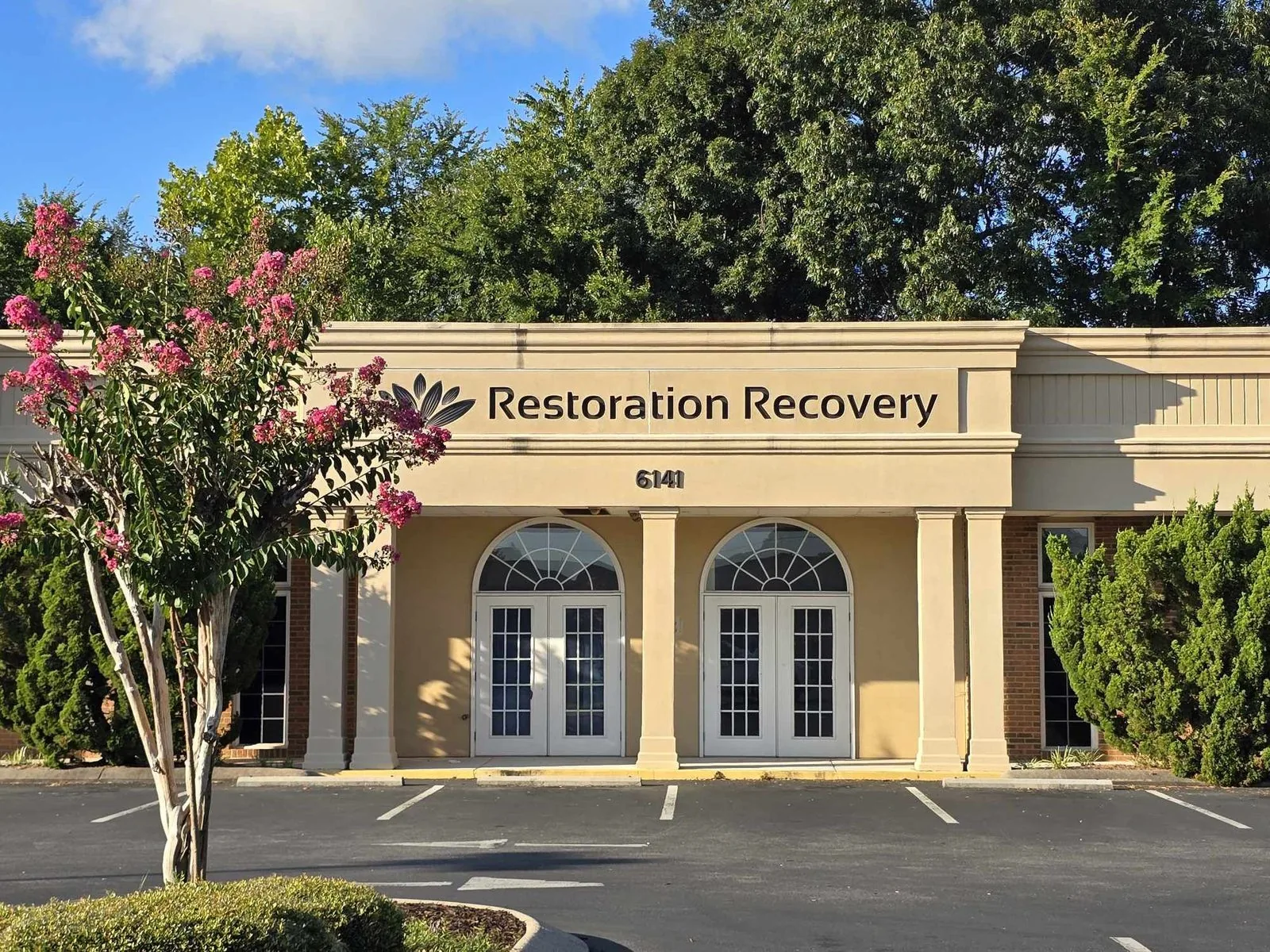
Chattanooga Clinic

Address6141 Shallowford Rd, Suite 100
Chattanooga, TN 37421
HoursMonday – Friday · 9:00 am – 4:30 pm
Fax423-498-2001
Restoration Recovery Chattanooga clinic near Collegedale, TN
Also Accessible · 20 min from Collegedale

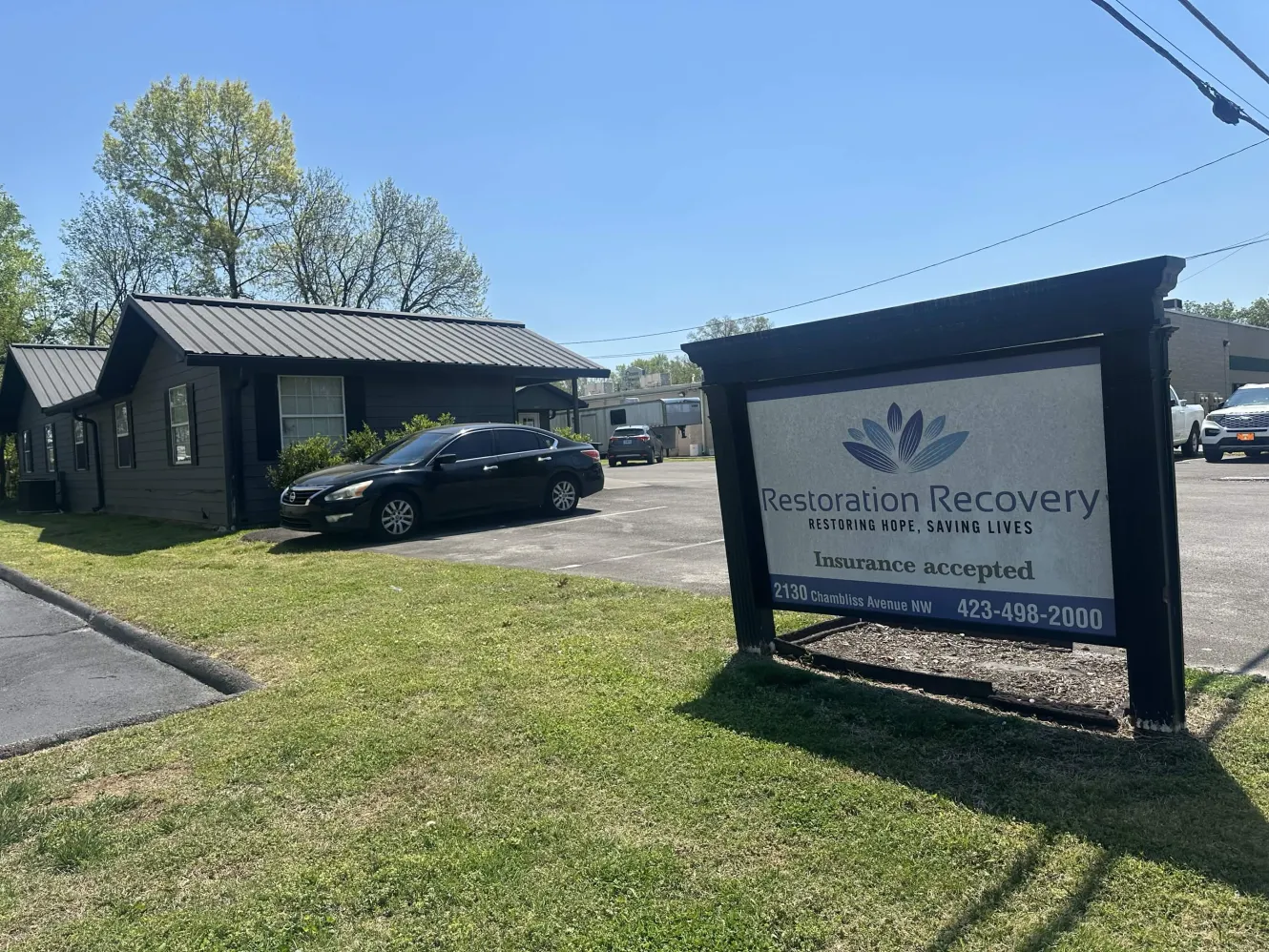
Cleveland Clinic

Address2130 Chambliss Avenue NW
Cleveland, TN 37311
HoursTuesday & Thursday · 9:00 am – 4:30 pm
Fax423-498-2001
Restoration Recovery Cleveland clinic
From your Collegedale neighborhood

The realistic drive from your block to one of our clinics

Collegedale is not large, but it is spread out along one primary spine: Apison Pike (State Route 317), which runs west to east from the Ooltewah area, through the Southern Adventist University campus, past McKee Foods, and out toward the Apison community and the White Oak Mountain foothills. How you get out of Collegedale on a treatment day depends on which half of town you live on — and, honestly, which direction you are already headed for work. Here is the short version: if your life runs west (Hamilton Place, downtown Chattanooga, East Brainerd, Ooltewah proper), Chattanooga is easier. If your life runs east (Cleveland, Athens, Ocoee, Bradley County), Cleveland is easier. Most people pick based on that, not on mileage.

Southern Adventist University campus & Ooltewah-Collegedale corridor (central Collegedale)

If you live on or near the Southern Adventist University campus — the residence halls, the faculty neighborhoods tucked behind Industrial Drive and University Drive, the older single-family blocks that ring the Commons, or the student rentals along Colcord Drive — both clinics are within a narrow window. West to our Chattanooga clinic is Apison Pike to Lee Highway, then a short hop onto I-75 South to Exit 5 (Shallowford Road); figure 20 to 22 minutes outside of rush hour. East to our Cleveland clinic is Apison Pike back to I-75 North, one highway stretch up to the Chambliss / 25th Street area of Cleveland; figure 20 to 22 minutes as well. The drive is a genuine coin flip on distance, so most patients from the central campus area pick by day-of-week. Chattanooga runs Monday through Friday. Cleveland runs Tuesday and Thursday. If you need Monday, Wednesday, or Friday availability, Chattanooga is the only option; if Tuesday or Thursday suits your schedule better, Cleveland is right there.

Apison Pike east / White Oak Mountain foothills & newer subdivisions

If you live on the eastern, rural end of Apison Pike — out past the Collegedale Municipal Airport toward the Apison community, in the newer subdivisions climbing toward White Oak Mountain, or in the stretch of custom homes and small horse properties north of the pike — Cleveland is almost always the shorter drive. Apison Pike east to Ooltewah-Ringgold Road, then north to I-75 at Exit 11, and you are in Cleveland in under 20 minutes with no city driving. Chattanooga from this end is 25 to 28 minutes in most traffic conditions because you have to cross the entire length of Apison Pike first. The quiet exception: if your weekday commute already takes you west through Ooltewah into Hamilton Place or downtown Chattanooga, then Chattanooga wins on pure overlap — the clinic is already on your route.

Ooltewah-side Collegedale & McDonald Road / McDonald Farm area

If you live on the western, Ooltewah-facing side of Collegedale — between the university and the Ooltewah town line, around the McDonald Road neighborhoods near Hamilton County's McDonald Farm park, or in one of the established subdivisions north of Apison Pike toward Mountain View Road — Chattanooga is the shorter drive by a clear margin. Apison Pike west to Ooltewah, then I-75 South at Exit 11. Sixteen to eighteen minutes in light traffic; add five minutes if you are driving during the Volkswagen shift change or afternoon school pickup. This is the corner of Collegedale where a 9 a.m. or 4 p.m. Chattanooga appointment fits most easily into a normal workday.

McKee Foods / Little Debbie plant area

If you work at McKee Foods or live in one of the residential blocks immediately around the plant on Industrial Drive or King Street, the picture is production-schedule-dependent. Day-shift employees finishing at 3 or 4 p.m. can slot a Chattanooga appointment at the end of the day (I-75 South via Ooltewah, 18 to 20 minutes). Night-shift employees starting at 6 or 10 p.m. almost always find that a morning Chattanooga slot before sleep is the better fit; a 9 or 10 a.m. appointment runs about the same drive time with much lighter traffic. For second-shift McKee employees who work straight through dinner, a Tuesday or Thursday Cleveland slot in the late morning is worth considering — it gets the clinical work done before the shift and keeps your full evening intact.

Commuting west through Ooltewah or east into Cleveland anyway?

If you already drive I-75 daily — south into the Hamilton Place / Shallowford Road corridor for work, or north into Cleveland for healthcare, retail, or industrial jobs — the question basically answers itself. Pick the clinic that sits on your existing route. Your first in-person visit runs 60 to 120 minutes depending on intake flow, so a long lunch, a half-day, or an early or late slot tends to work best. Follow-up visits are much shorter (usually 15 to 30 minutes) and most qualify for telehealth after the first in-person evaluation. Several of our Collegedale patients run their follow-ups from a quiet office on campus, from the passenger seat of a carpool home, or from the family couch after dinner.

Two-clinic flexibility after you are established

One of the practical advantages of living in Collegedale is that once you are a Restoration Recovery patient, you can move between the Chattanooga and Cleveland clinics without restarting care. If a week is unusually busy at work and a Thursday Cleveland slot is the only thing that fits, that is fine. If your regular Cleveland provider has a day off and the next open slot in town is at the Chattanooga clinic on a Friday, we can see you there. Your chart, your medication, and your provider team are the same across locations. That flexibility is particularly useful during midterms or finals at Southern Adventist University, during peak shifts at McKee Foods in the Halloween and Christmas runs, and during summer travel weeks when a parent is covering for a spouse's schedule.

How Treatment Works

Restoration Recovery provides outpatient addiction treatment — no residential stay, no detox facility. You visit our Chattanooga clinic for appointments and go home the same day. Treatment is built around your schedule, not the other way around.

Your first visit typically takes 60 to 120 minutes and follows a four-step flow: intake (DSM-5 assessment + COWS score for opioid use disorder), counseling, a doctor evaluation, and — if clinically appropriate — a same-day Suboxone prescription (Sublocade and Brixadi injections are ordered per-patient and administered at a follow-up visit). Follow-up visits are shorter and can often be done via telehealth from home.

What We Treat

We provide evidence-based treatment for addiction to opioids and opioid-like substances including heroin, fentanyl, oxycodone (OxyContin, Percocet), hydrocodone (Vicodin, Norco), morphine, codeine, tramadol, and prescription painkillers.

We also treat alcohol use disorder, stimulant dependence (cocaine, methamphetamine, Adderall, Ritalin, Vyvanse), benzodiazepine dependence (Xanax, Klonopin, Ativan, Valium), cannabis use disorder, and co-occurring mental health conditions including anxiety, depression, and trauma.

Kratom & 7-Hydroxymitragynine (7-OH) Addiction

Kratom and its concentrated derivative 7-OH are increasingly available and can cause opioid-like physical dependence with severe withdrawal symptoms. Our providers have experience treating kratom and 7-OH dependence with MAT and clinical support tailored to its distinct withdrawal profile. If you are struggling with kratom or 7-OH products, we can help.

Medications We Prescribe

  • Suboxone (buprenorphine/naloxone) — daily film or tablet for opioid use disorder. Reduces cravings and prevents withdrawal so you can function normally.
  • Sublocade (extended-release buprenorphine) — once-monthly injection for patients who prefer not to take daily medication. No pills, no films, no daily decisions.
  • Brixadi (extended-release buprenorphine) — weekly, bi-weekly, or monthly injection for opioid use disorder. Flexible dosing intervals for patients who want a shorter cadence than monthly, or who are still titrating to a maintenance dose.
  • Vivitrol (naltrexone) — once-monthly injection for alcohol use disorder. Blocks the reward pathway that drives compulsive drinking.

Insurance & Cost

We accept most major insurance plans including TennCare, Medicaid, BlueCross BlueShield, Cigna, Aetna, Ambetter, and United Healthcare. Most patients pay little to nothing out of pocket. Verify your coverage or call 423-498-2000 before your first visit.

Why Choose Restoration Recovery

  • CARF accredited (Commission on Accreditation of Rehabilitation Facilities)
  • Licensed in Tennessee and Georgia
  • HIPAA and 42 CFR Part 2 compliant — your treatment is confidential
  • MAT-certified providers
  • Four clinic locations with same-week appointments
  • Telehealth available for follow-up care from home
  • Integrated hepatitis C treatment for enrolled patients
Why Collegedale residents come to us

What we see most often from Collegedale-area patients

The Adventist community context

Collegedale was founded around Southern Adventist University in 1916, and the Seventh-day Adventist community still shapes the rhythm of the town in ways that matter clinically. The most obvious is Sabbath observance: a large share of our Collegedale patients reserve sundown Friday through sundown Saturday for rest, worship, and family, which means Saturday appointments, Saturday errands, and Saturday driving are all off the table. Our clinics are closed Saturday and Sunday anyway, so this is never a scheduling conflict — but it is worth saying plainly, because patients occasionally assume an outpatient clinic will expect weekend availability. We do not. The second piece that matters is dietary and lifestyle context. A significant share of Adventist patients are lifelong vegetarians or vegan, do not drink alcohol, and have never used tobacco; the clinical picture for these patients when opioid dependence develops is almost always post-surgical or post-injury rather than recreational. That shapes the conversation about what went wrong, what the next step looks like, and how to communicate with the primary-care provider who originally wrote the prescription. We are experienced with that conversation and do not treat it as unusual.

Faculty, staff, and administrators at Southern Adventist University

Southern Adventist University employs hundreds of faculty and staff, and a meaningful share live within walking or cycling distance of campus. For these patients, two things tend to matter most. First: confidentiality from the institution. Your treatment at Restoration Recovery is covered by HIPAA and 42 CFR Part 2 — the strictest federal privacy standard in medicine — which means nothing in your record can be released to the university without your written consent. This is a protection beyond ordinary medical privacy, and it applies specifically to substance use treatment. Second: schedule flexibility around the academic calendar. We have faculty patients who do the first one or two visits in person during a lighter week, then move almost everything else to telehealth during term. Monthly Sublocade or Brixadi injections still require a short in-person visit, but the rest can run online.

Southern Adventist University students

Students are a smaller share of our Collegedale patient mix than faculty and staff, but the ones we do see tend to come in under one of two circumstances. The first is a student who developed opioid dependence off-campus — at a previous school, during a gap year, or through a family member's prescription — and wants to start treatment quietly before classes become unmanageable. The second is a student who had a legitimate prescription after a sports injury, a wisdom-tooth extraction, or a surgery, then ran into withdrawal when the prescription ended and realized something had shifted. In both cases, a first in-person visit, a stable Suboxone dose, and a shift to telehealth follow-ups almost always works. Universities require no notification, and your record is protected from the dean, residence life, and academic advising without your consent.

McKee Foods production, office, and warehouse employees

McKee Foods — the Little Debbie parent company — is Collegedale's largest private employer and runs production around the clock. We see a steady stream of McKee patients, most commonly line workers and warehouse staff who had a back injury or a shoulder problem after years on the floor, legitimate opioid prescriptions that tapered badly, and shift schedules that rule out any kind of residential treatment. Outpatient Suboxone is built exactly for this. A 9 a.m. appointment works for a third-shift employee finishing at 7 a.m.; a 4 p.m. slot works for first-shift ending at 3. After the first in-person visit, the 15-to-30-minute follow-ups almost always qualify for telehealth, which means the check-in can happen on a break, at home between shifts, or in the parking lot before clock-in. None of this is visible to McKee HR or the employee assistance program unless you choose to involve them.

The two-clinic flexibility Collegedale residents get

Collegedale is genuinely rare among the small towns we serve in that it sits halfway between two of our clinics at roughly the same drive time. Most of our patients across the region have one nearby option; Collegedale has two. Practically, that means you can pick based on the day of the week that fits your life: Monday, Wednesday, or Friday — Chattanooga. Tuesday or Thursday — either clinic works, and Cleveland is often less crowded. If a week goes sideways and the only open slot is at the other clinic, you can use it without restarting your chart or switching providers. Your medication, your dose, your care team — all portable between the two. Very few patients take full advantage of this flexibility on day one, but it becomes meaningful over the first six months, when life is still unpredictable and missing an appointment can derail a month of progress.

The post-injury pain patient in a younger household

Collegedale skews younger than most of Hamilton County — the median age is around 33, well below the county median — largely because of the student population and the young families who have moved in around the university. That demographic shows up in our patient mix as parents in their late 20s, 30s, and early 40s who had a C-section, a sports injury, a car wreck, or a workplace accident, received a short opioid prescription, and found themselves in trouble when it ended. They are raising kids, paying a mortgage on one of the newer Apison-side subdivisions, and cannot step away from work for two weeks. Outpatient Suboxone at the right dose handles withdrawal and craving so the underlying pain conversation can resume with the original provider, most of whom are relieved to have the controlled-substance piece handled elsewhere. Many of these patients stabilize within the first month and are able to move to long-acting monthly injections (Sublocade or Brixadi) if they prefer not to think about a daily medication.

Telehealth for the Collegedale-to-Chattanooga or Collegedale-to-Cleveland commuter

If you drive I-75 daily in either direction — west toward Hamilton Place, downtown Chattanooga, or the medical campuses, or east toward Cleveland, Athens, or the industrial corridor — telehealth follow-ups let you keep the entire medication management piece of your care on your phone after the first in-person visit. Several of our Collegedale patients have done exactly one in-person appointment and then handled everything else remotely from the couch on a lunch break, from a quiet classroom between periods, or from home on a day off. Long-acting injections (Sublocade, Brixadi, Vivitrol) still have to happen in person. Everything else can usually run online.

Frequently Asked Questions

How far is Restoration Recovery from Collegedale?

Roughly 20 minutes in either direction. Our Chattanooga clinic on Shallowford Road is about 20 minutes west via Apison Pike and I-75 South to Exit 5. Our Cleveland clinic on Chambliss Avenue is about 20 minutes east via I-75 North. Most Collegedale patients pick based on which day of the week works best rather than on distance — Chattanooga is Monday through Friday, Cleveland is Tuesday and Thursday. Call 423-498-2000 and we can help you pick.

I observe Sabbath — how does that work with your schedule?

Both of our clinics operate Monday through Friday and are closed Saturday and Sunday, so sundown-Friday through sundown-Saturday observance is never a conflict. For Adventist patients at Southern Adventist University, McKee Foods, and across the Collegedale community, Tuesday, Wednesday, and Thursday appointments tend to be the easiest fit. After the first in-person visit, most follow-ups can shift to telehealth, which gives you even more flexibility around worship, family, and academic schedules.

I am a Southern Adventist University student, staff member, or faculty — is treatment confidential from the university?

Yes. All treatment at Restoration Recovery is protected by HIPAA and 42 CFR Part 2, the strictest federal privacy standard for substance use treatment. Nothing in your record can be released to Southern Adventist University, a residence hall director, the university health center, an academic advisor, an employer, or a family member without your written consent. This is a separate legal protection beyond ordinary medical privacy and it applies specifically to substance use care. Many of our campus-affiliated patients never disclose their treatment to anyone at the university, and they are not required to.

Should I use the Chattanooga clinic or the Cleveland clinic?

Usually whichever one matches your weekly schedule and your existing commute. Chattanooga runs Monday through Friday, so if you need Monday, Wednesday, or Friday availability, that is the only option. Cleveland runs Tuesday and Thursday. If either day works for you and you are already driving east into Cleveland for work or family, the Cleveland clinic is often a little less crowded. Once you are an established patient, you can move between the two clinics without restarting care — same chart, same medication, same provider team — so the first choice is not permanent.

How quickly can I start treatment?

Most Collegedale, Ooltewah, and Apison patients are seen within the same week. Call 423-498-2000 or request an appointment online. Many patients begin Suboxone on their first visit (Sublocade and Brixadi injections are ordered during the first visit and administered at a short follow-up). If you are in withdrawal or close to it when you call, we will work to get you in the same week.

What insurance do you accept?

We accept TennCare (BlueCare is Hamilton County's dominant MCO), Medicaid, BlueCross BlueShield of Tennessee, Cigna, Aetna, Ambetter, United Healthcare, and most major commercial plans — including the employer coverage offered by Southern Adventist University, McKee Foods, and the other large Collegedale-area employers. Check your coverage here or call to verify before your first visit.

Do I need to stop using opioids before my first appointment?

You do not need to be completely off opioids before coming in. Your provider will evaluate where you are and guide you through a safe transition onto Suboxone. In most cases, you should be in early withdrawal (usually 12–24 hours since last use of short-acting opioids, longer for long-acting opioids) before your first dose — your provider will explain exactly what to expect and time the first appointment accordingly.

Can I do follow-up appointments from home?

Yes. After your initial in-person evaluation, many follow-up visits can be conducted via secure, HIPAA-compliant telehealth from your phone, tablet, or computer — useful for Collegedale residents balancing class schedules at Southern Adventist University, McKee Foods shift work, or a family routine built around Sabbath observance.

Other Restoration Recovery Locations

In addition to our Chattanooga clinic, Restoration Recovery operates three other outpatient locations across Tennessee and Georgia.

  • Soddy-Daisy, TN — 210 Walmart Drive, Suite 100, Soddy-Daisy, TN 37379 (Mon & Wed, 9am–4:30pm)
  • Ringgold, GA — 4962 Battlefield Pkwy, Ringgold, GA 30736 (preparing to begin scheduling; wait list open)

View all locations →

Resources

Also serving: Hixson, Red Bank, East Ridge, Signal Mountain

A place for hope & healing

Starting is the
hardest part.
We’ll take it from there.

Same-day appointments available in most cases. Confidential from your first call.